Precision-Engineered OEM & Wholesale Lens Series
Engineered for international ophthalmic distributors, cosmetic retailers, and medical brand owners. All formulations are manufactured under strict ISO 13485 standards with comprehensive regulatory technical files.
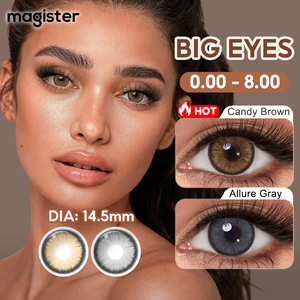
Magister Wholesale Natural Contact Lenses Colored Contact Cosmetic Eye Contact Lenses Prescription Color Lens
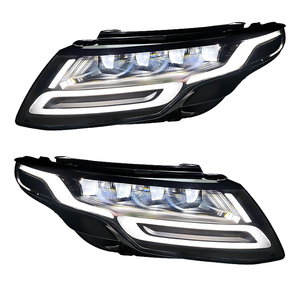
For Land Rover Range Rover Evoque 2012-2018 L538 LED Headlight 4 Lens Upgrade 2026 New Upgrade Design
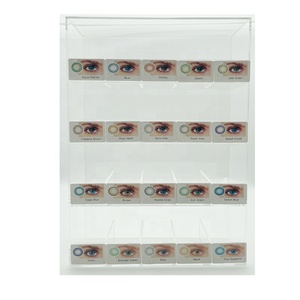
BSR hollywood / Branclear Luxury Color Contact Lenses Display
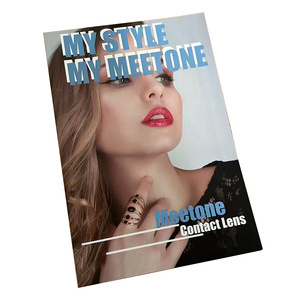
Free Design Paper Book Nice Pamphlet for Meetone Colored Contact Lenses
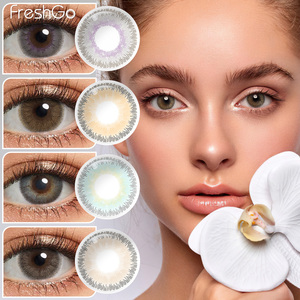
Free Shipping Soft Lens HEMA Material Colored Cosmetic Contact Lenses Two Pieces Lenses Popular Natural Style Wholesale Contacts
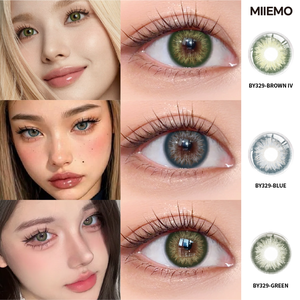
Wholesales Customized Soft Brown Nature New York Pro II Contact Lenses Fresh Tones
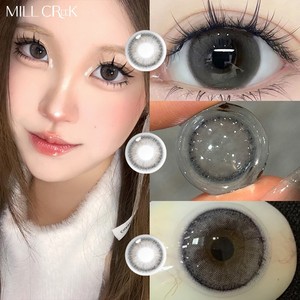
Lentes De Contacto Colored Contact Lenses Natural Soft Yearly Lentilles De Contact Lentes De Contato Pupilentes Wholesale
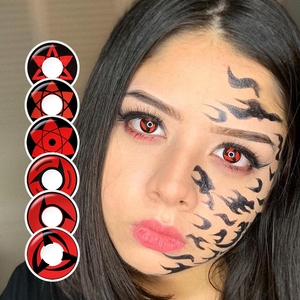
Free Shipping Anime Contact Lenses Cosplay Colored Contacts Halloween Eye Lens Colored Eye Contacts Lentes De Contacto
The Structural Advantage of Chinese Contact Lens OEM & ODM Ecosystems
In the global contact lens and ocular prosthetic industry, supply chain dynamics have undergone an undeniable paradigm shift. Historically centered within concentrated multinational cartels, the manufacturing of both hydrogel cosmetic lenses and precision refractive devices has decentralized toward world-class, automated manufacturing clusters in China. For ophthalmic brands, e-commerce scale-ups, and optical chains in North America, the European Union, and the Asia-Pacific region, selecting a premier contact lens OEM China supplier is no longer just a cost-arbitrage decision—it is an imperative for speed-to-market, agile customization, and regulatory scalability.
Modern Chinese contact lens cleanrooms leverage computerized cast-molding systems, automated optical power verification systems (such as Hartmann-Shack wavefront sensors), and automated robotic blister sealing. By consolidating hydrogel polymer synthesis, mold nanofabrication, multi-tone color printing, sterilization, and customized blister packaging into vertically integrated manufacturing parks, Chinese OEMs eliminate tiered markups and dramatically compress production turnaround from typical 16-week cycles down to as fast as 15 to 25 business days.
Ophthalmic Safety Integrity Assurance
"True manufacturing excellence in soft contact lens fabrication requires eliminating surface pigment exposure. In compliance with FDA 21 CFR 886.5925 and EU MDR Annex XVI, our cleanroom processes ensure zero direct pigment-to-corneal tissue contact via proprietary inter-polymeric embedding."
- Cast molding precision down to sub-micron optical tolerance
- HEMA, PolyHema, Ocufilcon D, and advanced Silicone Hydrogel blends
- Fully automated SAL 10⁻⁶ terminal saturated steam autoclave
Future Contact Lens Procurement Trends (2026–2030)
Anticipating regulatory tightening, consumer health awareness, and shifting retail channels is critical for brand survival. Here is how international buyers are reshaping their annual sourcing pipelines.
1. The Shift to High-Dk/t Daily Disposables
Procurement managers are transitioning inventory budgets from legacy annual and quarterly wear schedules toward daily and monthly silicone-hydrogel disposables. Driven by consumer prioritization of ocular health and corneal oxygenation, daily colored lenses with high oxygen transmissibility (Dk/t > 80) prevent hypoxia-induced neovascularization while sustaining maximum daily comfort.
- Elimination of lens cleaning maintenance compliance issues
- Higher recurring monthly customer lifetime value (LTV)
- Eco-friendly micro-blister packaging options
2. EU MDR Annex XVI & Global Compliance
Cosmetic lenses without corrective refractive power now fall under stringent medical device directives in key target markets, including Regulation (EU) 2017/745 (MDR) Annex XVI, UKCA, and US FDA 510(k). Global buyers are rapidly decoupling from non-certified white-label workshops, consolidating orders exclusively with audited factories that provide validated biocompatibility, cytotoxicity, and leachability data dossiers.
- Complete ISO 13485:2016 audit trail documentation
- UDI (Unique Device Identification) barcode integration
- Authorized Representative (EC REP) assistance ready
3. Low-MOQ Agile Iteration Commerce
Direct-to-consumer (D2C) brands and social commerce retailers no longer commit to rigid 10,000-unit opening minimums. Modern agile sourcing leverages modular small-batch OEM programs (starting at 100 to 500 pairs per SKU), allowing boutique brands to field-test seasonal color collections, natural gradient limbal rings, and theatrical FX styles across micro-influencer campaigns before scaling production volumes.
- Lean initial capital commitment for emerging founders
- Rapid localized SKU color testing based on demographic eye pigments
- Custom foil and carton box digital proofing in under 72 hours
Technological Innovations in Contact Lens Development
How biomaterial polymer chemistry and micro-optics nanofabrication are redefining wearer comfort, optical crispness, and physiological safety.
| Technology Dimension | Traditional Legacy Manufacturing | Next-Gen Chinese OEM Standard | Direct Clinical & Commercial Benefit |
|---|---|---|---|
| Color Matrix Placement | Pad printing on front/back surface; risk of ocular friction | Full Sandwich Encapsulation (Pigment trapped between two polymer layers) | Zero corneal erosion risk; smooth blinking mechanics and frictionless comfort |
| Edge Profile Engineering | Standard round/beveled edge via spin casting or lathe cutting | Aspheric CNC micro-cast curve with micro-tapered tear-exchange contour | Enhanced tear film replenishment behind the lens, preventing end-of-day dryness |
| Polymer Matrix Chemistry | Basic 38% PolyHEMA hydrophilic homopolymers | NVP/GMA Phosphorylcholine biomimetic and Silicone Hydrogel hybrids | Dramatically superior resistance to lipid and protein bio-fouling deposits |
| Chromatic Printing Precision | Coarse 150 DPI dot matrix; artificial, flat aesthetic | High-resolution 1200 DPI layered radial dot printing with biomimetic depth | Seamless iris integration across diverse natural eye iris tones (dark brown to light blue) |
| UV & Blue Light Attenuation | None or basic Class II UV block additive | Integrated Class I UV blockers (99% UVB, 90%+ UVA) + High-energy blue light filtering | Dual medical-cosmetic appeal for digital screen heavy modern consumer demographics |
Enterprise Capabilities & Turnkey Private-Label Solutions
Rooted in decades of advanced precision optical manufacturing, our facility bridges the gap between state-of-the-art medical technology and vibrant beauty trend responsiveness.
ISO 13485 & GMP Certified Sterility
Operating across certified Class 100,000 (ISO Class 7) modular cleanrooms with laminar flow hoods. Our manufacturing infrastructure is rigorously audited for GMP standards, ensuring biological bioburden is controlled at zero before terminal autoclaving at 121°C.
- Zero chemical residue ethylene oxide alternative processes
- Sterility Assurance Level (SAL) validated to 10⁻⁶ standards
- Batch-by-batch physical parameter & optical power testing
500+ Proprietary Color Libraries & Custom ODM
Our in-house optical color lab maintains over 500 validated iris designs—from high-demand subtle, natural enhancement shades (honey, hazel, crystal gray) to hyper-pigmented theatrical cosplay and anime special-effects styles.
- Custom 1-tone, 2-tone, and 3-tone color matrix formulating
- Custom pupillary and limbal ring diameter calibration
- Fast prototyping of bespoke customer designs in 10 working days
Turnkey Packaging, UDI & Labeling Engineering
Beyond lens molding, we deliver market-ready, customized product packaging. From medical PP blister packs and glass vials to FSC-certified outer carton boxes, instructional leaflets (IFU) in multiple languages, and barcoding.
- Custom multilingual labeling (German, French, Spanish, Arabic, English)
- UDI compliance barcoding & GS1 DataMatrix generation
- Packaging materials suited for automated retail warehousing
Frequently Asked Questions (Buyer Technical Due Diligence)
Essential answers addressing regulatory clearance, order logistics, quality assurance tolerances, and manufacturing workflows.
What is the standard Minimum Order Quantity (MOQ) for custom private label orders?
How do you guarantee pigment safety and ocular biocompatibility?
What regulatory documentation do you provide for importing into the European Union and the USA?
What is the typical production timeline from artwork sign-off to shipment?
Can you provide custom-formulated prescription powers (Rx diopters) for cosmetic lenses?
What are the Acceptable Quality Limit (AQL) standards for defect rejection?
Scale Your Contact Lens Brand with a Trusted China OEM Leader
Whether you are seeking small-batch testing from 100 pairs or commercial-scale production runs exceeding millions of units, our engineering and regulatory affairs teams are here to accelerate your timeline.