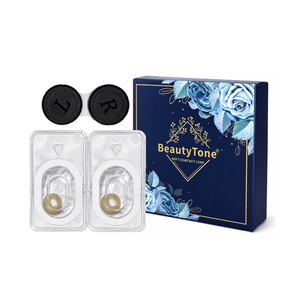
Featured OEM/ODM Solutions
Wholesale Private Label Colored Lenses & Packaging Systems
Explore our medical-grade color contact lenses and fully customized eco-friendly packaging capabilities engineered for global optical brands.
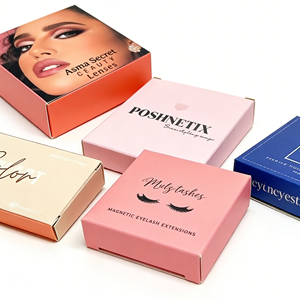
Best Quality Eco-Friendly High-End Wholesale Custom Logo Contact Lenses Packaging Paper Box
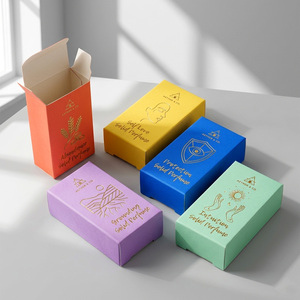
Custom Printed Own Your Logo Design Color Contact Lenses Gift Box Soap Cosmetic Contact Lenses Packaging Boxes
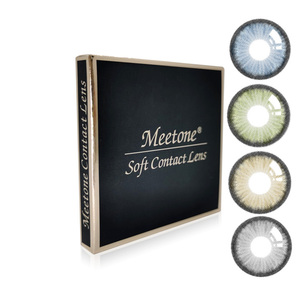
Private Label Meetone Lens Box Wholesale Color Eye Soft Contact Lenses Packaging
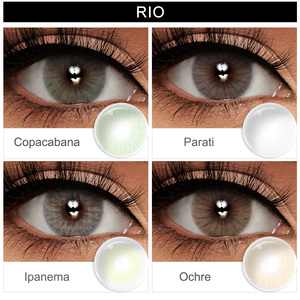
Free Samples Freshgo Rio Lenses Eye Contact Lenses Eye Contact Box Lentillas De Colores Lentilles Kontaktlinsen
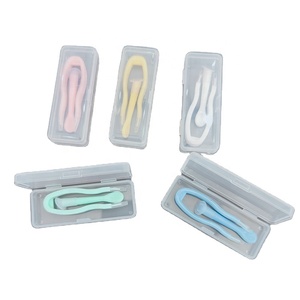
Wholesale One-Piece Flip-Top Clamp Rod Combination Contact Lens Box Take-Off Eyeglasses Care Products
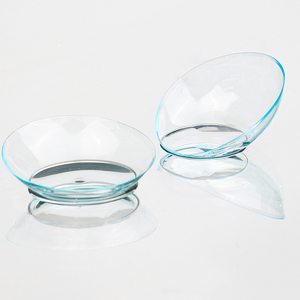
Free Magister Clear Lens Myopia Contact Lenses Wholesale Prescription Contact Lenses Packaging for Clear Contact Lenses
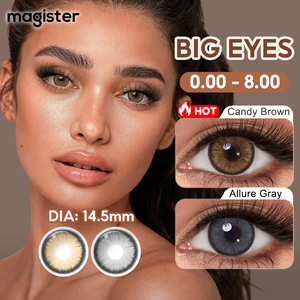
Free Sample Magister Wholesale Natural Contact Lenses Colored Contact Cosmetic Eye Contact Lenses Prescription Color Lens
Supply Chain Intelligence
Navigating the Global Landscape of Colored Contact Lens Manufacturing
The cosmetic contact lens sector has evolved from a niche fashion market into a sophisticated medical-grade aesthetic industry. Understanding the supply chain dynamics between Chinese manufacturing powerhouses and South Korean design hubs is essential for brand owners, opticians, and international distributors.
1. The Convergence of Strategic Manufacturing Hubs: China vs. South Korea
When procurement executives evaluate global sourcing channels for colored contact lenses, the discussion inevitably focuses on two dominant manufacturing hubs: China and South Korea. Historically, South Korea pioneered intricate natural iris aesthetics, popularizing multi-tone micro-dot printing, sub-limbal ring designs, and Korean pop-culture-driven visual dynamics. Meanwhile, Chinese OEM manufacturers established vast industrial infrastructure, investing heavily in automated cast molding lines, Class 100,000 cleanroom environments, and superior supply chain vertical integration.
Today, the strategic lines between these two ecosystems have synthesized. High-tier Chinese manufacturers have integrated Korean design philosophies with advanced German lathe-cutting and cast-molding machinery. The result is a hybrid manufacturing ecosystem that delivers top-tier optical precision, ultra-thin edge profiles, and superior oxygen permeability (Dk/t values) at highly competitive unit economies.
| Technical Benchmark | Chinese OEM Supply Chain | South Korean Supply Chain | Hybrid Integrated Sourcing Model |
|---|---|---|---|
| Core Production Method | Automated Cast Molding & Spin Casting | Cast Molding & Semi-Automated Lathe Cutting | Fully Automated Cast Molding + High Precision Lathe |
| Pigment Encapsulation | Sandwich Printing & Dual-Layer Polymerization | Sandwich Technology & Surface Tinting | Advanced Bio-Compatible Sandwich Color Lock |
| Water Content Range | 38% - 58% (Hydrogel & Silicone Hydrogel) | 38% - 45% (HEMA & Polymacon Base) | 38% - 55% Customized Hyaluronic Formulations |
| Minimum Order Quantity (MOQ) | Flexible (100 pairs for stock, 1,000 for custom) | Higher Thresholds (typically 3,000+ pairs/color) | Agile Low-MOQ Launch (100 pairs per design) |
| Regulatory Dossier Support | NMPA, FDA 510(k), CE, ISO 13485, EU MDR | MFDS, CE, ISO 13485, FDA Registered | Full Technical File & UDI Integration Support |
2. Material Science & Pigment Lock Technology: The "Sandwich" Imperative
A primary benchmark of product safety and end-user comfort in cosmetic contact lenses is the isolation of color pigments from corneal tissue. Uncertified low-tier suppliers utilize surface-printing techniques where colorants come into direct contact with the ocular surface, leading to potential pigment leaching, epithelial staining, and severe allergic keratitis.
Bio-Compatible Sandwich Process
Our premier manufacturing partners utilize micro-encapsulation sandwich technology. Pigments are embedded within an inner polymer matrix (HEMA or Silicone Hydrogel), sandwiched between two ultra-thin transparent hydrogel layers. This ensures zero pigment exposure, maintaining a completely smooth lens surface and an friction-free blink experience.
Precision Edge Profiling & Oxygenation
Corneal health relies on continuous oxygen exchange and tear flow. Advanced automated lathe and molding technology craft a rounded edge design that optimizes tear turnover under the lens. High-permeability hydrogel matrices prevent hypoxia, allowing daily comfort across extended wear hours.
Strategic Foresight
Future Sourcing & Procurement Trends (2025–2030)
The global vision care market is undergoing rapid transformations driven by consumer safety demands, eco-conscious regulations, and technological advancements. Brand buyers must align with suppliers capable of staying ahead of these four macro trends:
1. Dominance of Daily Disposables
Consumer preferences are shifting rapidly from annual and quarterly replacement schedules toward 1-Day Daily Disposable colored contact lenses. Driven by hygiene awareness and convenience, daily disposables minimize infection risks associated with improper lens storage. B2B importers must select manufacturers equipped with high-speed automated blister packaging lines that handle daily disposable volumes efficiently.
2. Eco-Friendly & Sustainable Packaging
Regulatory frameworks like the European Packaging and Packaging Waste Regulation (PPWR) and Germany’s VerpackG (LUCID) demand recyclable secondary packaging. Leading suppliers now offer FSC-certified paper boxes, soy-based ink printing, and reduced-plastic blister packs, enabling brands to fulfill corporate sustainability commitments without sacrificing sterile barrier integrity.
3. Stringent Regulatory Compliance (EU MDR Annex XVI)
Non-prescription cosmetic contact lenses now fall strictly under medical device directives in major markets—including EU MDR Regulation (EU) 2017/745 Annex XVI and US FDA 510(k) clearances. Importers can no longer rely on standard cosmetic declarations. Modern sourcing requires factories capable of providing full technical dossiers, clinical evaluation reports, and UDI (Unique Device Identification) barcode integration.
4. Hyper-Realistic Micro-Patterning
Modern consumers reject artificial, harsh lens patterns. The trend favours 3-tone and 4-tone natural gradient blends that simulate authentic iris textures, subtle limbal rings, and light-reflecting highlights. Automated digital printing and precise optical alignment ensure batch-to-batch color fidelity for global private-label lines.
Market Intelligence
Key Product Development & Aesthetic Trends
Aligning your brand catalog with evolving consumer fashion demands is critical to maximizing inventory turnover and high customer lifetime value.
Natural Iris Enhancement
Soft hazel, warm honey, olive green, and mocha brown shades designed for daily wear. Focuses on seamless iris translucency that works across diverse natural eye colors without harsh opacity lines.
Vivid & High-Opacity Series
Engineered specifically to completely transform dark brown or black eyes into striking ice blue, gray, or violet tones. Utilizes dense micro-dot arrays for maximum coverage while preserving central pupil clarity.
Special FX & Cosplay Lenses
Specialized theatrical, mini-sclera (17mm), and full-sclera (22mm) lenses for Halloween, film productions, and cosplay. Demands rigorous structural integrity and strict bio-compatibility testing.
Why Partner With Us
Enterprise Strengths & Global OEM/ODM Capabilities
Empowering independent optical brands, retail chains, and international importers with agile manufacturing, uncompromised quality assurance, and end-to-end regulatory support.
Agile Low-MOQ Launch Program
We lower market entry barriers by offering OEM private label production starting at just 100 pairs per design. This enables startups and established optical chains to test consumer response across new color collections without capital tie-ups.
ISO 13485 & Class 100,000 Cleanrooms
All contact lenses are manufactured in state-of-the-art medical cleanrooms equipped with automated cast molding, robotic lens extraction, ultrasonic hydration baths, and 100% automated optical inspection (AOI) systems.
Comprehensive Technical Dossiers
We streamline international customs clearance and health authority registrations by providing complete technical documentation, including material safety data sheets (MSDS), sterilization validation reports, and EU MDR compliance files.
Turnkey Packaging & Branding Solutions
From blister foil heat-sealing to luxury rigid gift boxes, paper cartons, instruction inserts (IFU in multiple languages), and care kit accessories, we deliver fully shelf-ready products tailored to your market.
Procurement Guide
Frequently Asked Questions (FAQ) for B2B Buyers
Essential technical, regulatory, and logistics answers for wholesale buyers, brand managers, and optical distributors.
1. What is the Minimum Order Quantity (MOQ) for private-label contact lenses?
Our small-batch OEM framework allows brand owners to launch private-label collections with an introductory MOQ starting at 100 pairs per design/color for standard stock parameters. For completely customized, bespoke iris pattern development and custom blister foil printing, standard production runs typically start at 1,000 to 3,000 pairs depending on packaging specifications.
2. How do you ensure pigment safety in cosmetic colored contact lenses?
We strictly employ Sandwich Color Encapsulation Technology. FDA-approved, medical-grade organic pigments are printed inside an inner layer of the hydrogel material. The pigments are completely sealed between transparent polymer layers, preventing direct contact with the cornea or palpebral conjunctiva, ensuring zero pigment migration and superior ocular safety.
3. Which international certifications and technical documents do you provide?
Our manufacturing facilities operate under ISO 13485 Medical Device Quality Management Systems. Products carry CE compliance markings, NMPA registrations, and FDA listings depending on the product line. For European importers, we supply technical dossier documentation supporting compliance with EU Regulation (EU) 2017/745 (MDR) Annex XVI for non-corrective cosmetic lenses.
4. Can packaging, labels, and IFU be translated into specific regional languages?
Yes. We offer complete custom artwork engineering. Outer paper boxes, blister sealing foils, vial labels, and Instructions for Use (IFU) leaflets can be customized in German, English, French, Spanish, Arabic, or bilingual formats, fully integrated with your company logo, importer details, UDI codes, lot numbers, and expiry dates.
5. What is the standard lead time for OEM production and global delivery?
For standard catalog items with custom outer box branding, sample approval takes 3 to 7 days, with bulk production completed within 15 to 25 days. Fully customized new mold creations or bespoke iris pattern developments typically require 30 to 45 days. Shipments are dispatched via express air freight (DAP/DDP) or sea cargo depending on your destination warehouse requirements.
Ready to Scale Your Contact Lens Brand?
Request our comprehensive product catalog, technical parameter sheets, and OEM pricing matrix today. Our international export specialists reply within 12 hours with customized project evaluations.