Precision Engineered Optical & Cosmetic Circle Lens Series
Explore our export-grade medical contact lenses, specialized optical diagnostic instruments, and luxury branded packaging assemblies manufactured under cleanroom conditions.
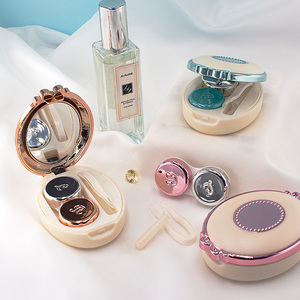
Custom Logo Mini Oval Shiny Contact Lens Kit
Compact ergonomic ABS cosmetic travel case equipped with dual-chamber anti-leak lens wells, medical-grade silicone insertion stick, and hygienic mirror.
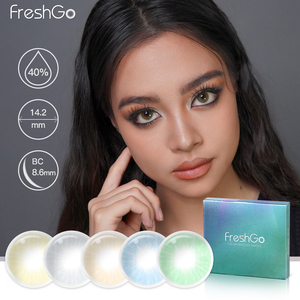
Freshgo Hidrocor Natural Colored Contact Lenses
Annual cosmetic soft contact lens with balanced 40% water content and high oxygen flux, delivering complete iris transformation with prescription parameters from 0.00 to -8.00D.
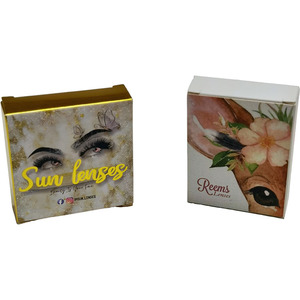
Luxury Gold Foil Custom Colored Lens Box
Premium rigid cosmetic box utilizing 350gsm virgin bleached sulfate board with metallic hot-foil stamping, anti-scratch matte soft-touch lamination, and security tamper seals.
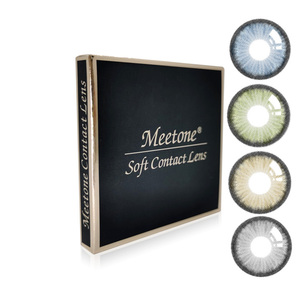
Private Label Meetone Lens Packaging System
Fully compliant turnkey secondary packaging solution incorporating standardized barcode placements, multi-language regulatory warnings, UDI identifiers, and batch fields.
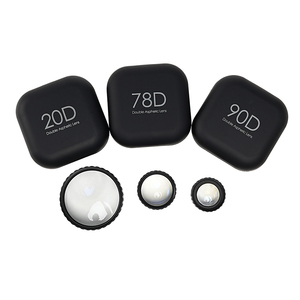
High Accuracy Multi-Selective Diagnostic Lenses
Specialized medical-grade optical examination lenses (20D, 78D, 90D) engineered with computer-optimized double aspheric surfaces and broadband anti-reflective multi-coatings.
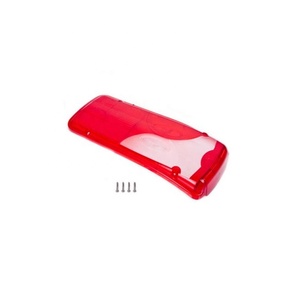
Specialized Moulded Polymer Optical Lens Assembly
Industrial injection-molded optical grade PMMA/polycarbonate component featuring UV-stabilized light transmission matrices, tight chromatic dispersion control, and impact resistance.
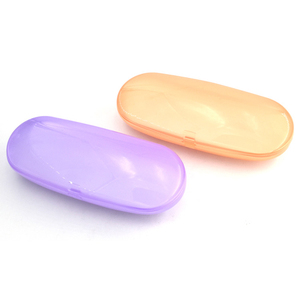
Custom Logo Graphic Iris Soft Circle Lenses
High-demand aesthetic circle lenses featuring ultra-smooth rounded edge profiling, optimized sagittal depth, and 38%-42% hydrogel hydration for maximum ocular oxygenation.
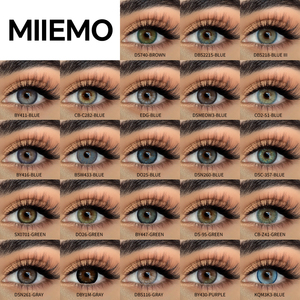
MIIEMO Pro Penni Soft Natural Circle Lenses
Ultra-thin bio-compatible hydrogel lens displaying an organic graduated limbal ring design that simulates authentic iris depth and enhances ocular luminance without pupillary interference.
China & South Korea Circle Lens Manufacturing Dynamics
A rigorous examination of polymer synthesis, optical precision cast molding, microscopic color encapsulation, and regulatory risk mitigation for international medical device distributors.
Polymer Material Science
Modern circle lens manufacturing relies on cross-linked hydrogels such as Poly-2-hydroxyethyl methacrylate (pHEMA), Polymacon, and third-generation fluoro-silicone hydrogels. Formulations balance equilibrium water content with tensile modulus.
- Equilibrium Water Content: 38% – 43%
- High Oxygen Permeability (Dk/t: 12 - 28)
- Low Protein Adsorption Index
Cast Molding vs. Lathe Cutting
Full cast-molding technology employs sub-micron CNC-machined steel and optical inserts. Liquid monomers are dispensed into disposable polymer molds and photopolymerized under ultraviolet irradiance for uniform surface geometry.
- Nanometer Profile Repeatability
- Aspheric Peripheral Edge Profiling
- Minimal Center Thickness (0.04 - 0.08mm)
Sandwich Color Isolation
To eliminate direct ocular contact with colorants, biocompatible micro-pigments (iron oxides, titanium dioxide, phthalocyanines) are completely embedded between two distinct layers of optical polymer via advanced pad printing.
- Zero Pigment Leaching (ISO 10993 compliant)
- Ultra-Smooth Frontal & Posterior Tangents
- Natural Micro-Dot Tint Matrix Density
1. The Industrial Synergy of China & South Korea Circle Lens Supply Chains
The global circle lens sector has consolidated around an integrated manufacturing paradigm connecting the aesthetic research centers of South Korea with the high-throughput, cleanroom-automated cast-molding infrastructures of China. South Korea has historically spearheaded cosmetic lens culture, establishing the world-renowned "circle lens" format characterized by an enlarged limbal ring (typically 14.0mm to 14.8mm graphic diameters) designed to provide ocular enhancement and iris depth. Meanwhile, leading Chinese manufacturers have deployed multi-million dollar cleanroom facilities featuring continuous automated optical inspection (AOI), robotic blister packaging lines, and validated autoclave sterilization systems conforming to ISO 11137 and ISO 17665.
By leveraging this cross-border dynamic, global optical brands obtain the best of both regions: South Korea's nuanced cosmetic gradients, micro-fine dot patterns, and multi-tone iris depth, fused with China's economies of scale, tight physical tolerances, and ultra-flexible batch customization. In particular, modern factories have decoupled the traditional 5,000-piece Minimum Order Quantity (MOQ) barrier, introducing modular low-volume pilot programs (starting from 100 to 500 pairs per design) that enable optical startups and regional e-commerce powerhouses to test trending color palettes with low working capital exposure.
2. Engineering Matrix: Optical Parameters & Mechanical Tolerances
Ensuring physiological corneal health while delivering vibrant cosmetic transformation requires precise control over sagittal height, center thickness, and tear exchange pathways. Below is the standard engineering baseline applied across export-grade cosmetic circle lenses:
| Physical Parameter | Standard Specifications | Medical Significance / Quality Target |
|---|---|---|
| Base Curve (BC) | 8.50 mm – 8.70 mm (±0.10 mm) | Ensures stable lens centering over the corneal apex; prevents mechanical limbal impingement and excessive movement. |
| Diameter (DIA) | 14.00 mm – 14.50 mm (±0.20 mm) | Provides total corneal coverage with optimal peripheral edge lift for continuous post-lens tear replenishment during blinking. |
| Graphic Diameter (GDIA) | 13.00 mm – 14.20 mm | Determines the cosmetic enlargement effect; engineered with transparent optic zones (≥5.5mm) to prevent pupil vignetting in low light. |
| Center Thickness (CT) | 0.06 mm – 0.08 mm (±0.01 mm) | Optimized to minimize corneal barrier resistance, promoting continuous oxygen transmissibility (Dk/t) without compromising mechanical durability. |
| Water Content | 38% – 43% Poly-HEMA Matrix | Maintains consistent on-eye dimensional stability; balances all-day hydration while preventing dehydration-induced corneal staining. |
| Power Range (Sphere) | 0.00D to -10.00D (0.25D/0.50D steps) | Single-vision corrective optical zones manufactured via precision aspheric tool inserts for minimized spherical aberration. |
3. Future Sourcing & Procurement Trends (2025–2030)
Procurement directors and private-label brand owners must navigate significant technological and regulatory evolutions occurring in the decorative contact lens supply chain:
Accelerated Shift to Silicone Hydrogel (SiHy) Daily Disposables: While annual and monthly Poly-HEMA lenses remain dominant in cost-conscious retail channels, the international consumer market is gravitating rapidly toward daily disposable modalities with higher oxygen flux (Dk/t > 80). Silicon hydrogel formulations alleviate long-term hypoxic stress, permitting comfortable extended wear. Modern OEM plants are retooling cast-molding cells with automated plasma surface treatment lines to improve hydrophilicity and wettability across silicone-rich substrates.
Sub-Micron Digital Inkjet Printing for Iris Customization: Traditional pad printing using silicone tampon heads is being supplemented by automated multi-nozzle piezo digital inkjet printing. This technology allows high-definition, 1200 DPI photographic iris reconstruction with hyper-realistic chromatic variation. More importantly, digital printing eliminates mechanical cliché plate tooling, reducing design turnaround times from weeks to 48 hours for rapid sample verification.
Strict Enforcement of EU MDR Annex XVI & Global Barcode Traceability: Decorative contact lenses without an intended medical corrective purpose are classified as medical devices under Annex XVI of European Regulation (EU) 2017/745 (EU MDR). Importers require full technical documentation (GSPR matrices, biocompatibility datasets per ISO 10993, leachability testing, and clinical evaluations). Furthermore, mandatory implementation of Unique Device Identification (UDI-DI/UDI-PI) with serialized 2D DataMatrix packaging barcodes has become standard across European, US, and East Asian customs gateways.
Why International Brands Choose Our Manufacturing Infrastructure
We combine advanced cleanroom manufacturing with comprehensive regulatory dossier support, providing private-label partners with a seamless journey from design conceptualization to shelf-ready delivery.
Full Regulatory Dossier
We supply validated CE, ISO 13485, CFDA/NMPA, and FDA 510(k)-ready technical files. Every batch ships with an authentic Certificate of Analysis (CoA), biological safety evaluations, and biocompatibility verification reports.
Turnkey OEM / ODM Solutions
From primary blister foil packaging and sterile glass vial sealing to secondary luxury folding cartons with custom holographic security labels, our packaging engineers deliver complete shelf-ready branded SKUs.
Rapid In-House Prototyping
Our dedicated optical prototyping studio creates custom graphic mockups within 24 hours and delivers physical sampled lenses within 7 to 14 business days, significantly compressing your product development cycle.
Global DDP Fulfillment
We provide full logistics management with direct customs-cleared air freight and maritime shipping solutions, handling international import protocols, tariff classifications, and localized warehouse drops.
Frequently Asked Questions for Global Circle Lens Sourcing
Key technical, regulatory, and production insights to streamline your procurement review.
What is the Minimum Order Quantity (MOQ) for custom private label circle lenses?
How do your manufacturing facilities guarantee zero pigment leakage?
What technical documentation is provided to support EU MDR 2017/745 Annex XVI compliance?
What are the standard lead times for custom sampling versus mass production?
Can lenses be produced with astigmatism (Toric) or multifocal optical zones?
What primary packaging configurations are available for export orders?
Partner with an Authoritative Circle Lens Manufacturer
Schedule an engineering consultation with our optical specialists to review technical dossiers, discuss custom private label packaging, or request sample kits for market evaluation.
Contact Us