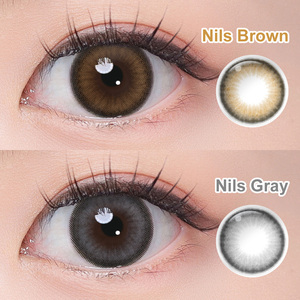
Curated Inventory
High-Turnover Color Formulations & Turnkey Private Label Series
Pre-validated optical hydrogel matrices, dual-encapsulated color architectures, and sterile secondary packaging suites engineered for retail-ready distribution.
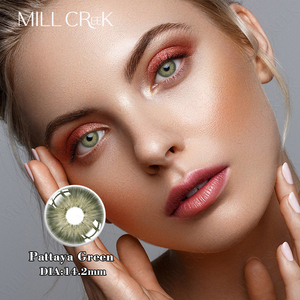
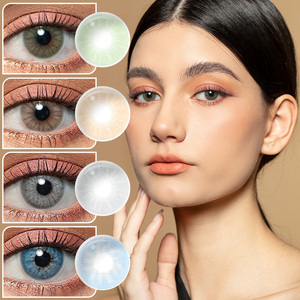
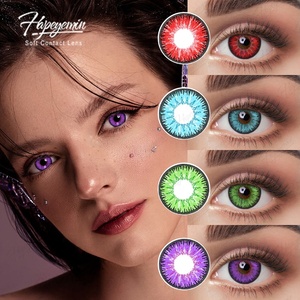
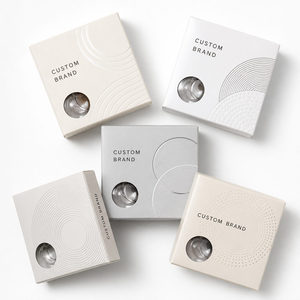
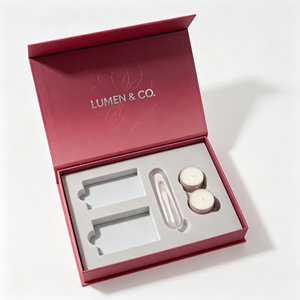
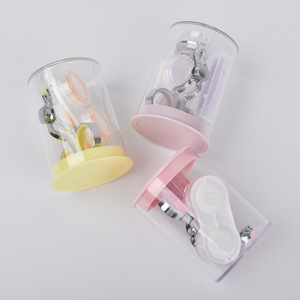
500+
Stock Iris Geometries & Molds
100
Pairs Low-Risk Pilot MOQ
ISO 13485
Class III Cleanroom Manufacturing
100%
Sandwich Pigment Encapsulation
Enterprise Strengths
Why Tier-1 Global Distributors Partner With Miomiconlens
Combining high-throughput cast-molding infrastructure with German-standard regulatory compliance and precision dot-matrix pigment engineering.
The global cosmetic contact lens sector has undergone a fundamental transformation. Cosmetic lenses are no longer simply beauty accessories; under modern international regulatory frameworks—such as EU MDR 2017/745 Annex XVI, US FDA 510(k), and China NMPA Class III—they are strictly audited as non-corrective medical devices. Sourcing from non-compliant suppliers presents severe cross-border risks, including port-of-entry impoundment, regulatory fines, and reputational brand damage.
As a leading China OEM/ODM manufacturer and exporter, Miomiconlens integrates high-volume cast molding, automated dry/wet optical inspection, and full-stack regulatory dossier support. Whether catering to German optician chains requiring LUCID-compliant secondary packaging and bilingual German/English Instructions for Use (IFU), or fast-scaling D2C makeup labels needing agile 100-pair micro-batch validations, our production network operates under comprehensive traceability protocols.
Proprietary Sandwich Encapsulation
Our automated color-printing technology isolates organic dyes between micro-thin biocompatible HEMA/poly-HEMA hydrogel layers. Color pigments never touch the cornea or palpebral conjunctiva, eliminating cytotoxicity risks and pigment leeching during prolonged wearing schedules.
Full EU MDR & Technical File Provision
We provide full manufacturer-side technical dossiers: ISO 13485 quality systems, bio-burden validations, shelf-life real-time stability reports, extractables/leachables data, and sterile barrier testing (ISO 11607) for swift European Authorized Representative (EC REP) sign-off.
Turnkey Brand Acceleration (MOQ 100)
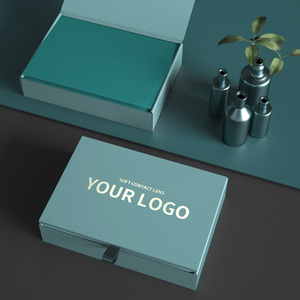
Bridge the gap between custom concept and retail shelf. We support emerging optical founders with 100-pair private-label batch runs, FSC-certified kraft/die-cut folding cartons, sterile blister sealing, tamper-evident labeling, and global DDP express fulfillment directly to target fulfillment centers.
Industry Whitepaper
Future Procurement Trends in Cosmetic Contact Lenses (2026–2030)
Strategic market analysis on material transitions, biometric comfort algorithms, and shifting distribution compliance.
Procurement teams navigating the cosmetic lens market are moving away from commodity purchasing toward technical differentiation. The standard 38%–42% water content HEMA hydrogel vial lens, while remaining cost-effective for annual replacement cycles in emerging regions, is ceding significant volume to high-Dk/t silicone hydrogels and daily disposables across developed Western and East Asian retail segments.
Silicone Hydrogel (SiHy) Migration
Demand for high oxygen permeability (Dk/t > 80) in color-printed contact lenses has surged by 42% year-on-year. Procurement channels are transitioning toward third-generation silicone hydrogel macromers that preserve surface wettability without requiring plasma treatments or chemical wetting agents.
Daily Disposable Dominance
Ocular hygiene awareness has accelerated the phase-out of annual vial lenses in Europe and North America. Daily disposable (1-Day) color blisters now represent the highest-margin segment, reducing consumer risks associated with microbial keratitis and case contamination.
Biomimetic Gradient Printing
Consumers reject flat, pixelated color rings. The prevailing aesthetic requires 3-tone and 4-tone variable dot-pitch structures that emulate the natural depth, crypts, and contraction furrows of human irises, accommodating diverse baseline dark-eye and light-eye color tones without artificial glare.
Sourcing Intelligence
Frequently Asked Questions by OEM/ODM Buyers
Authoritative answers addressing quality management, low MOQs, European compliance, and customized production.
What are the legal compliance prerequisites for importing cosmetic contact lenses into the EU under MDR?
Under Regulation (EU) 2017/745, non-corrective cosmetic lenses are classified under Annex XVI, subjecting them to medical device conformity routes equivalent to corrective lenses. Importers must hold a comprehensive Technical File from the manufacturer containing ISO 13485 certification, biocompatibility evaluation (ISO 10993 series), sterilization validation (ISO 11137 / ISO 17665), and clinical evaluation reports. Furthermore, packaging must adhere to UDI (Unique Device Identification) barcode protocols and include bilingual Instructions for Use (IFU) with the designated European Authorized Representative (EC REP) clearly stated.
How does your factory ensure the pigment layer never contacts the human cornea?
We utilize high-precision cast molding paired with fully automated pad-printing encapsulation technology. During production, a base optical monomer layer is cast into the mold cavity. The non-toxic, biocompatible mineral pigments are applied via precision micro-dot transfer, followed immediately by an enclosing monomer layer before thermal or UV polymerization. This seals the color matrix inside the lens substrate, guaranteeing that the surface touching both the corneal epithelium and the eyelid tarsal conjunctiva is 100% medical-grade hydrogel with zero pigment exposure.
Can a startup brand customize custom iris patterns and primary packaging with a low initial MOQ?
Yes. Our small-batch OEM acceleration framework allows brand founders to select from over 500 validated stock iris designs with MOQs starting at only 100 pairs per SKU. For fully custom pattern creation (unique PSD/AI artwork, proprietary diameter, base curve, or tint profile), our precision steel mold tooling program requires a pilot run starting at 1,000–3,000 pairs depending on parameters, complete with customized blister foil printing, magnetic rigid boxes, or kraft folding cartons.
What is the shelf-life stability of sealed blister vs. glass vial packaging?
Both our pharmaceutical-grade borosilicate glass vials (crimped with medical aluminum-plastic seals) and automated polypropylene blister packs (sealed with medical-grade foil laminate) are validated for a sterile shelf-life of 3 to 5 years, depending on the preservative-free saline formulation and polymer type. Real-time and accelerated stability testing reports according to ISO 11987 are supplied with batch Release of Certificates (CoA).
What shipping terms and Incoterms are available for European and North American consignments?
We offer full logistics flexibility, including EXW, FOB (Shanghai/Shenzhen/Hong Kong), CIF, and turnkey DAP/DDP terms via air freight or express courier (DHL, FedEx, UPS). For established brands, we coordinate with your designated freight forwarders to manage smooth customs clearance, supply LUCID packaging weight documentation for Germany, and streamline all export Declarations of Conformity.
Launch Your Private Label Cosmetic Lens Collection
Consult with our optical engineers, access our full 500+ design catalog, or request physical OEM verification samples and regulatory technical documentation today.
Send an Inquiry