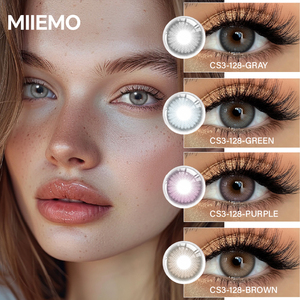
OEM ODM Custom Logo Colored Contact Lenses Private Label Beauty Eye Lenses
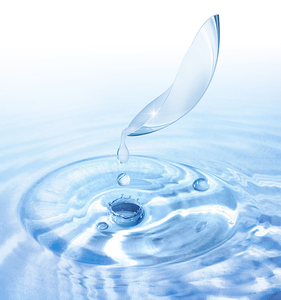
Contact Lenses Clear Prescription Myopia With Power Eye 40% Water HEMA
Hot Selling Designs Color Lens Soft Customized Logo Contact Lenses
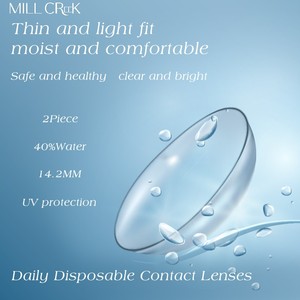
Wholesale Daily Disposable Transparent Clear Contact Lenses UV Defense
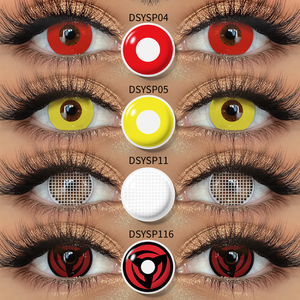
Factory Crazy Colored Contact Lenses for Cosplay and Halloween
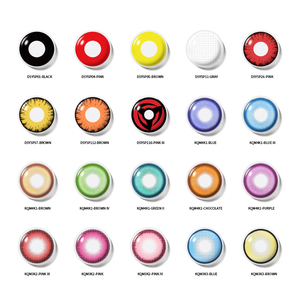
MIIEMO 2.0 Series 3 Tone Color Soft Contact Lenses 38% Water 14.2mm
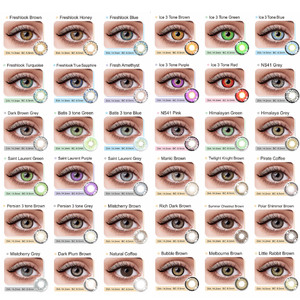
Haipurecon Factory Direct Wholesale Lenses $0.99 / Pair MOQ 500 Pairs

Christmas Holiday Themed Colored Contact Lenses Wholesale OEM/ODM
As a dominant force within China's medical device manufacturing landscape, modern contact lens fabrication requires uncompromising adherence to ISO 13485:2016 quality management standards, strict GMP guidelines, and cleanroom disciplines equivalent to Class 100,000 (ISO Class 8) or Class 10,000 (ISO Class 7). The paradigm of contract manufacturing for hydrogel and silicone-hydrogel optical medical devices has shifted: enterprise advantage is no longer merely defined by labor arbitrate, but by automated micromachining, computer-controlled polymer casting, and automated visual inspection systems (AOI) capable of micron-level defect resolution.
Proprietary Color-Lock Sandwich Tech
Unlike sub-standard pad-printed lenses where pigments come into contact with corneal tissue, our proprietary multi-layer sandwich encapsulating technology seals bio-inert pigments strictly within the internal polymer matrix. The corneal epithelial layer and palpebral conjunctiva interact exclusively with biocompatible, ultra-hydrated HEMA or silicone-hydrogel surfaces.
Cast Molding Automation & Diamond Tooling
Operating high-speed cast-molding cells driven by ultra-precision nano-lathe cut steel/nickel molds, our production tolerances maintain a radial variance within ±0.01 mm. This level of repeatability eliminates peripheral power aberrations, minimizes sagittal height inconsistencies, and guarantees identical edge-lift geometry across high-volume production runs.
Agile Small-Batch OEM to Mass Scale
To alleviate commercial risk for boutique optical retailers, digital native cosmetic startups, and regional distributors, we deploy agile pilot manufacturing pipelines. Starting from low minimums of 100 pairs per design, brands can validate market demand before transitioning effortlessly to automated mass blistering runs exceeding 5,000,000 units monthly.
Navigating the evolving regulatory framework for contact lenses—classified as Class IIa or Class IIb medical devices globally, and explicitly included under Annex XVI of Regulation (EU) 2017/745 (EU MDR) for plano cosmetic lenses—demands an experienced contract manufacturer. Our regulatory affairs department furnishes comprehensive technical documentation: biocompatibility evaluations (ISO 10993-series cytotoxicity, ocular irritation, systemic toxicity), extractables/leachables chemistry panels, accelerated and real-time 5-year shelf-life stability validations, and bilingual (English/German/French/Spanish) packaging label generation compatible with GS1-128 and Unique Device Identification (UDI) mandates.
Procurement directors and B2B buyers must anticipate shifting geopolitical dynamics, evolving raw material formulations, and shifting retail channels. The transition from legacy traditional hydrogels (poly-2-hydroxyethyl methacrylate / pHEMA) toward next-generation fluoro-silicone hydrogels represents the single most consequential technological transition in contact lens wholesale sourcing today.
| Performance Dimension | Legacy HEMA Hydrogel | Silicone Hydrogel (SiHy Gen III) | Strategic Procurement Impact |
|---|---|---|---|
| Oxygen Transmissibility (Dk/t) | 18 – 28 × 10-9 Fatt units | 85 – 130 × 10-9 Fatt units | SiHy reduces corneal hypoxia; mandatory for extended-wear premium positioning. |
| Water Content Equilibrium | 38% – 58% (Water-dependent Dk) | 33% – 48% (Siloxane-phase Dk) | SiHy maintains hydration via low modulus without drawing moisture from the tear film. |
| B2B Unit Production Cost | Baseline Competitive Factor ($) | +25% to +40% Premium Index | HEMA remains ideal for cosmetic/party retail; SiHy captures medical optometry segments. |
| Wear Modality Trajectory | Transitioning to Daily Disposable | Dominating 1-Day & 30-Day Disposables | Bulk procurement of daily packaging continues to grow at an 8.4% CAGR globally. |
| Surface Wettability / Lubricity | Inherently hydrophilic | Requires Plasma or Internal PVP/HA | Next-gen factories co-polymerize non-ionic surfactants directly into the monomer blend. |
1. Daily Disposable Dominance in Private Label: Global ophthalmic data shows daily disposable contact lenses now represent over 62% of consumer demand in mature markets (North America, Western Europe, Japan). Wholesalers are shifting inventory capital away from annual vials toward 10-pack, 30-pack, and 90-pack blister packaging architectures with integrated moisture strips and hyaluronic acid (HA) soaking agents.
2. Micro-Dot Optical Formulations: Wholesale buyers of cosmetic color lenses are demanding ultra-fine sub-pixel dot-matrix printing. Traditional flat color patches fail on diverse natural iris colors (from deep Fitzpatrick grade brown to pale European blue). Our advanced matrix uses 3D micro-halos and biomimetic limbal margins that seamlessly blend with existing eye morphology, eliminating the "artificial flat eye" aesthetic.
3. Supply Chain Near-Shaping & Automated Buffering: To mitigate oceanic logistics volatility, leading brand aggregators maintain contract stocking arrangements where Chinese manufacturing hubs pre-cast and store unsterilized lens inventories in hydration-ready intermediate formats. Final coloring, blistering, private-label box foil stamping, and terminal autoclave cycles are completed upon receiving dynamic EDI purchase triggers.
Modern contact lens manufacturing sits at the intersection of polymer chemistry, fluid dynamics, and optometry. Achieving high oxygen transmission without elevating lens stiffness (Young's Modulus) has historically remained a fundamental chemical hurdle. When siloxane moieties are integrated to transport oxygen, the resulting polymer matrix exhibits natural hydrophobicity, increasing lipid deposition and subjective ocular dryness.
Plasma Surface Modification & Co-Polymerization
Our laboratories employ cold atmospheric plasma (CAP) activation and integrated hydrophilic brush grafting. This process chemically alters the siloxane bond terminals at the interface, generating a persistent hydrophilic boundary layer with sessile water contact angles below 35°, without requiring external wetting drop solutions.
Aspheric Edge Contouring Engineering
Corneal staining and papillary conjunctivitis are frequently triggered by poor lens peripheral geometry. Our precision CNC mold tooling yields a tapered continuous-curve posterior edge bevel. This facilitates rapid post-blink tear exchange beneath the optic zone, flushing cellular debris and maintaining aerobic epithelial metabolism.
Integrated HEV Blue Light & UV Filtration
With digital asthenopia and prolonged screen exposure impacting consumers worldwide, we co-inject UV-absorbing monomers (Class 1 blocking: 90% UVA, 99% UVB) combined with selective 415–455 nm High-Energy Visible (HEV) blue-blocking compounds directly into both cosmetic and clear corrective masterbatches.
Looking toward the horizon of wearable ocular health, China's research consortiums and contract manufacturing infrastructure are actively testing the embedding of micro-sensor circuits for non-invasive intraocular pressure (IOP) tracking for glaucoma management, as well as tear-glucose monitoring microfluidics. As these smart lenses clear multi-center clinical trials, our facility's cast-molding encapsulation architecture is engineered to integrate micro-circuit substrates without compromising lens hydration or optical fidelity.
Our flexible program accommodates two sourcing routes: (1) Agile Small-Batch OEM: Utilizes pre-validated proprietary ODM patterns with custom exterior brand box packaging starting at just 100 to 500 pairs per SKU. (2) Bespoke Custom Master-Mold ODM: For unique proprietary color matrices, base curves, or private print screens, our typical threshold begins at 5,000 to 10,000 pairs, accompanied by pilot sampling verification rounds.
We use an automated semi-cast sandwich encapsulation protocol. Certified pharmaceutical-grade organic pigments (iron oxides, phthalocyanines, titanium dioxide) are sealed entirely between anterior and posterior polymer layers. Lenses undergo rigorous organic solvent extraction testing (USP <87> and <88>) to ensure zero trace migration, supported by cytotoxicity and systemic safety certificates.
Under Regulation (EU) 2017/745, non-corrective cosmetic lenses must fulfill clinical evaluation and risk-management criteria identical to prescription medical devices. We supply complete Technical Dossiers: ISO 13485 declarations, Common Specifications (CS) conformity matrices, biocompatibility datasets, residual EO/monomer gas chromatography assays, and label compliance files containing designated UDI carrier formats.
Yes. Our in-house packaging prepress studio delivers turnkey localized artwork. We handle typography, regulatory iconography, warning declarations, and traceability barcodes in German, English, French, Spanish, Arabic, and Japanese. We also supply packaging tare weights and material safety data sheets (MSDS) for national environmental systems like Germany's VerpackG (LUCID).
Standard OEM lead times range from 20 to 35 business days following digital proof and sampling approvals, with expedited 12-day turnaround available for in-stock catalog formulations. Goods are dispatched internationally under Incoterms 2020 (FOB, CIF, DAP, or DDP) via temperature-regulated express air cargo (DHL/FedEx/UPS) or dedicated sea freight containers, complete with verified sterile barrier packaging integrity.
Every production batch undergoes a 5-stage quality audit: (1) Automated Optical Inspection (AOI) checking 100% of lenses for edge tears, bubbles, or surface debris; (2) Laser-interferometric optical power mapping; (3) Water-content and refractive index validation; (4) Blister peel-strength and seal-burst testing; and (5) Biological indicator autoclave sterility confirmation (121°C moist-heat terminal cycle).
Ready to Scale Your Private-Label Contact Lens Brand?
Consult directly with our engineering and regulatory affairs team. Whether you need small-batch market testing or millions of daily disposable blisters, we provide competitive factory pricing, comprehensive compliance dossiers, and rapid prototyping.