High-Performance Contact Lens Lines & OEM Packaging
Explore our export-ready contact lenses engineered with advanced poly-HEMA hydrogel, ultra-smooth cast-molded edge geometries, and custom secondary packaging solutions.
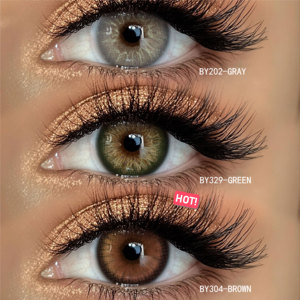
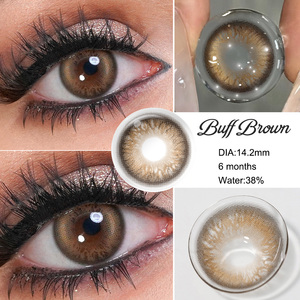
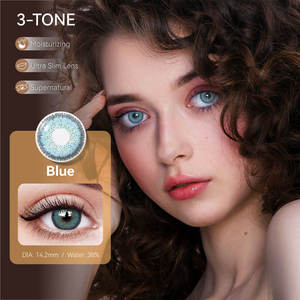
Precision Cast-Molding & Bio-Compatible Ocular Engineering
Shenzhen's optoelectronic and medical device ecosystem drives significant efficiency in ophthalmic hydrogel manufacturing. Discover how our cleanroom facilities produce precision ocular medical devices.
Pigment Sandwich Isolation
Unlike lower-grade cosmetic lenses where reactive dyes contact corneal tissue, our sandwich process embeds micro-pigments completely between two layers of bio-hydrogel material, guaranteeing 0% pigment migration.
- Zero corneal staining risk
- Smooth non-ionic polymer surface
- Meets ISO 10993 cytotoxicity protocols
Automated Full Cast Molding
Using single-use precision quartz master molds, our automated assembly yields ultra-consistent edge profiles (0.04mm to 0.08mm edge bevel), eliminating friction during mechanical blinking cycles.
- High geometric repeatability
- Zero lathe-cutting surface abrasions
- High-yield production up to 10M units/month
Sub-Micron AOI Inspection
Every single lens passes through high-resolution CCD Automated Optical Inspection (AOI) stations that identify edge serrations, center thickness deviations, and pigment offset under polarized lighting.
- 100% optical clearance validation
- Batch tracing and UDI serial linking
- Autoclave terminal sterilization at 121°C
| Evaluation Parameter | Conventional Lathe-Cut OEM | Standard Cast Molded Units | Shenzhen Miomiconlens High-Precision Standard |
|---|---|---|---|
| Pigment Placement | Surface printing (High abrasion risk) | Single-coated encapsulation | Dual-Layer Pure Sandwich Matrix (Zero Corneal Contact) |
| Water Content Nominal | 35% - 38% (Rigid feel) | 38% - 40% (Medium hydration) | 38% – 58% Optimized Water/Dk Hydrogel Curves |
| Oxygen Permeability (Dk) | 8.5 × 10⁻¹¹ | 11.0 × 10⁻¹¹ | Up to 24.5 × 10⁻¹¹ (Silicone Hydrogel Available) |
| Edge Profile Finish | Stepped contour (Induces eyelid friction) | Standard round bevel | Dynamic Micro-Tapered Contour (All-day Blink Comfort) |
| Custom Brand Minimums | 3,000 – 5,000 Pairs/SKU | 1,000 Pairs/SKU | From 100 Pairs/SKU (Agile Small-Batch Program) |
Emerging Procurement Trends for Global Eyewear Brands
Optical supply chain procurement models are undergoing significant transformations. Below is a strategic assessment for B2B distributors, optometrist networks, and direct-to-consumer (D2C) brands navigating current market dynamics.
1. Shift Toward Low MOQ Small-Batch Test Launches
Traditional mass manufacturing required commitments of 5,000 units per color shade, tying up capital and elevating inventory risk. Leading global brands now prioritize Chinese manufacturing partners offering agile MOQs from 100 pairs. This allows brands to test 10 to 20 seasonal color palettes simultaneously, gathering real-time D2C checkout data before initiating high-volume reorders.
2. Rise of High-Dk Silicone Hydrogel in Color Segments
Cosmetic lenses historically relied on basic HEMA monomers with lower oxygen transmissibility. The current procurement landscape is aggressively pivoting toward Silicone-Hydrogel (SiHy) formulations. Buyers seek lenses that support extended 12-hour comfortable wear times without corneal hypoxia, pairing eye cosmetic aesthetics with genuine clinical-grade ocular health.
3. Sustainable Primary & Secondary Packaging Mandates
With regulations like Germany’s VerpackG (LUCID) and EU EPR directives, international buyers require zero-plastic or reduced-plastic packaging. Supply chains are transitioning from bulky plastic cases to recyclable FSC-certified kraft paper boxes, compact PP blister packs with minimal aluminum foil tear weights, and non-toxic soy-based ink printing.
4. Strict EU MDR Annex XVI Conformity Preparedness
Since the enforcement of EU MDR Regulation (EU) 2017/745, non-corrective cosmetic lenses have been reclassified under Annex XVI, requiring rigorous technical dossiers, clinical data, and Notified Body audits. Overseas importers now demand direct factory assistance: full ISO 13485 audit trail logs, UDI traceability, biological risk assessments, and bilingual IFU translations.
5. Multi-Curve Toric & Myopia Color Customization
Cosmetic lenses are no longer restricted to 0.00 plano aesthetic users. The demand for prescription-integrated colored lenses (-0.50 to -10.00 diopters, plus cylinder astigmatism correction) has grown rapidly. Modern factories must balance intricate iris dot printing with precise optical power grinding in high-volume, automated workflows.
6. Turnkey Private Label Kitting & Direct-to-Port Delivery
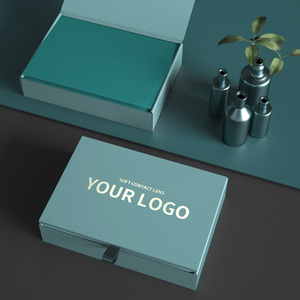
Brand operators increasingly outsource secondary packaging and fulfillment. Procurement contracts now encompass customized rigid magnetic gift sets, retail-ready barcode labeling, custom solution bottles, and certified blister insertion, enabling shipments to move directly from Shenzhen cargo hubs to consumer-facing fulfillment centers.
Next-Generation Lens Formulation & Design Innovations
In the highly competitive ocular cosmetics sector, product differentiation relies heavily on polymer chemistry and precision optical engineering. Here is how forward-thinking factories are refining next-generation contact lens platforms.
Dual-Action Moisture Reservoirs
Next-generation cast-molding incorporates Sodium Hyaluronate (HA) and Trehalose directly into the saline storage medium and lens matrix. This creates a sustained wetting agent barrier that reduces tear evaporation and maintains lipid layer stability throughout demanding screen-time sessions.
- High wettability with low contact angles (<25°)
- Resists protein & lipid accumulation
- Maintains hydration in air-conditioned environments
Integrated UV400 & HEV Blue Filtering
With digital screen use and outdoor UV exposure at all-time highs, functional contact lenses now integrate Class II UV blockers (>95% UVB, >70% UVA) directly into the monomer formulation. Advanced lines incorporate high-energy visible (HEV) blue light absorption without compromising iris tint clarity.
- Class I / II UV protection compliance
- Protects retinal pigment epithelium
- Crystal-clear optical zone clarity
3D Micro-Dot Realistic Iris Gradient
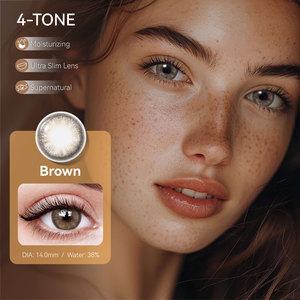
Early cosmetic contacts had an unnatural, flat appearance. Modern R&D leverages multi-tone variable density micro-dotting (down to 15-micron droplet resolution). The dot density gradually fades toward the central pupil zone, allowing the wearer's authentic iris texture to blend seamlessly with the lens pigment.
- Natural 3-tone & 4-tone stereoscopic depth
- Feathered limbal ring for natural enlargement
- Consistent 5.5mm–6.5mm clear optical pupil aperture
Why Tier-1 Optical Brands Source via Shenzhen Supply Chains
Combining the Pearl River Delta's robust injection mold tooling, rapid automation development, and strict ISO 13485 cleanroom operations provides our B2B partners with measurable production advantages.
Frequently Asked Questions for B2B Contact Lens Sourcing
Detailed technical and operational answers to address common inquiries regarding batch manufacturing, regulatory verification, order minimums, and worldwide distribution logistics.
Q1 What is the standard minimum order quantity (MOQ) for custom private-label lenses?
For existing catalog patterns in our standard packaging, MOQ begins at 100 pairs per design. For completely bespoke client-designed iris patterns, customized blister foils, or specialized diopter curves, the entry-level batch run typically starts around 500 to 1,000 pairs, maintaining an accessible threshold for growing eyewear and cosmetic brands.
Q2 How does the factory ensure regulatory compliance with EU MDR Annex XVI for non-corrective lenses?
Under Regulation (EU) 2017/745, non-corrective cosmetic lenses must meet the same stringent standards as prescription lenses. We supply our clients with comprehensive technical documentation: ISO 13485 quality systems, biological risk evaluations (ISO 10993 cytotoxicity, sensitization, ocular irritation), stability test logs, and packaging artwork templates featuring allocated spaces for UDI barcodes and authorized European Representative (EC REP) notations.
Q3 What are the shelf life and sterilization parameters for your hydrogel contact lenses?
Our lenses undergo terminal moist heat steam autoclaving at 121°C (250°F) for a validated dwell period exceeding 20 minutes inside sealed PP blister packs or pharmaceutical-grade glass vials. This provides a validated 5-year sterile shelf life under standard storage conditions, with real-time and accelerated aging stability reports available for review.
Q4 Can we customize the base curve (BC), diameter (DIA), and optical power ranges?
Yes. Our standard manufacturing parameters are Base Curve 8.5mm to 8.6mm and Total Diameter 14.0mm to 14.5mm, which fit approximately 90% of global eye geometries. For customized production runs, base curves can be adjusted between 8.4mm and 8.8mm, diameters from 13.8mm to 15.0mm (including mini-sclera up to 17.0mm and full-sclera up to 22.0mm), with corrective powers spanning plano (0.00) down to -10.00D.
Q5 How is pigment migration prevented to ensure corneal safety?
We use a proprietary sandwich cast-molding system. The pigment is pad-printed onto an initial bio-polymer base curve matrix. A second layer of poly-HEMA hydrogel is then injected over the pigment layer before high-temperature thermal polymerization. This permanently embeds the color layers inside the lens polymer, ensuring zero direct pigment-to-cornea contact and eliminating dye leaching risks.
Q6 What are the available wear schedules and replacement cycles?
We manufacture four primary replacement schedules tailored to international channel demands: Daily Disposables (1-Day wear, favored for ocular hygiene and convenience), Monthly Disposables (30-Day wear, popular in European markets), Quarterly Disposables (3-Month wear), and Annual Extended Wear Lenses (1-Year wear, packaged primarily in glass vials).
Q7 Can packaging, user manuals (IFU), and labeling be localized in multiple languages?
Yes. Our in-house packaging and artwork team routinely implements compliant packaging for export to Germany, France, Japan, the Middle East, and Latin America. We support German-language (DE), French (FR), Spanish (ES), and multilingual Instructions for Use (IFU), ensuring compliance with regional labeling mandates, recycling icons, batch lot numbers, and expiration dates.
Q8 What is the standard sample policy before placing a bulk OEM order?
We provide sample evaluation kits containing representative lens colors, blister types, and power configurations. This allows your clinical, optometrist, or marketing teams to inspect on-eye movement, hydration retention, color density, and comfort profiles prior to issuing a commercial purchase order.
Q9 What are the production lead times from artwork sign-off to export dispatch?
For catalog ODM patterns using pre-printed stock components, dispatch can be completed within 10 to 14 business days. For full custom private-label OEM runs involving bespoke packaging print runs, foil stamping, and customized diopters, lead times are approximately 25 to 35 calendar days following proof approvals.
Q10 What shipping terms and global logistics pathways are supported?
We provide flexible Incoterms including EXW (Shenzhen), FOB (Shenzhen/Hong Kong), CIF, DAP, and full DDP (Delivered Duty Paid) air freight or sea freight to your regional warehouse. We manage standard customs declarations, non-hazardous cargo transit documentation, and airway bill tracking for smooth clearance.
Launch or Scale Your Contact Lens Brand with Shenzhen’s Premier OEM
Access our library of 500+ proven lens designs, low 100-pair minimum order quantities, and complete ISO 13485 regulatory dossiers. Our multilingual engineering and export team is ready to review your specifications and supply turnkey pricing.