Commercial Product Recommendations & Direct Sourcing Pipeline
Explore our validated, export-grade contact lens series and production line assets. Certified for safety, high oxygen permeability, and dynamic visual clarity.
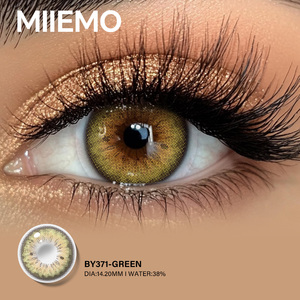
Miiemo Brown Contact Lenses Color Lentes De Contacto Para Miopia Wholesale
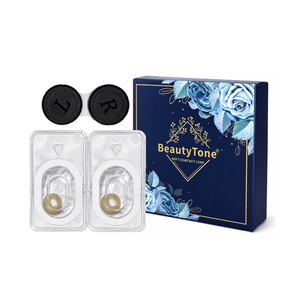
HOT Private Label Customized Design Wholesale Paper Box Colored Contact Lenses OEM Box
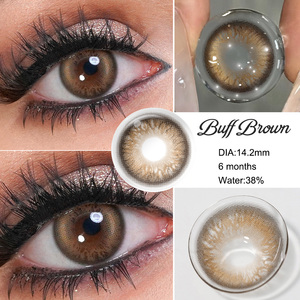
Free Sample MAGISTER Prescription Colored Contacts Myopia Contact Lenses with Power
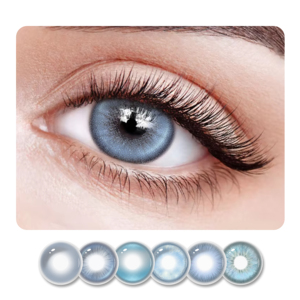
Haipurecon Sweet and Dreamy Blue Color Scheme Beautiful Eyes Annual Wholesale Contacts
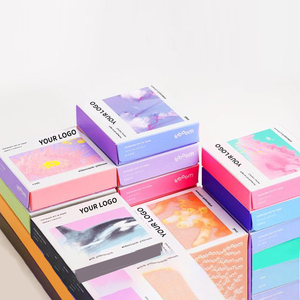
High Quality Private Customized Brand Contact Lens Cosmetic Box Packaging
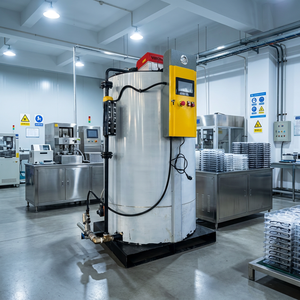
0.3T LPG Fired Fully Automatic Vertical Steam Generator Boiler Lens Production Line
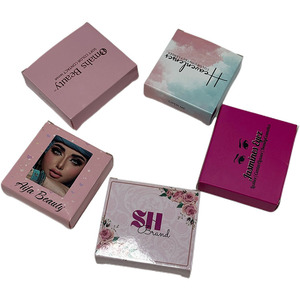
Custom Eye Lens Packing Box Colored Contact Lenses Wholesale Personal Brand Lentes Box
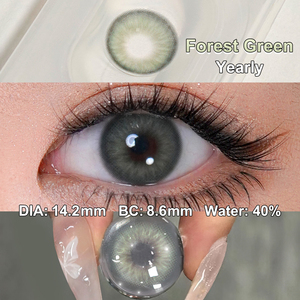
Free Shipping Freshgo 14.20mm Soft Black Contact Lenses 6 Months Beauty Eye Contacts
Industrial Whitepaper: The Evolution of China’s Circle Lens Manufacturing Ecosystem
A comprehensive technical report on high-precision cast molding, biocompatible chromophore stabilization, and medical-grade manufacturing pipelines.
In the contemporary ophthalmic medical device and cosmetic ocular landscape, colored contact lenses—frequently denominated as circle lenses—have transitioned from niche subcultural fashion statements into precision-engineered, high-volume fast-moving consumer health goods (FMCHG). Sourcing agents, optical dispensary chains, and digitally native vertical brands (DNVBs) face an increasingly complex international landscape governed by rigorous safety regulations such as EU MDR (Regulation EU 2017/745 Annex XVI) and US FDA 510(k) premaket notifications.
China has emerged as the global epicenter of circle lens research, development, and mass-scale fabrication. This dominance is underpinned not merely by cost efficiencies, but by capital-intensive investments in Class 100,000 cleanroom environments, closed-loop cast-molding synthesis, and automated machine vision optical inspection (AOI) systems that drastically minimize batch variance.
When selecting a qualified Chinese manufacturing partner, sophisticated procurement teams must scrutinize the supplier’s fundamental polymer chemistry (HEMA vs. Silicone Hydrogel), molding methodologies (Full Cast Mold vs. Semi-Cast vs. Spin-Cast), pigment fixation integrity, and documentation pipelines. The transition from legacy vial packaging toward fully automated aseptic blister sealing represents a pivotal inflection point in international compliance and brand perception.
Strategic Sourcing Trends: The 2025–2030 Contact Lens Procurement Horizon
Actionable predictive intelligence for chief purchasing officers, optical brand directors, and healthcare venture executives.
1. Accelerated Shift to Daily Disposables
Global clinical consensus strongly favors single-use daily disposables (1-Day) over annual modalities. Procurement volumes are rapidly reallocating toward high-speed blister packing lines that offer superior microbiological safety and recurring subscription customer lifetime value (LTV).
2. Silicone Hydrogel (SiHy) Infiltration
While poly-HEMA remains cost-effective for cosmetics, silicone hydrogel formulations featuring oxygen transmissibility rates of Dk/t > 80 Barrer/cm are becoming mandatory in Western European and North American retail optical ecosystems to prevent corneal edema and neo-vascularization.
3. Ultra-Agile Small-Batch OEM
The era of rigid 10,000-unit minimums per SKU is obsolete. Forward-thinking Chinese manufacturing hubs now offer agile micro-runs (from 100 pairs per design). This empowers brands to run rapid multi-variant social commerce split-tests with localized packaging before committing capital.
4. Direct EU MDR & UDI Trackability
Under EU Regulation 2017/745 Annex XVI, non-corrective cosmetic lenses are categorized as Class IIa medical devices. Direct supply integration demands GS1-compliant Unique Device Identification (UDI) barcodes on primary blister foils and technical files ready for immediate Notified Body review.
5. Photoprotective & Comfort Polymers
Ocular wellness integration is paramount. Future production specifications combine Class II UV filtering (blocking ≥70% UVA and ≥95% UVB) with moisture-locking matrix agents such as integrated Hyaluronic Acid (HA) and Poloxamer surfactants blended into the saline packaging matrix.
6. Fully Integrated Sustainable Packaging
Brands now require end-to-end ESG verification. Tier-1 Chinese suppliers provide lightweight, recyclable blister polypropylene cups, aluminium foil cold-form lidding with peel-force optimization (preventing saline spillage), and FSC-certified paper secondary cartons.
Technical Manufacturing Architecture: Cast Molding vs. Legacy Systems
Evaluating edge-profile geometry, optical center aberration control, and colorant encapsulation matrices.
The ocular surface is one of the most sensitive epithelial environments in human physiology. Substandard circle lenses manufactured through crude surface-printing or obsolete spin-casting protocols pose severe pathological risks, including giant papillary conjunctivitis (GPC), corneal micro-abrasions, and hypoxia-induced neovascularization. Elite manufacturers in China leverage high-precision double-sided cast-molding.
The diagrammatic matrix below presents an engineering comparison across primary manufacturing paradigms utilized in colored lens fabrication:
| Evaluation Parameter | Full Cast Molding (Our Standard) | Semi-Cast Lathe Cutting | Legacy Spin-Casting |
|---|---|---|---|
| Pigment Isolation | Sandwich Polymerization (0% Contact) | Surface Pad Print with Polymer Overcoat | External Layer (High Friction Risk) |
| Edge Profile Uniformity | Computer-modeled Beveled Smooth Edge | Mechanical Lathe Polish (Variable) | Asymmetrical Knife-Edge |
| Batch Reproducibility | ±0.02mm Dimensional Variance (AOI Verified) | ±0.06mm Dimensional Variance | ±0.10mm (Highly Sensitive to Viscosity) |
| Optical Center Alignment | Micron-Level Centration via Optical Molds | Subject to secondary chuck centering | Centration drift common during cure |
| Cost per Unit at Scale | Highly Economical (>100k Monthly Capacity) | High Labor Cost, Low Throughput | Low Cost, Sub-standard Quality Profile |
Chromophoric Resolution & Limbal Ring Micro-Optics
Beyond clinical safety, the commercial triumph of circle lenses rests on aesthetic verisimilitude. Consumers reject "pixelated" or artificial ocular patterns. State-of-the-art Chinese manufacturing facilities implement high-definition multi-tone plate engraving (photolithography) capable of laying down graduated 3D dot matrix prints with dots smaller than 25 microns. This allows natural blending between the wearer’s authentic iris stroma and the external limbal defining ring.
Enterprise Strengths & Miomiconlens Infrastructure
Your strategic OEM/ODM partner bridging medical-device manufacturing excellence and rapid private-label commercialization.
Proprietary Wetting Matrices: Tear-Film Bio-Compatibility
Through advanced internal cross-linking technologies, our factories combine 2-Hydroxyethyl methacrylate (HEMA) with hydrophilic co-monomers including N-Vinylpyrrolidone (NVP) and Methacrylic Acid (MAA). This chemical architecture locks water within the core hydrogel structure rather than allowing surface evaporation, substantially reducing end-of-day dryness symptoms for end-users across all climate zones.
Frequently Asked Questions: Global Sourcing & Compliance Guide
In-depth responses to the most critical operational, clinical, and logistical inquiries raised by international procurement teams.
Initiate Your Private Label Circle Lens Sourcing Program
Partner with an internationally certified Chinese manufacturing powerhouse. Connect with our senior optical engineering and export compliance specialists today to receive sample kits, technical dossiers, and volume pricing matrices.