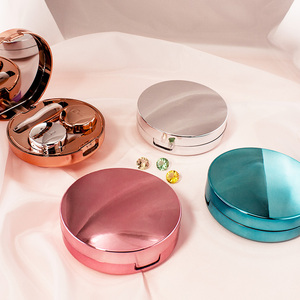
Wholesale Portfolio
Engineered Cosmetic Circle Lenses & Custom Optical Packaging
Direct factory supply featuring 500+ clinical cosmetic patterns, custom moisture-lock poly-HEMA polymers, and turnkey sterile blister packaging solutions designed for rapid brand scaling across North America, Europe, and Asia-Pacific.
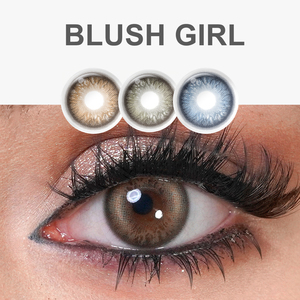
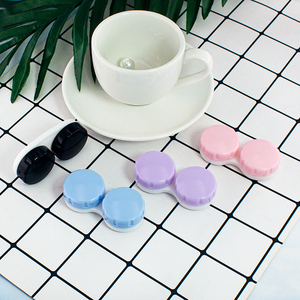
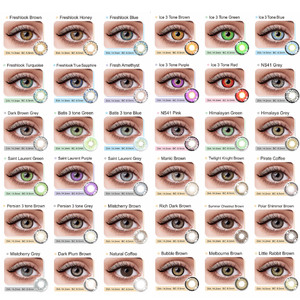
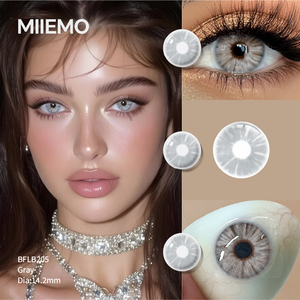
DSC Factory Half Year Disposable Soft HEMA Three Tone ISO 13485 Certified Dream Lenses
Cast-Molding / Semi-Annual
Inquire Now
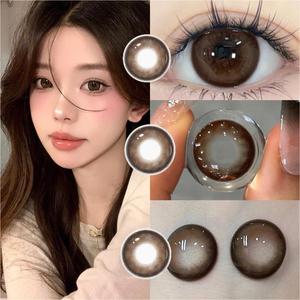
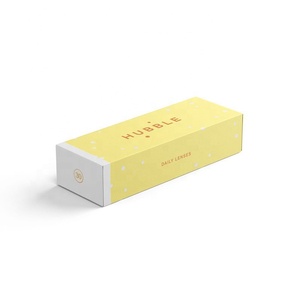
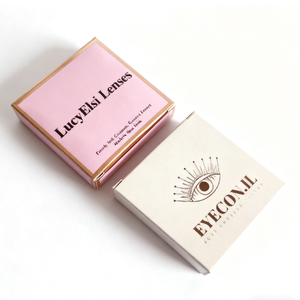
Custom Eco-Friendly Art Paper Eye Contact Lenses Complete Retail Box Set Folders
FSC Certified / Foil Stamp
Inquire Now
500+
Patented Matrix Iris Patterns
100 Pairs
Flexible Small-Batch OEM MOQ
99.8%
Lot-to-Lot Yield & Conformity
ISO 13485
MDR & FDA Standard Manufacturing
Manufacturing Excellence
Why Global Eyewear Brands Partner With Our Factory
Combining class 100,000 cleanroom automation with German optical tooling standards to deliver ocular-safe, hyper-pigmented cosmetic contact lenses with unmatched batch stability.
Triple-Layer Sandwich Micro-Encapsulation
Our automated pigment isolation technology permanently seals cosmetic colorants inside biocompatible poly-HEMA layers. Pigments never directly touch the human corneal endothelium or palpebral conjunctiva, completely eliminating dye degradation and allergic friction risks.
Computerized Full-Cast Molding
Utilizing high-precision digital CNC copper tooling to produce disposable optical molds, each lens achieves smooth spherical aberration correction, thin round edge contours, and consistent base curve adherence (8.5mm to 8.7mm), ensuring day-long tear-film hydration.
Stringent Multi-National Regulatory Dossiers
We supply comprehensive technical documentation files—including biocompatibility cytotoxicity reports (ISO 10993), chemical leachables testing, accelerated stability assessments, and UDI coding support ready for EU MDR (Annex XVI), US FDA 510(k), and Health Canada audits.
Strategic Intelligence
Circle Contact Lens Industry Whitepaper: Technology & Procurement Shifts
An executive overview of evolving polymer chemistry, consumer visual demands, and procurement supply-chain mechanics shaping wholesale optical distribution through 2026–2030.
Polymer Evolution
Silicone Hydrogel & Micro-Matrix Printing
Traditional circle lenses relied on conventional HEMA polymers (Dk/t around 10–15). The emerging global standard has shifted toward high-oxygen silicone hydrogels (Dk/t > 60) combined with non-ionic matrices that resist lipid and protein deposition.
- Nano-Dot Dot Matrix Dispersion: Reduces artificial pupil demarcation, seamlessly blending dark limbal transitions into natural lighter or darker European and Asian iris nuances.
- UV400 Photoprotective Monomers: Integrating class 1 & 2 UV blockers (absorbing >90% UVA and >99% UVB) straight into the hydrogel prepolymer formulation.
- Hydroloc Hydrophilic Surfactants: Locking poly-vinyl pyrrolidone (PVP) into the matrix structure to maintain surface wettability exceeding 14 continuous wearing hours.
Global Procurement
Future Purchasing Trends: Agile Batching & Shorter Cycles
B2B brand buyers, e-commerce direct-to-consumer (DTC) players, and fast-fashion beauty platforms are pivoting away from rigid container-load commitments toward agile supply pipelines.
- The Rise of Daily Disposable (1-Day) Dominance: Driven by consumer hygiene demands, daily modalities are expanding at a 7.2% CAGR, taking market share from annual vials.
- SKU Proliferation with Low Initial MOQs: Procurement executives test 6–12 colorways with pilot batches of 100–300 pairs per SKU before triggering full production runs.
- Consolidated Kit Sourcing: Single-vendor procurement that bundles sterile lenses with custom Pantone-matched travel cases, tweezers, and packaging folders reduces supply chain friction by 35%.
Compliance Mandates
Strict Traceability & EU MDR Annex XVI Barriers
Cosmetic lenses without diopter corrective power are no longer treated as simple beauty accessories. Under EU MDR Regulation 2017/745 Annex XVI, non-corrective lenses face stringent device oversight.
- UDI-DI & Carrier Serialization: Factory-direct implementation of GS1 compliant Datamatrix codes printed onto secondary cartons and individual blister foils.
- German VerpackG / LUCID Preparedness: Complete ecological material weight transparency allowing seamless cross-border packaging declarations.
- End-to-End Sterilization Validation: High-pressure industrial steam autoclaving (121°C for 20+ minutes) backed by biological indicators (Geobacillus stearothermophilus) verification per batch.
B2B Sourcing Handbook
Frequently Asked Questions for Wholesale & Private-Label Buyers
Clear, technical insights to help optical brand founders, category managers, and retail distributors navigate tooling, design formulation, compliance, and shipping logistics.
What are the exact MOQ parameters for OEM custom designs versus factory-stock ODM lenses?
For ODM selections (choosing from our library of 500+ proven graphic iris designs), our small-batch OEM program starts at only 100 pairs per SKU with your custom branded labels and outer packaging. For bespoke custom designs involving custom pad-printing steel cliches, exclusive color blending, or patented diameter configurations (e.g., 14.0mm to 14.8mm), our standard production pilot run is typically 500 to 1,000 pairs per design. This enables high capital efficiency while ensuring optical tooling amortisation.
How do you guarantee color safety and ensure pigments do not migrate to the corneal surface?
We operate an automated sandwich cast-molding encapsulation process. Unlike primitive surface-tinted lenses, our medical-grade colorants (titanium dioxide, phthalocyanine, and iron oxide pigments compliant with US FDA color additive regulations 21 CFR Part 73/74) are embedded between a front base hydrogel layer and a rear cover polymer layer. In-vitro cytotoxicity tests and abrasion rub assessments confirm zero pigment exposure to the corneal epithelium.
Can you support corrective power spans (myopia / prescription diopters) for cosmetic circle lenses?
Yes. We provide complete diopter matrices ranging from 0.00 (plano cosmetic) down to -8.00D (or -10.00D upon request). Power increments are calibrated in 0.25D steps from -1.00 to -5.00, and 0.50D steps from -5.00 to -8.00. Each corrective lens undergoes laser focal meter power testing and interferometric edge verification to ensure zero optical aberration across both central vision fields and peripheral cosmetic zones.
What regulatory documentation do you furnish to support EU MDR or local Ministry of Health clearance?
We furnish comprehensive technical construction files (TCF), including valid ISO 13485:2016 quality management system certificates, CE mark documentation, biological safety test evaluations (ISO 10993: cytotoxicity, ocular irritation, systemic toxicity), extractable chemical profiles, real-time 3-year and 5-year shelf life stability data, and bilingual instructions for use (IFU). These dossiers directly support your EU Authorised Representative (EC REP) and importer filings.
What are the lead times for private label sampling, volume production, and global delivery?
Physical stock samples ship within 3 business days for evaluation. Custom artwork sample packaging proofs require 7–10 days. Full-scale production of private label orders typically completes within 25–35 working days post-deposit and artwork sign-off, factoring in autoclave cycles, cleanroom packaging, and 14-day mandatory sterility quarantine testing. International air freight (DAP/DDP) delivers to major hub warehouses in 5–8 business days.