500+
Proprietary ODM Designs
100pr
Ultra-Low Agile Batch MOQ
4x
Wear Cycles (Daily to Annual)
100%
Color-Locked Biocompatibility
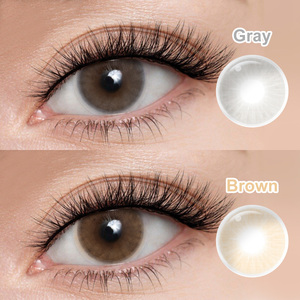
Curated Portfolio
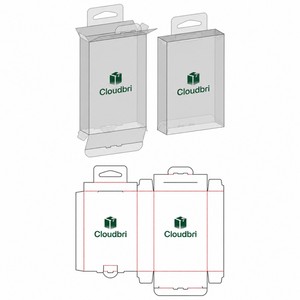
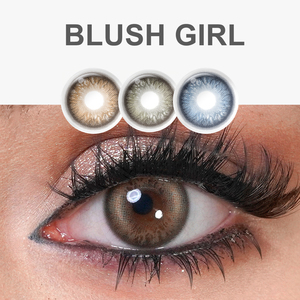
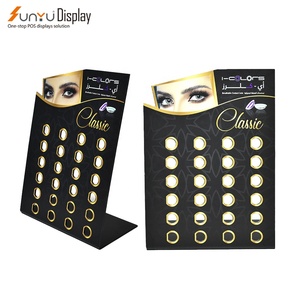
Benchmark OEM/ODM Form Factors & Packaging Solutions
Explore production-tested cosmetic lens formats and retail-ready packaging engineered for rapid global brand deployment.
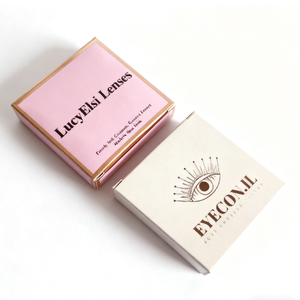
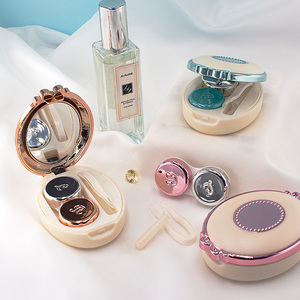
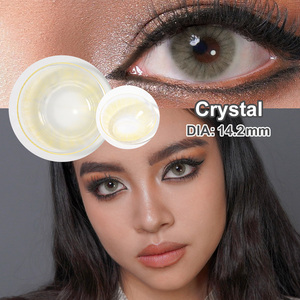
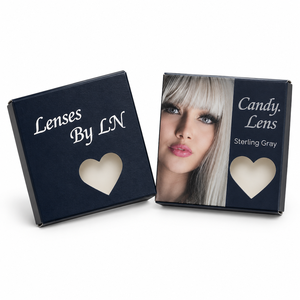
Manufacturing Backbone
Integrated Enterprise ODM/OEM Advantages
Combining world-class cleanroom automation, medical device certification, and flexible supply chains to protect brand equity and streamline global customs clearance.
Full-Spectrum Global Compliance
Production runs adhere strictly to ISO 13485 medical device quality systems. Lenses and manufacturing facilities are supported by FDA 510(k), CE mark, NMPA (CFDA), MFDS Korea, and GMP registrations, providing an unshakeable audit trail.
Advanced Sandwich Cast-Molding
Zero colorant-to-cornea contact. Advanced 3-layer sandwich encapsulation embeds color pigments entirely within biocompatible hydrogel or silicone hydrogel layers, eliminating mechanical friction and dye elution risks entirely.
Agile Small-Batch to Industrial Scale
Eliminate inventory write-offs. Our flexible ODM production pathways allow private label test runs starting from just 100 pairs per SKU, scaling seamlessly to monthly allocations exceeding millions of blister units.
Complete Turnkey Packaging & Merchandising
Beyond the lens: We engineer custom blister foils, hermetic vial capping, outer folding cartons, multilingual IFUs, retail acrylic stands, and eco-friendly consumer carry cases designed for retail and e-commerce compliance.
Proprietary Optical Biometrics
Equipped with computerized sub-micron edge profiling that prevents mechanical eyelid impingement, paired with advanced toric and multi-radial back surfaces for exceptional on-eye stabilization and visual acuity.
EU MDR Annex XVI Technical Dossier Prep
Non-corrective cosmetic lenses are categorized as medical devices under EU MDR 2017/745 Annex XVI. We supply European importers and Authorized Representatives (EC REP) with complete biocompatibility and clinical evaluation dossiers.
The Global Cosmetic Contact Lens Supply Landscape: Evaluating Tier-1 ODM Exporters
The global cosmetic contact lens sector has transitioned definitively from a novelty fashion accessory category into a heavily regulated, medically sophisticated beauty crossover market. For institutional distributors, pharmacy chains, and direct-to-consumer (DTC) beauty conglomerates, selecting an Original Design Manufacturer (ODM) or Original Equipment Manufacturer (OEM) requires navigating rigorous clinical thresholds, proprietary polymer formulations, and shifting regulatory barriers.
When analyzing the top ten manufacturing hubs across Asia (predominantly South Korea, Taiwan, and Mainland China), tier-1 exporters differentiate themselves through technological vertical integration. Leading factories no longer rely on outsourced semi-finished blanks or manual lathe-cutting; instead, high-precision automated cast-molding lines govern lens yields with micron-level repeatability. These manufacturers maintain automated cleanrooms meeting ISO 14644-1 Class 7 standards, equipped with integrated inline optical coherence tomography (OCT) and automated optical inspection (AOI) to discard lenses with minute edge defects, tear-film disruptions, or chromatic bleeds.
Strategic Procurement Takeaway: In the modern cosmetic optics market, product differentiation is governed by pigment encapsulation integrity and wet-state dimensional stability. An ODM exporter must be audited not merely on catalog aesthetics, but on its extraction testing data, residual monomer levels, and cytotoxicity profiles under ISO 10993 standards.
Emerging Procurement Trends Shaping Global B2B Supply Contracts
Procurement directors and brand founders are navigating dynamic operational shifts driven by consumer awareness, sustainability mandates, and evolving medical device surveillance. When securing long-term supply agreements with contract manufacturers, leading brands are structuring their RFP criteria around four overarching procurement vectors:
1. Transition to Silicone Hydrogel (SiHy) Formulations
While traditional HEMA (poly-2-hydroxyethyl methacrylate) hydrogels dominate the price-sensitive annual replacement sector, premium brand procurement is pivoting aggressively toward high-Dk/t silicone hydrogel matrices. These materials provide superior oxygen transmissibility (Dk/t > 80), mitigating hypoxic corneal stress during prolonged 12+ hour cosmetic wear cycles.
2. Hyper-Localized Iris Pigmentation Formats
Standardized colored contact lenses frequently look unnatural when overlaid on diverse demographic iris undertones. Leading ODMs are leveraging computational iris mapping to craft layered 3-tone and 4-tone dot matrices. These blend seamlessly over dark Asian and Mediterranean eyes or provide realistic enhancement for light Caucasian eyes.
3. Shortened Wear Cycle Replacements
Clinical data highlighting reduced infectious keratitis risks with daily disposable formats has driven a massive channel shift. Brand owners are expanding their 1-Day daily disposable SKU counts, prompting ODMs to innovate highly automated, cost-effective blister packing and high-speed packaging machinery to keep per-blister production costs competitive.
4. Sustainable Secondary Packaging & Recyclability
Regulatory frameworks such as the German Packaging Act (VerpackG / LUCID register) and broader EU circular economy directives are forcing brands to scrutinize every gram of plastic. Forward-thinking ODMs now supply biodegradable PLA outer cartons, recycled paperboard folders, minimized blister foil profiles, and reduced water consumption curing processes.
5. Regulatory-First Supply Chain Traceability (UDI Integration)
Traceability is no longer optional. Export contracts now require full Unique Device Identification (UDI) machine-readable 2D DataMatrix barcodes applied directly to unit blisters. Contracted manufacturers must guarantee real-time serialization, linking sterile lot numbers directly to sterilizer autoclaving run logs and raw monomer lots.
6. Small-Batch Omnichannel Drop-Model Sourcing
To keep pace with viral social media trends and micro-seasons (such as Halloween FX, festival aesthetics, and cosplay trends), modern buyers demand hybrid inventory contracts: holding buffer inventory in primary sterile formats while executing secondary boxed labeling on-demand under agile MOQs.
Future Technology & R&D Horizons in Cosmetic Contact Lenses
Looking toward the next half-decade, the boundaries between decorative cosmetic optics, ophthalmic health monitoring, and smart wearables are progressively blurring. Innovative ODM labs are already piloting technologies that will redefine the competitive landscape:
Active Photoprotection and HEV/Blue-Light Filtering: Cosmetic lenses are increasingly integrating non-leachable ultraviolet (UV-A, UV-B) blockers alongside selective high-energy visible (HEV) blue-light absorbing monomers. This converts cosmetic color lenses into functional eye-health protectors against digital screen strain and environmental solar radiation without distorting the cosmetic color rendering of the lens.
Bio-Inspired Wetting Agents and Anti-Fouling Coatings: Lipid deposition and protein fouling remain the primary cause of late-day contact lens discomfort. Emerging R&D is focused on incorporating phosphorylcholine (PC) technology and polyvinylpyrrolidone (PVP) internal wetting networks. These hydrophilic polymers mimic the natural cell membrane, maintaining an unbroken tear-film lipid layer over the lens surface and ensuring all-day wearer compliance.
Digital Direct-to-Mold Micro-Printing: Moving beyond traditional pad printing with etched steel clichés, pioneering factories are developing high-resolution piezoelectric digital ink-jet systems that print FDA-approved color formulations directly into the cast molds. This reduces setup lead-times for custom graphic iris designs from months to days, unlocking unprecedented micro-customization for private-label brands.
Direct Answers
Frequently Asked Questions on Sourcing & Compliance
Essential regulatory, technical, and logistical insights required before executing your OEM/ODM purchase orders.
What are the key regulatory hurdles under EU MDR for non-corrective cosmetic lenses?
Under Regulation (EU) 2017/745, non-corrective (plano) cosmetic contact lenses are explicitly classified under Annex XVI as devices without an intended medical purpose. Consequently, they are subjected to the same strict conformity assessment routes as corrective medical devices. An ODM exporter must provide complete technical documentation, proof of ISO 13485 certification, biocompatibility evaluations according to ISO 10993, clinical evaluation reports (CER), post-market clinical follow-up (PMCF) plans, and full UDI compliance. Importers within the EU must also ensure an appointed Authorized Representative (EC REP) is in place.
How does the sandwich cast-molding method prevent corneal staining and dye toxicity?
In inferior production processes (like surface printing), pigment layers remain exposed on the anterior or posterior surface of the lens, posing severe risks of micro-abrasions, epithelial dye leaching, and cytotoxic ocular damage. Our enterprise cast-molding utilizes an advanced 3-layer sandwich process: an optical base matrix is formed, the non-toxic biocompatible pigment layer is printed with sub-micron precision, and a third transparent protective capping layer is fully polymerized over the pigment. The color is completely locked inside the polymer matrix, guaranteeing zero direct corneal or conjunctival contact.
What are the baseline minimum order quantities (MOQs) for custom private-label runs?
For existing catalog ODM designs utilizing standardized base curves (8.6mm) and diameters (14.0mm - 14.5mm), small-batch agile programs start as low as 100 pairs per SKU with custom secondary carton labeling. For bespoke color patterns, customized diameters, or unique blister foil tooling, typical production MOQs begin at 1,000 to 3,000 pairs per SKU to justify automated molding cliché manufacturing and cleanroom sterilization validation runs.
What parameters define the shelf-life stability and sterilization validation of sealed blisters?
Medical contact lenses are typically granted a 3-year to 5-year validated shelf life when sealed in medical-grade PP blisters or glass vials. Stability is backed by real-time and accelerated aging studies (under ISO 11607 packaging standards). Each production lot undergoes moist heat steam sterilization (autoclaving) validated to achieve a minimum Sterility Assurance Level (SAL) of 10^-6, monitored by calibrated biological and chemical indicators.
Can private-label artwork, packaging text, and IFU documents be customized for multi-country sales?
Yes. We offer complete custom packaging engineering. Outer cartons, blister foil coatings, and Instructions for Use (IFU) inserts can be produced in bilingual or multilingual variants (including German, French, Spanish, Arabic, and English). Packaging layouts are built to leave dedicated print windows for mandatory regulatory fields, including local distributor addresses, CE Mark with Notified Body four-digit identification numbers, lot numbers, expiration hourglass symbols, and 2D UDI barcodes.
What lead times should institutional procurement departments factor into production cycles?
Standard turnaround times for repeat ODM private-label production orders average between 25 to 35 business days from final digital artwork proof approval to factory dispatch. First-time bespoke formulations or designs requiring new steel molds, specialty toric axes, or custom registration filings require a lead time of approximately 45 to 60 days, followed by air express (5-7 days) or scheduled temperature-controlled sea freight (25-35 days).
Build Your Premium Contact Lens Brand With a Proven ODM Exporter
Partner with an ISO 13485 certified manufacturer. Connect with our optical engineering team today to review mold designs, request physical sterilization samples, or obtain custom formulation quotes.
Get a Quote