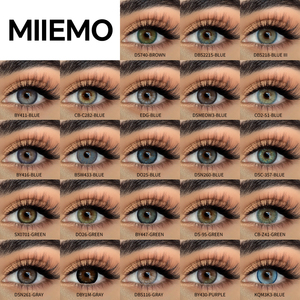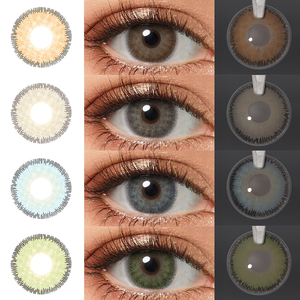
Global Strategic Sourcing Directory & OEM Whitepaper

Top 10 Contact Lens Brand Supplier Manufacturers & Supplier

An enterprise-grade procurement analysis evaluating engineering capabilities, ISO 13485 cleanroom compliance, cast-molding technologies, and international supply resilience for commercial optical brands.

500+ Pre-Engineered ODM Iris Formulations
100pr Agile Low-MOQ Pilot Batching
ISO13485 Certified Cleanroom Sterile Manufacturing
100% Pigment Encapsulation Layering Assurance

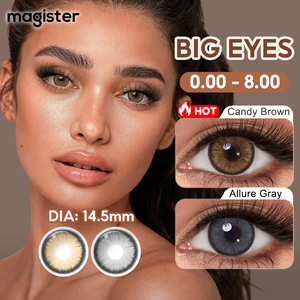
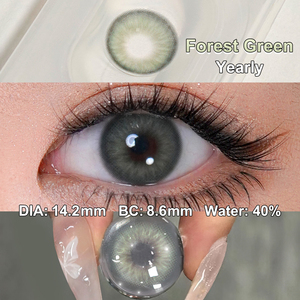
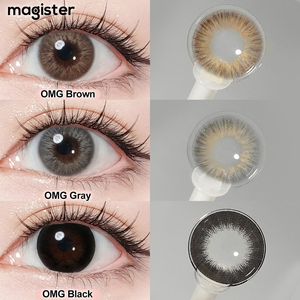
Curated Flagship Contact Lens Formulations

Direct from medical-device cast-molding lines: high-oxygen, biocompatible color and corrective matrices ready for private label distribution across international retail markets.
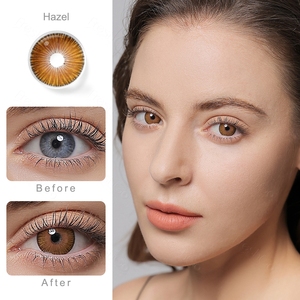
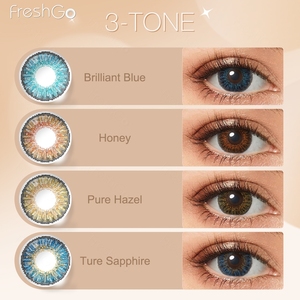
Comprehensive Strategic Sourcing Analysis: The Global Top 10 Contact Lens Manufacturers Landscape

The global contact lens manufacturing supply chain has evolved from a commoditized optical niche into an advanced biomaterial and high-precision polymer fabrication domain. Commercial ophthalmic organizations, beauty conglomerates, and private-label optometry distributors evaluating the top 10 contact lens brand suppliers must look beyond catalog pricing. Rigorous due diligence demands deep inspection of polymer cast-molding stability, biocompatibility metrics (such as the Dk/t oxygen transmissibility ratio), pigment fixation methodologies, and comprehensive compliance under regulatory frameworks like EU MDR 2017/745 (Annex XVI) and US FDA 510(k).

Within this rigorous paradigm, prominent enterprise manufacturers such as Johnson & Johnson Vision (Acuvue), Alcon, CooperVision, Bausch + Lomb, Menicon, SEED, and specialized contract fabrication groups like Miomiconlens define the global standard. While the primary tier focuses heavily on massive standardized clear prescription production lines, agile high-precision contract manufacturers provide the customized flexibility, micro-pigment alignment, and private-label responsiveness necessary for dynamic direct-to-consumer and professional cosmetic brands.

Strategic Buyer Summary: Material Selection and Ocular Safety Contact lens coloration must never interface directly with corneal epithelium or conjunctiva. Top-tier contact lens suppliers utilize true "Sandwich" pigment encapsulation—locking non-toxic bio-inks between micro-thin cast-molded layers of hydrogel (such as Poly-HEMA or HEMA-GMA copolymers) or silicone hydrogel. This guarantees zero dye elution, maintains oxygen flux, and prevents irritation across all wear profiles.

Technological Evolution & Future Manufacturing Trends

When engineering product lifecycles for the upcoming multi-year procurement cycles, purchasing departments must plan for several technological tipping points reshaping contact lens fabrication:

Silicone Hydrogel for Color Cosmetics

Traditional cosmetic contacts rely on conventional hydrogels with low oxygen permeability. Advanced manufacturing is adopting breathable SiHy monomers, pushing Dk/t figures past 80 for prolonged, healthy wear cycles.

Sub-Micron Digital Pad Printing

Moving away from legacy dot-matrix screens, nano-precision digital printing replicates realistic iris striations, gradient limbal transitions, and dynamic hazel-to-amber undertones indistinguishable from natural irises.

Universal UDI & Global MDR Compliance

With cosmetic contact lenses falling under Annex XVI of EU MDR (EU 2017/745), automated cleanroom packaging lines must dynamically laser-etch and verify Unique Device Identifiers (UDI) alongside multi-language IFU inserts.

B2B Procurement Trends: Shifting Dynamics for Modern Optical Brands

Procurement directors no longer operate under the historical constraints of massive monolithic production runs. In prior decades, entering the contact lens market necessitated Minimum Order Quantities (MOQs) surpassing 50,000 units per Stock Keeping Unit (SKU), binding millions in working capital while risking dead inventory due to shifting aesthetic preferences. Modern supply chain engineering has transformed this paradigm through:

  • Agile Pilot Validation (Micro-MOQ Strategy): Forward-thinking suppliers offer localized small-batch manufacturing beginning at 100 pairs per design. This enables e-commerce brands and regional boutique opticians to validate color uptake and diopter distribution before committing to high-speed automated output.
  • On-Demand Private Label Packaging: Decoupling lens manufacturing from final packaging. Sterile pre-blistered vials or strips are warehoused under medical device GMP conditions, allowing buyers to rapidly apply customized German, French, or multi-jurisdiction packaging box designs upon order intake.
  • Integrated Prescription Integration: The convergence of pure cosmetic fashion lenses with high-precision optical corrections (ranging from -0.50 to -10.00 D with precise aspheric surface modeling) gives single SKUs broader addressable demographic penetration.

Supplier Technical Evaluation Matrix

Evaluation Parameter Legacy Bulk Optical OEM Specialized Contract Manufacturer (e.g., Miomiconlens) Decisive Enterprise Advantage
Minimum Order Quantity (MOQ) 10,000 – 50,000 pairs / design Flexible from 100 pairs / design 90% Less Inventory Exposure
Pigment Isolation Tech Surface pad printing Cast-molded 3-layer Sandwich encapsulation Zero direct ocular contact
Custom Box & Vials Fixed generic templates Fully custom dielines, foil stamping, localized IFU Seamless brand identity
EU MDR Annex XVI Support Self-declaration only ISO 13485 technical dossier, biocompatibility data Full EU market customs clearance
Lens Geometry Options Standard 14.0mm only 14.0mm to 14.5mm + Mini/Full Sclera options Diverse portfolio range

Enterprise Manufacturing Capabilities & OEM Advantages

Building a defensible optical brand requires a manufacturing partner with proven operational scale, scientific precision, and end-to-end packaging infrastructure. Our integrated manufacturing center leverages advanced technology to deliver tangible competitive advantages:

Precision Cast-Molding Systems

Every lens is fabricated via high-repeatability optical casting tools, ensuring uniform radial thickness, consistent base curves (8.5–8.6mm), and smooth edge contours that minimize corneal mechanical friction.

Full Regulatory Documentation Dossiers

We provide full manufacturer-side traceability, including ISO 13485 quality certificates, sterilization validation, cytotoxicity data, and bilingual packaging templates designed to meet German VerpackG (LUCID) and EU MDR demands.

Air Cargo & Direct-to-Warehouse Logistics

Supported by streamlined Incoterms (including DAP and DDP freight handling), shipments arrive directly at your regional logistics hub with complete import declarations, customs clearing codes, and verified lot batches.

Frequently Asked Questions: Contact Lens Procurement & Manufacturing

Essential guidance for procurement directors, product managers, and distributors evaluating wholesale production contracts.

What is the minimum order quantity (MOQ) for custom private-label contact lenses? +
Our flexible OEM program starts with a minimum order quantity of only 100 pairs per design. This enables optical startups, dermatological brands, and optometry clinics to test specific colorways and diopter power curves in target markets before committing to high-volume commercial production.
How does pigment encapsulation protect wearer safety in colored contact lenses? +
Safety is achieved through our multi-layer "sandwich" casting technology. Bio-compatible color micro-pigments are completely sealed between an anterior and posterior layer of clear optical hydrogel. This prevents pigments from contacting either corneal tissues or tarsal conjunctiva, eliminating risks of mechanical abrasion, toxic dye leaching, or surface deposition.
What regulatory documentation is provided for European and US importation? +
Shipments are supported by complete factory-side quality technical files: ISO 13485 medical device quality certification, GMP compliance audit records, raw material biocompatibility profiles, and CE/FDA registration documentation. Under Regulation (EU) 2017/745 (EU MDR Annex XVI), we provide batch records, UDI traceability structures, and sterilization validation certificates to support your Authorized Representative and Importer of Record.
Can packaging, instructions for use (IFU), and labeling be localized? +
Yes. We offer complete custom packaging OEM services, including single-pack blisters, sealed glass vials, multi-pack carton boxes, blister foil printing, and folded paper IFU leaflets. Print files can be configured in bilingual German/English, Spanish, French, or other market-specific languages with compliant barcode, expiration date, and serial number integration.
What replacement schedules and optical ranges are supported? +
Production schedules include Daily Disposable (1-Day), Monthly, Quarterly, and Yearly (Annual) modalities. Optical powers range from plano (0.00 diopter) for purely cosmetic wear up to -10.00 diopters for refractive correction, alongside custom base curves (8.5mm to 8.6mm) and diameters from 14.0mm natural blends to 14.5mm cosmetic enlarging profiles.

Accelerate Your Contact Lens Brand Deployment

Consult with our technical engineering team for certified product catalogs, physical sampling sets, formulation dossiers, and transparent manufacturing lead times.

Get a Quote