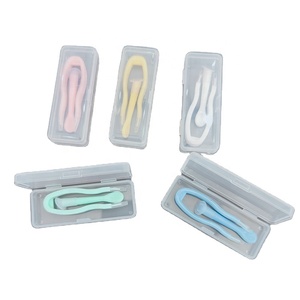
Free Shipping Freshgo Best seller Iris Contact Lenses 14.2 Natural Colored Contact Lenses 2026 Fashion Colored Contact Lenses
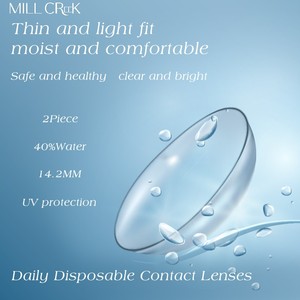
Material: HEMA 38-42% Hydration
Cycle: Yearly / Monthly Replacement
Direct from our automated cleanroom facilities: ready-to-market cosmetic contact lenses, optical hydrogels, certified waterproof labeling, and bespoke rigid secondary packaging tailored for global distributors.
Operating at the intersection of medical safety and cosmetic artistry, our advanced production ecosystem supports high-growth beauty labels, pharmaceutical distributors, and independent opticians across North America, Europe, Asia, and the Middle East.
To safeguard corneal integrity, non-toxic organic pigments are locked safely between two ultra-thin layers of hydrogel material. Pigment never touches ocular tissue directly, eliminating abrasion, chemical leakage, and cellular toxicity risks.
Unlike outdated lathe-cutting methods that create rough edges, our optical-grade computerized cast molding ensures exact sub-micron spherical reproducibility, consistent edge profiles, and consistent center thickness on every single batch.
We break the traditional barriers of high minimum production volumes. Start-ups and optometric practices can introduce customized private label collections with as few as 100 pairs per design, minimizing upfront inventory exposure.
Colored cosmetic contact lenses are regulated as medical devices without intended medical purpose under EU MDR Regulation 2017/745 (Annex XVI). We supply complete technical dossiers, clinical summaries, and biocompatibility documentation.
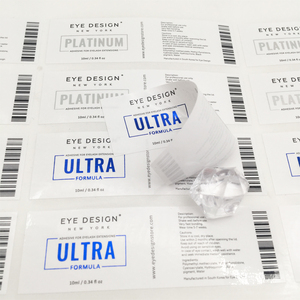
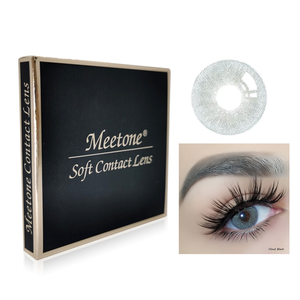
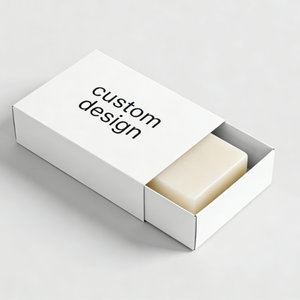
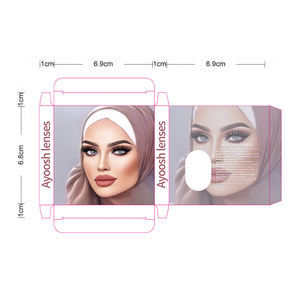
From sterile buffered saline PP blisters and glass vials with aluminum tear-off caps to foil-stamped drawer retail boxes and multi-language Instructions for Use (IFU), we deliver completely finished goods ready for instant retail placement.
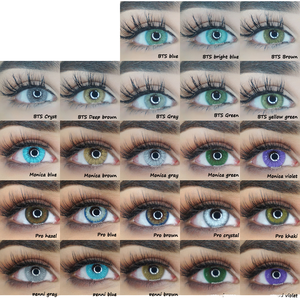
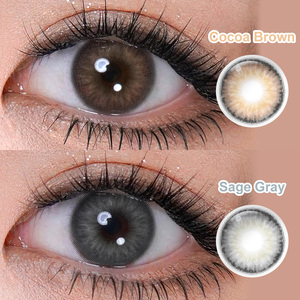
Tap into our massive proprietary catalog spanning natural limbal rings, hyper-realistic iris striations, doll-eye enlargement, cosplay theatrical optics, mini-sclera (17mm), and full-sclera (22mm) lenses created specifically for diverse ethnicities.
Contact lens manufacturing requires strict airborne particulate control and bioburden management. Our automated facilities maintain Class 100,000 (ISO Class 8) cleanrooms equipped with continuous HEPA laminar air filtration, high-purity USP sterile water systems (WFI), and dual-stage automated visual verification systems to inspect 100% of finished lenses for edge integrity, dimensional symmetry, and color centering.
Global supply chain dynamics, consumer cosmetic expectations, and regulatory tightening are transforming how international buyers, pharmacy chains, and DTC eyewear brands structure their sourcing strategies.
Procurement officers are shifting substantial budget shares from traditional annual (365-day) vials to daily disposable blisters. Driven by ophthalmologist advocacy and Gen-Z hygiene preferences, daily wear color lenses minimize cleaning compliance risks while creating recurring direct-to-consumer subscription revenues.
Strategic Action for Buyers: Prioritize OEM partners that possess high-speed automated strip packaging lines and competitive high-volume daily hydrogel unit pricing.
While conventional HEMA polymers (polyHEMA, Ocufilcon D) continue to dominate budget cosmetics, high-Dk silicone hydrogel formulations are expanding rapidly in the premium colored lens segment. Oxygen permeability ratings exceeding 80–120 Dk/t are becoming the new baseline for prestige eyewear brands.
Strategic Action for Buyers: Diversify product tiers by offering an entry-level HEMA collection alongside an advanced SiHy "Breathable Comfort" series for premium price points.
Customs authorities in the European Union, the United Kingdom, and the Americas have instituted strict non-tariff barriers for decorative contact lenses. Importers must hold full technical files, documented Clinical Evaluations, and designated Authorised Representatives (EC REP / UKRP).
Strategic Action for Buyers: Avoid grey-market factories lacking validated ISO 13485 QMS certifications; require ready-to-inspect technical dossiers before issuing purchase orders.
Opaque, stark, artificial-looking color circles are declining in consumer appeal. Buyers are ordering complex multi-tone patterns featuring feathered transition zones that blend seamlessly into dark natural irises without harsh boundary lines around the optical pupillary zone.
Strategic Action for Buyers: Select manufacturers offering advanced 3-tone and 4-tone stochastic dot printing matrices capable of delivering soft hazel, olive, and icy-grey aesthetics.
Retail buyers in Western Europe are demanding minimized blister foil thickness, recycled polypropylene blister cups, and FSC-certified biodegradable outer cartons. Compliance with packaging waste frameworks like Germany’s VerpackG (LUCID) and France’s CITEO has become mandatory for shelf entry.
Strategic Action for Buyers: Specify plastic-neutral or reduced-footprint blister designs and unlaminated virgin kraft or FSC paperboards during packaging design stages.
To mitigate supply chain shocks, major global exporters are adopting vendor-managed inventory (VMI) frameworks and bonded warehouse stock buffers. Rather than committing to 6-month ocean shipments, brands are opting for hybrid models: large-batch core SKUs via sea and agile air-freight small-batch seasonal runs.
Strategic Action for Buyers: Establish multi-tiered delivery contracts with contract manufacturers to hedge against container shipping lead-time fluctuations.
Explore the breakthrough engineering pathways shaping contact lens fabrication: from photochromic responsive pigments to ocular surface moisture-retention matrices.
The integration of light-reactive molecular switches allows color contact lenses to adjust their tint density dynamically based on ambient ultraviolet radiation. In addition to aesthetic enhancement, these lenses serve as functional sun filters, offering advanced visual comfort under intense daylight conditions.
Next-generation cast-molding machinery incorporates ultra-precision diamond-turned mold inserts. Both the anterior and posterior lens geometries are molded concurrently with sub-nanometer surface roughness, eradicating mechanical friction against the palpebral conjunctiva during blinking.
Modern contact lens formulations now chemically cross-link high molecular weight Hyaluronic Acid (HA) and 2-Methacryloyloxyethyl phosphorylcholine (MPC) directly into the polymer matrix. This drastically suppresses protein and lipid deposition, sustaining moisture retention for over 16 continuous hours.
Moving beyond conventional silicone pad printing, high-speed piezoelectric digital drop-on-demand (DOD) printing enables photographic-resolution (1200+ DPI) iris patterning. This eliminates visible pixelation and provides unlimited design customization for boutique private label collections.
R&D labs are testing colorimetric biosensors embedded within decorative iris rings that change color in response to tear-fluid biomarkers such as glucose, intraocular pressure spikes, or extreme ocular surface dryness, converging cosmetic appeal with preventative medical diagnostics.
Modern contact lenses incorporate advanced chemical monomers that block over 98% of UVB, 90% of UVA, and a significant portion of High-Energy Visible (HEV) blue light generated by digital displays, safeguarding the crystalline lens and macular health.
Critical answers regarding minimum order requirements, regulatory dossier submissions, sterilisation methods, and international freight logistics.
For ODM production utilizing our existing library of 500+ validated iris patterns, our flexible small-batch OEM program starts at just 100 pairs per design. For fully custom pattern development involving bespoke printing plates or proprietary color blending, MOQ begins at 500 to 1,000 pairs depending on the lens material (HEMA vs. Silicone Hydrogel) and primary packaging format (glass vial vs. sterile blister strip).
Cosmetic colored contact lenses without corrective vision power are strictly classified as Class IIa devices under Annex XVI of Regulation (EU) 2017/745. As an ISO 13485 certified manufacturer, we supply our European brand partners with comprehensive technical documentation, including biological safety evaluations (ISO 10993), extractables/leachables data, shelf-life verification reports, clinical evaluations, and UDI (Unique Device Identifier) allocation data to facilitate seamless registration with national competent authorities (such as BfArM in Germany or ANSM in France).
Yes. European medical device regulations mandate that the Instructions for Use (IFU), outer carton warning statements, and primary container labels must be printed in the official language(s) of the target sales territory. Our in-house regulatory design team formats and proofs bilingual and multi-language packaging compliant with local optical advertising laws, including all mandatory symbols (ISO 15223-1), lot identification, and CE mark notified body numbers.
Glass Vials (5ml / 10ml): Traditionally preferred for yearly and quarterly replacement modalities due to high mechanical puncture resistance and classic salon positioning. Polypropylene Blisters: Modern standard for daily, bi-weekly, and monthly modalities; highly lightweight, space-saving for international air freight, ergonomic for consumer peeling, and ideal for automated high-speed multi-pack cartoning (e.g., 2-pack, 10-pack, 30-pack).
We apply proprietary sandwich color encapsulation technology. The FDA and CE-approved cosmetic pigments are embedded strictly within the central hydrogel monomer layers prior to thermal polymerisation. The outer anterior and posterior contact surfaces remain 100% pure, virgin biocompatible hydrogel. In-vitro cytotoxicity tests, ocular irritation tests, and slit-lamp rub testing confirm zero pigment migration over the 5-year storage shelf life.
For initial private label orders requiring custom plate fabrication and printed carton die-lines, typical production requires 25 to 35 business days following physical pre-production sample sign-off. Repeat batch orders ship within 15 to 20 business days. We support standard Incoterms including EXW, FOB, CIF, DAP, and DDP (Delivered Duty Paid directly to your European, US, or Asian distribution hub via expedited air courier or temperature-controlled sea freight).
Over 15 years of dedicated contract manufacturing expertise delivering reliable ophthalmic products to licensed optical distributors, retail chains, and international beauty brands.
From chemical monomer synthesis and optical mold engineering to sterile secondary packaging, automated label printing, and custom contact lens companion cases, we maintain complete operational control under a unified quality system.
Every single contact lens produced in our facility is tied to raw material lot numbers, cleanroom environmental monitoring records, autoclave temperature log graphs, and automated visual inspection files, archived for 7 full years.
Serving clients across 68 countries with certified cold-chain and temperature-stable shipping solutions. We navigate regional customs regulations, import licenses, Certificate of Free Sale (CFS), and notarized consular legalization.
Consult directly with our ophthalmic manufacturing engineers. Request physical sample sets, explore our catalog of 500+ iris designs, or review complete technical dossiers for your target regional market.