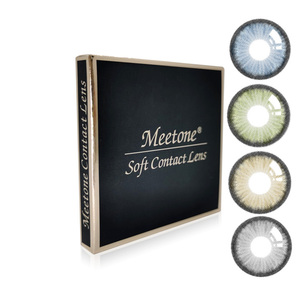
500+
Turnkey Iris Tone Patents
100
MOQ Pairs for Small-Batch Launch
100%
Pigment Sandwich Encapsulation
ISO
13485 & CE MDR Compliant Lines
Factory Showcase
High-Velocity Cosmetic Contact Lens Lines & Accessories
Engineered for high-volume retail, optical e-commerce brands, and global distributors seeking unmatched batch consistency and edge comfort.
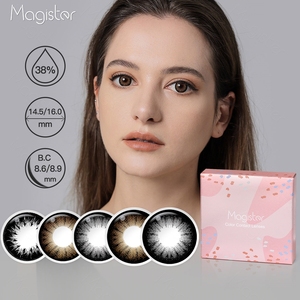
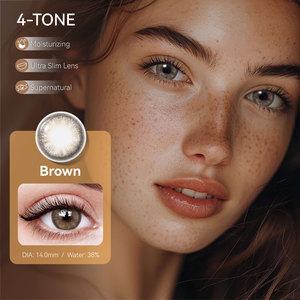
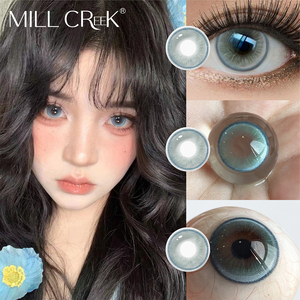
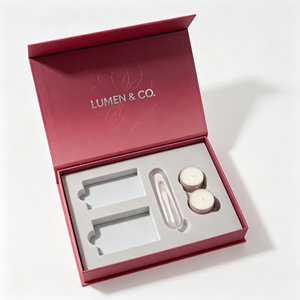
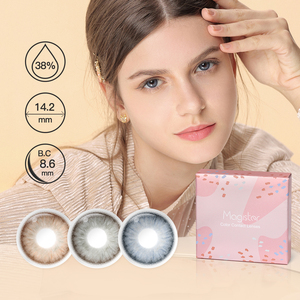
Strategic Manufacturing Partner
Integrated Cleanroom Infrastructure & Full Lifecycle ODM Capabilities
We eliminate friction for international buyers by bridging medical-grade biocompatibility standards, rapid prototyping, and automated high-throughput production lines.
Pigment Sandwich Isolation
Our bio-safe printing embeds micro-pigments firmly between polymer layers, guaranteeing zero corneal contact while preserving oxygen permeability (Dk/t).
- 100% surface pigment-free verification
- Smooth peripheral edge profiling
- Minimal ocular friction & dry eye mitigation
Precision Full-Cast Molding
Automated optical toolings ensure identical dimensional tolerances across millions of units, preventing spherical aberration and batch deviation.
- Automated optical inspection (AOI)
- Sub-micron base-curve repeatability
- Optimized edge lift for tear exchange
Turnkey Compliance & Labelling
From Class II medical device technical files to EU MDR (Annex XVI) documentation, we prepare full traceability files before your order leaves our dock.
- UDI barcode and lot-traceability
- LUCID / VerpackG weight manifests
- Multilingual IFU (German, French, Spanish)
Industry Whitepaper
Cosmetic Contact Lens Engineering: Material Science & Global Sourcing Trends
A technical guide for procurement directors, opticians, and private-label brand founders navigating shifting regulations and evolving consumer habits.
1. The Evolution of Color Contact Lens Polymers: Hydrogel vs. Silicone Hydrogel
Cosmetic contact lenses were historically dominated by standard hydrogels (e.g., HEMA-based materials) due to their predictable tint-binding properties. However, global market trends indicate a sharp inflection toward high-Dk/t formulations. Buyers are now prioritizing breathable matrices that mitigate ocular hypoxia during prolonged 12-hour wear schedules. Our automated facility utilizes precision cast-molding to maintain superior surface lubricity and wettability angles without compromising iris print detail.
| Evaluation Parameter | Standard Poly-HEMA (Traditional) | Next-Gen Silicone Hydrogel (Premium) | Clinical & Procurement Benefit |
|---|---|---|---|
| Oxygen Permeability (Dk/t) | 18 - 25 Barrers | 80 - 130 Barrers | Significantly reduces limbal redness and dry eye feedback. |
| Water Content (%) | 38% - 42% (Optimal equilibrium) | 45% - 55% | Prevents lens dehydration in air-conditioned or screen-heavy settings. |
| Encapsulation Method | Pad Print / Surface Coating | Triple-Layer Sandwich Cast | Eliminates pigment toxicity risks; conforms strictly to EU MDR Annex XVI. |
| Target Retail Pricing | Mass Market / Fast-Fashion | Clinical / Premium Private Label | Higher brand equity and customer lifetime value (LTV). |
2. Future Sourcing Trajectory: Daily Disposables, Low MOQs, and Sustainability
The colored contact lens landscape is undergoing structural disruption. Forward-thinking procurement managers are optimizing their portfolios based on three decisive operational vectors:
A. Daily Disposables Surpassing Annual Replacement: While 1-year lenses retain solid traction in price-sensitive emerging markets, top-tier brands are shifting rapidly to 1-Day cosmetic lenses. Daily disposables drastically reduce the incidence of bacterial keratitis, remove cleaning-solution overhead, and generate recurring subscriber revenues.
B. Agile Small-Batch Customization (Down to 100 Pairs): The legacy barrier of 5,000-unit minimum orders per SKU has been dismantled by our lean tooling systems. Brand founders can now test seasonal tones—such as warm amber, hazel limbal blends, and cool cyber-greys—in limited drops of 100 pairs per design before allocating capital to master batch cycles.
C. Green Logistics and Circular Packaging Compliance: European and North American regulations increasingly penalize excessive plastics. We support clients with biodegradable secondary cartons, ultra-light primary blister packs, and certified weight declarations to ensure smooth clearance through EPR (Extended Producer Responsibility) schemes such as the German LUCID registry.
Buyer Due Diligence
Frequently Asked Questions on Contact Lens OEM/ODM Sourcing
Comprehensive answers covering minimum quantities, regulatory clearances, sample runs, and custom tooling.
What is the minimum order quantity (MOQ) for custom brand packaging and lenses? +
For existing catalog iris patterns with private-label outer boxes and blister/vial labels, our small-batch OEM program starts at just 100 pairs per design. For completely bespoke pupil/iris dot-matrix patterns requiring new printing plates and tooling calibration, initial order thresholds typically start at 1,000 pairs.
How do you ensure cosmetic lenses meet EU MDR (2017/745) Annex XVI rules? +
Under EU MDR Annex XVI, non-corrective cosmetic lenses are categorized as Class IIa/IIb medical devices requiring stringent notified body oversight. As an ISO 13485 certified facility, we supply full technical files, cytotoxicity reports, leachability data, bio-compatibility assays, and UDI identification files directly to your Authorized Representative (EC REP) or import partner.
What is the difference between pad-printing and pigment sandwich technology? +
Direct pad-printing applies color pigments straight onto the lens surface, which can degrade ocular health if abrasive particles contact corneal epithelial cells. Our sandwich technology encapsulates pharmaceutical-grade colorants safely between micro-layers of polymer, ensuring zero direct corneal exposure and a frictionless surface profile.
Can you handle customized multilingual packaging and unique barcoding? +
Yes. We offer turnkey graphic design adaptations. We can render diopter specs, batch lot codes, expiration calendars, GTIN/EAN barcodes, and local language Instructions for Use (IFU) strictly following target-market health ministry conventions (such as BfArM in Germany, FDA in the US, or TGA in Australia).
What is the typical lead time for initial sample validation and production? +
Physical sample sets from our active inventory are dispatched within 48 to 72 hours via international air courier. Customized packaging design proofs are finalized within 5 working days. Commercial production lead times range between 15 to 30 days depending on whether blister foils or sterile glass vials are specified.
Launch Your Global Contact Lens Line With Direct Factory Pricing
Access our comprehensive 500+ pattern ODM catalog, request ISO-certified sample batches, or review technical compliance files with our international OEM engineering desk.
Contact Us