Corrective Color
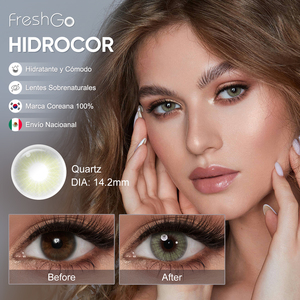
Freshgo Hidrocor Natural Colored Power Contact Lenses With Graduation Lentille De Couleur
HEMA PolyHema
Plano to -8.00D
Yearly Wear
Explore our top production-ready colored hydrogel lenses, corrective lenses, and medical-grade custom packaging folders engineered for rapid time-to-market and full international compliance.
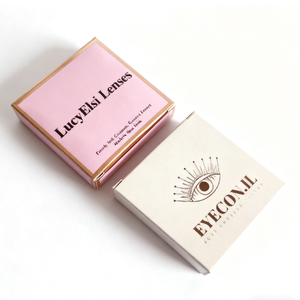
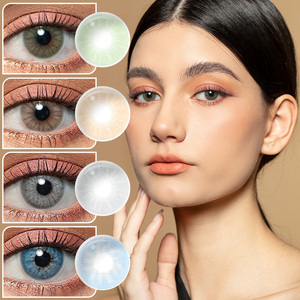
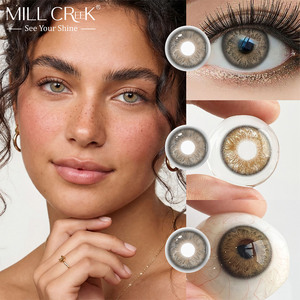
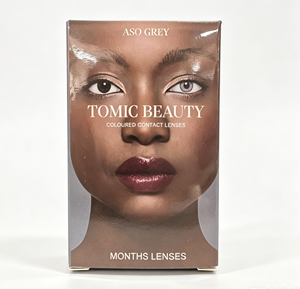
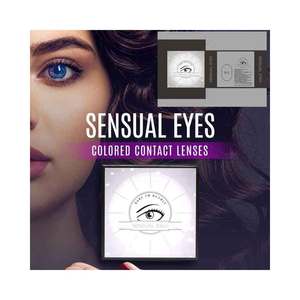
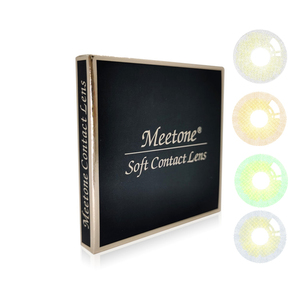
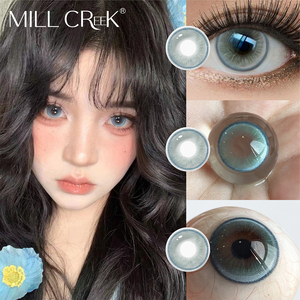
Combining high-precision optical physics, biocompatible polymer chemistry, and automated cleanroom manufacturing to give brand owners an unassailable competitive advantage.
Safety is paramount in ophthalmic devices. Our patented micro-encapsulation embeds cosmetic pigments between two hydrogel layers, eliminating corneal abrasion risks entirely.
Mitigate supply chain risk. Validate new market niches, influencer drops, or optical boutique capsules with initial production minimums as low as 100 pairs per design.
We provide comprehensive technical documentation, biocompatibility reports (ISO 10993), and localization support for rapid customs clearance worldwide.
Strategic insights for brand managers, optical wholesalers, and distributors navigating consumer preference shifts, regulatory tightening, and material advancements.
The global cosmetic and corrective contact lens sector is experiencing a paradigm shift. Once treated as simple beauty accessories, contact lenses are now categorized under stringent international medical device mandates—most notably the European Medical Device Regulation (EU) 2017/745 (MDR) Annex XVI, which subjects non-corrective colored contact lenses to the exact same conformity assessment rigor as prescription ophthalmic devices. For wholesalers and private label entrepreneurs, selecting a manufacturing partner who understands both clinical ergonomics and retail packaging dynamics has become the singular prerequisite for sustainable brand equity.
While classic HEMA/PolyHema hydrogels maintain a commanding cost advantage for cosmetic lenses, high-Dk/t Silicone Hydrogel (SiHy) formulations are accelerating in daily and monthly categories. The demand for higher oxygen transmissibility prevents corneal hypoxia during extended screen-time wear, making hybrid materials essential for premium brand positioning.
Annual lenses retain market strength in emerging regions due to accessible cost structures, but developed European and North American markets are witnessing exponential growth in Daily Disposable (1-Day) color contacts. Consumers prioritize pristine hygiene, zero lens-care maintenance, and the versatility to change iris tints daily, driving brands to seek high-yield cast-molding automated lines.
Monolithic, flat pigments are obsolete. Modern luxury buyers demand 3-in-1 and 4-tone variable dot-matrix patterns that subtly blend with deep brown and hazel base irises. Computer-aided optical mapping mimics the naturally occurring trabecular meshwork of human eyes, creating realistic depth, translucent limbal gradients, and cosmetic enhancement without the artificial "doll-eye" look.
Driven by the German VerpackG (LUCID) and broader EU sustainability directives, blister shell materials are transitioning toward lightweight, recyclable polypropylene (PP), and outer cartons require FSC-certified paperboard. Wholesale purchasers increasingly partner with manufacturers offering minimized secondary plastic waste and water-based soy ink printing.
Customs authorities worldwide are aggressively enforcing end-to-end batch traceability. Contract packaging lines must accommodate inline high-speed laser coding of 2D DataMatrix codes, dynamic GS1 UDI-DI/PI barcodes, and automated blister seal integrity verification to satisfy FDA 21 CFR Part 820 and EUDAMED data registries.
Direct-to-consumer (D2C) brands require unboxing experiences that mirror luxury cosmetics. Standard medical vials are giving way to sleek blister multipacks with magnetic closures, holographic foils, and personalized accessory tools, transforming medical devices into viral social commerce lifestyle statements.
Direct answers to core regulatory, engineering, and logistics questions addressed by our technical steering team.
Our flexible startup program accommodates orders starting from 100 pairs per design utilizing our 500+ verified inventory patterns with custom-branded outer cartons. For bespoke proprietary pattern tooling and unique optical curves, custom production cycles typically require an MOQ of 1,000 to 3,000 pairs.
Under EU MDR 2017/745 Annex XVI, cosmetic colored contacts require class IIa medical certification. As an ISO 13485:2016 audited facility, we supply complete technical files, biocompatibility test results (ISO 10993 cytotoxicity, ocular irritation, sensitization), shelf-life stability data, and localized EU-compliant bilingual Instructions for Use (IFU).
We employ an advanced Cast-Molding Semi-Embedded Sandwich process. The color pigment matrix is printed onto the interior mold surface and completely sealed between the base and anterior hydrogel layers before UV polymerization, guaranteeing that pigments never leach or touch ocular tissue directly.
We support Daily Disposable (1-Day), Monthly Disposable, Quarterly, and Yearly modalities. Spherical powers range from Plano (0.00D) up to -10.00D for corrective myopia lenses, alongside custom programs for Toric (astigmatism) and specialty theatrical/sclera dimensions (14.0mm to 22.0mm).
Yes. Our in-house packaging prepress team formats all outer cartons, blister foils, and vials to adhere to regional medical device regulations, including localized German (VerpackG, CE, DIN EN ISO symbols) or US FDA 21 CFR labeling with GS1 UDI barcoding and high-precision serial lots.
Standard catalog selections with custom packaging take approximately 15 to 25 business days from artwork approval. Completely new color formulations or specialty parameter molds generally require 30 to 45 business days including sample pilot validation and dimensional CMM quality audits.
Connect directly with our senior optical engineering and OEM/ODM account directors. Receive a customized product catalog, physical samples, and an immediate compliance audit tailored to your target distribution jurisdictions.