High-Velocity Product Recommendations & Turnkey Private Label Assemblies
Engineered for global brand incubators, optometry retail franchises, and e-commerce beauty distributors. Explore certified stock patterns, medical-grade blister packaging, and custom-embossed secondary folding boxes.
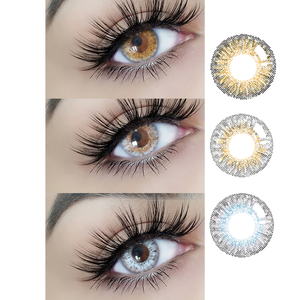
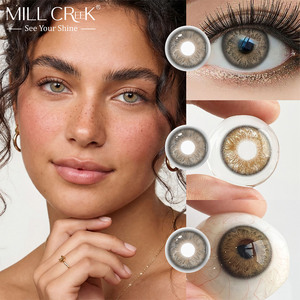
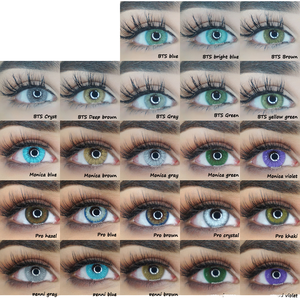
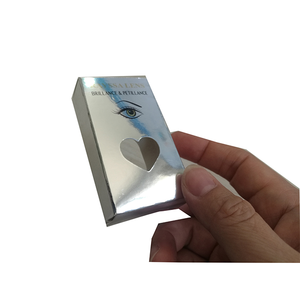
Why International Optics Brands Outsource Manufacturing to China
Overcoming the trade-off between flexible small-batch iteration and high-throughput automated cleanroom execution.
Enterprise Manufacturing DNA: Scalable, Compliant, Precise
Our manufacturing ecosystem merges Class 100,000 cleanroom environments with computerized cast molding, sub-micron edge-polishing, and rigorous wet-state optical profiling. Every SKU is documented to satisfy German, EU MDR, and North American FDA scrutiny.
Cast-Molding Mastery
High-precision optical tooling ensures edge thickness consistency under 0.04mm, eliminating corneal abrasion hazards and maximizing continuous wear comfort.
Sandwich Printing Layer
Advanced pad and digital micro-encapsulation seal colorants securely between biocompatible HEMA or Silicone Hydrogel layers, ensuring zero direct corneal contact.
EU MDR & FDA Class II
Turnkey compliance dossiers, including ISO 10993 cytotoxicity validation, extractable analysis, packaging barrier validations, and dual-language IFUs.
Flexible Packaging ODM
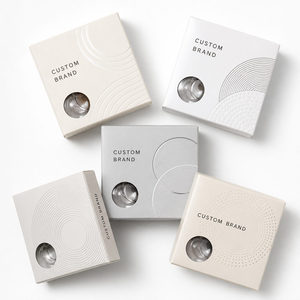
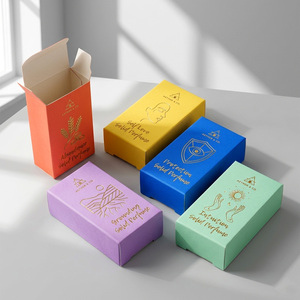
From automated medical polypropylene blister strip sealing to FSC-certified luxury folding cartons, we design the unboxing experience to drive retail premium.
Inside the Modern Contact Lens ODM Factory: Cast Molding vs. Lathe Cutting
Understanding polymer cross-linking, oxygen permeability (Dk/t), and automated optical verification.
Fully Automated Cast Molding
Unlike slow lathe-cutting techniques reserved for custom medical prosthetics, modern China ODM factories leverage high-speed dual-sided cast molding. Polypropylene male and female optical dies are injected with liquid macromers (HEMA, NVP, MMA, or PDMS) and subjected to localized UV-photopolymerization and thermal polymerization. This ensures cycle times under 15 seconds with sub-micron surface repeatability, preventing optical aberrations across sphere powers from 0.00D to -10.00D.
Tri-Layer Color Encapsulation
Cosmetic lenses manufactured without embedded color technology expose pigment salts (iron oxides, copper phthalocyanine, titanium dioxide) to the tear film and corneal epithelium, triggering allergic papillary conjunctivitis. China ODM leaders implement automated automated three-layer sandwich polymerization: a micro-thin transparent anterior protective layer, a micro-registered multi-tone iris graphic zone, and a posterior base-curve sealing layer.
Defect Sorting & Hydration
Post-demolding, lenses transition into automated demolding and solvent extraction stations where residual monomers are leached down below toxicological detection limits (ppm levels). The dehydrated xerogels are then transferred to physiological saline solution, swelling into isotropic hydrogels. Integrated high-resolution CCD cameras analyze every lens edge for micro-tears, bubbles, particulate inclusions, and printing eccentricity before ultrasonic blister sealing.
Emerging Procurement Trends in Global Contact Lens Manufacturing (2025–2030)
Macro market analysis covering material science innovations, regulatory barriers, and omnichannel supply strategies.
| Strategic Domain | Legacy Sourcing Paradigm (2018–2022) | Emerging Paradigm & Strategic Pivot (2025–2030) | Supply Chain Advantage for Brands |
|---|---|---|---|
| Substrate Material | Traditional p-HEMA hydrogel (Dk/t 15–25, 38–42% H2O) | Silicone Hydrogel (SiHy) composites (Dk/t 80–120+) with plasma surface treatment | Enables prolonged daily wear without corneal hypoxia; opens clinical prescription channel. |
| Wear Modality | Annual & quarterly replacement vials predominate | Mass migration toward Daily Disposable (1-Day) single-use sterile blisters | Significantly higher customer lifetime value (LTV), higher recurring purchase frequency, superior eye hygiene. |
| EU Regulatory Framework | MDD 93/42/EEC self-declarations for cosmetic planno contacts | Strict EU MDR (Regulation 2017/745) Annex XVI classification as Class IIa/IIb medical devices | Barriers to entry weed out sub-par manufacturers; certified China factories secure EU channel compliance. |
| Cosmetic Aesthetic Trends | Unnatural solid block colors and harsh black limbal rings | Multi-tonal translucent gradients, biomimetic pupil blending, and limbal feathering | Blends seamlessly with European, Middle Eastern, and Asian iris base colors for a high-fashion look. |
| Minimum Order Quantities | Rigid MOQs starting at 10,000+ pairs per single color/power | Agile small-batch programs (100–500 pairs) powered by flexible automated printing plates | Allows D2C startups and retail chains to test multi-SKU collections with minimal tied-up working capital. |
Trend 1: Silicone Hydrogel Democratization
Silicone Hydrogel (SiHy) has long been dominated by the global Big Four due to monomer patent thickets. Over recent years, top-tier Chinese optical research institutes and manufacturing clusters have synthesized proprietary fluoro-silicone macromers that combine high oxygen transmissibility (preventing neovascularization) with low modulus (preventing mechanical irritation). Sourcing SiHy color lenses from China enables brands to compete head-to-head with tier-1 pharmaceutical brands at 40-60% lower COGS.
Trend 2: Packaging as Brand Differentiation
In modern e-commerce and retail environments, secondary packaging is as critical as the lens itself. China OEM factories now deliver integrated packaging engineering: thermoformed polypropylene blisters filled with buffered borate saline enriched with hyaluronic acid (HA) or trehalose for enhanced comfort upon insertion. Outer packaging integrates holographic anti-counterfeiting seals, Braille stamping, FSC-certified substrates, and GS1-compliant Datamatrix UDI barcodes ready for automated pharmacy scanning.
Trend 3: Omnichannel Regulatory Support
Navigating the post-pandemic regulatory landscape demands deep factory transparency. Leading Chinese OEM/ODM facilities act as extensions of a brand's regulatory affairs department, supplying full Technical Documentation: Biocompatibility (ISO 10993-5, 10993-10), Stability Testing (accelerated real-time shelf life validation up to 5 years), Sterilization Validation (ISO 11137 / ISO 17665 autoclave cycles), and Clinical Evaluation Reports (CER) for notified body audits.
Frequently Asked Questions: Sourcing OEM/ODM Contact Lenses from China
Direct, unvarnished insights into production tolerances, quality management, regulatory submissions, and custom packaging design.
What are the typical Minimum Order Quantities (MOQs) for custom OEM vs. private label ODM? +
How do China factories ensure compliance with EU MDR 2017/745 Annex XVI? +
What is the difference between HEMA and Silicone Hydrogel lenses from a sourcing perspective? +
Can we customize the lens parameters such as Base Curve (BC) and Diameter (DIA)? +
How is packaging configured for multi-market distribution? +
What is the typical production lead time from deposit to dispatch? +
The 5-Stage OEM/ODM Launch Protocol
A proven, audit-proof blueprint for bringing your private label contact lens line from concept to retail shelves.
Clinical & Aesthetic Brief
Define replacement modality (daily, monthly, yearly), power mix (plano vs. diopter ranges from -1.00 to -8.00), base material (HEMA vs. SiHy), and target iris color palette. Our optical designers assist in digitizing aesthetic mockups onto eye iris simulations.
Prototype & In-Vivo Sampling
We cast physical sample lots within 7–10 days. Pre-production samples undergo bench verification for power accuracy, center thickness (CT), sagittal depth, edge profile geometry, and microscopic color dot-dispersion before mass batch sign-off.
Packaging & Regulatory Review
Die lines are provided for blister foil seals, folding boxes, and IFU manuals. We review all packaging artwork to ensure mandatory medical device iconography (CE symbol, LOT, EXP, sterile barrier symbols ISO 15223-1) complies with your target jurisdiction.
Automated Production & Autoclave
Upon deposit confirmation, materials enter cleanroom casting lines. Lenses are inspected, stripped into blisters, sealed, and exposed to computerized terminal moist heat autoclave sterilization (121°C for 20 minutes) to guarantee Sterility Assurance Level (SAL 10⁻⁶).
DDP Customs Clearance & Logistics
Full batch release documentation (Certificate of Analysis, Sterilization Certificates, Bill of Lading) is issued. Goods are dispatched with air or ocean forwarders under DAP or DDP terms, delivering cleared pallets directly to your domestic distribution centers.
Accelerate Your Private Label Optical Brand
Consult with our senior optics engineers and regulatory specialists today. Request our physical sample kit, factory audit credentials, or an immediate volume quotation tailored to your operational budget.
Get a Quote