OEM & Wholesale Korean Soft Contact Lenses & Packaging Automation
Engineered via precision cast-molding, multi-layer biocompatible pigment sandwiching, and ultra-smooth edge profiling. Click any product to explore detailed dimensional blueprints or request instant OEM samples.
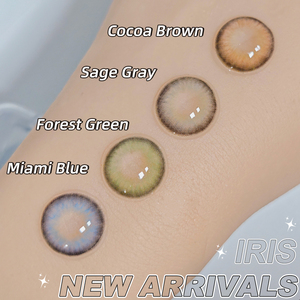
Water Content: 40% Polymacon hydrogel
Process: Fully cast molded sandwich color
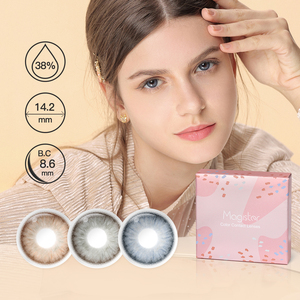
Pigment Tech: Micro-dot matrix layering
Wear Cycle: Monthly / Yearly disposable
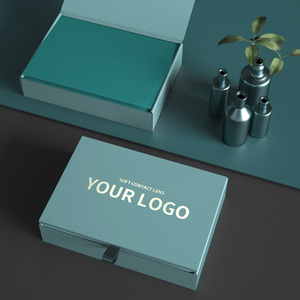
Finishes: Hot foil stamping, spot UV, embossing
Custom MOQ: 500 pcs with full die-line files
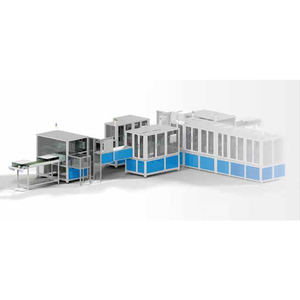
Vision Inspection: High-speed CCD optical test
Capacity: Up to 12,000 blisters / hr
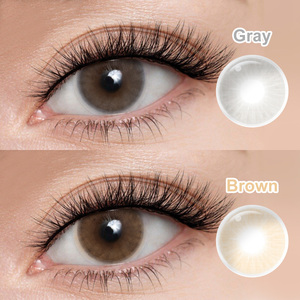
Target Iris: Dark brown / Caucasian hazel blend
Sterilization: Saturated steam autoclave 121°C
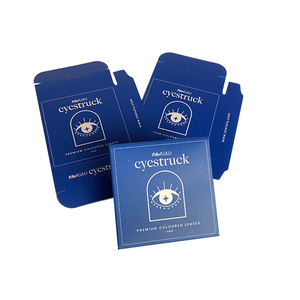
Compatibility: Glass vials, PP foil blisters
Compliant: ISO 15223-1 Medical Device Symbols
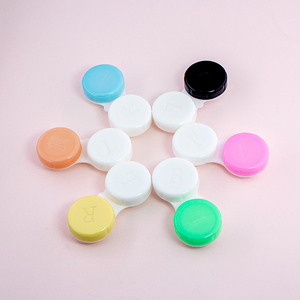
Safety: Medical grade PP, non-toxic, BPA-free
Customization: Silk-screen logo printing
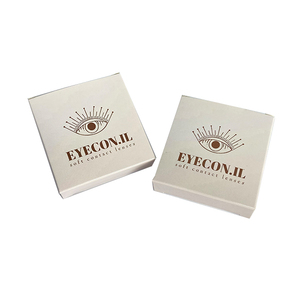
Compliance: Tamper-evident seals, UDI matrix code
Lead Time: 7-10 business days rapid turnaround
Engineering Superiority: Korean Cast Molding & Polymer Innovation
In high-stakes ophthalmic optics, patient safety and repeatable aesthetic depth dictate market longevity. Our manufacturing lines combine Korean polymer expertise with cleanroom automation.
Dual-Layer Pigment Sandwich Technology
Unlike lower-tier printed contacts where pigments contact corneal tissue directly, our automated Korean sandwich process embeds micro-pigments firmly between two inert hydrogel matrices. This guarantees zero color bleeding, prevents ocular friction, and retains 100% surface wettability for 12+ hours of wear.
Micro-Beveled Edge Profilometry
Discomfort often arises from poor edge geometry rather than lens thickness. Our CNC diamond-tooled cast molds yield an ultra-thin, smooth beveled edge profile that facilitates unhindered tear fluid exchange and micro-circulation during normal involuntary blinks, minimizing peripheral limbal hyperemia.
Automated CCD Laser Metrology & Inspection
Every single manufactured lens batch passes our automated in-line inspection workstations. Optical defect detection algorithms cross-reference base curve radii, center thickness tolerances (±0.005mm), edge concentricity, and chromatic density across high-resolution sub-pixel sensors.
Emerging Procurement Trends Shaping the Global Contact Lens Industry
B2B optical buyers, private label founders, and retail distributors must balance evolving clinical standards with aesthetic shifts. Here are the core sourcing trends dominating high-margin markets through 2026–2030.
1. The Rapid Transition from Polymacon to Silicone Hydrogel (SiHy)
While traditional 2-HEMA (Polymacon/Ocufilcon) continues to dominate budget cosmetic lenses due to low mold cycle times, high-tier retail brands are shifting rapidly to Silicone Hydrogel matrices. Silicone hydrogel delivers oxygen transmissibility (Dk/t) exceeding 80–120 units (compared to 18–25 in standard hydrogels), dramatically mitigating corneal hypoxia during extended cosmetic wear.
As an OEM buyer, specifying third-generation SiHy formulations with internal wetting agents (such as PVP copolymer grafting) allows your private label brand to command a 200% to 350% pricing premium in North American and European direct-to-consumer (DTC) channels.
2. Hyper-Natural Aesthetic Mimicry: The Decline of Harsh Limbal Rings
Oversized “circle lenses” with stark, solid black outer rings have witnessed softening demand in Western and upscale East Asian demographics. Market consumption has pivoted towards hyper-natural iris mimicry. Modern B2B collections emphasize radial feathering, realistic pupillary transition zones, and subtle limbal fade layers that blend seamlessly with both dark and light natural irises.
Our OEM color libraries include 3-tone and 4-tone variable opacity matrix prints that mimic the physiological crypts of Fuchs and contraction furrows found in natural human eyes.
3. Regulatory Stringency & The EU MDR Annex XVI Paradigm
Importers across the European Union now face the strict enforcement of Regulation (EU) 2017/745 (MDR), where cosmetic lenses without corrective power are explicitly categorized under Annex XVI alongside medical devices. Sourcing from non-certified exporters without complete technical documentation, biocompatibility testing (ISO 10993), and authorized European Representative (EC REP) pathways presents immediate customs seizure risks.
We provide global partners with turn-key technical files, clinical evaluation summaries, and validated sterilization records for seamless national health authority audits.
4. Sustainable Primary Packaging & Monomaterial Blister Foils
Environmental, Social, and Governance (ESG) mandates have reached retail cosmetics. Traditional PVC blister cavities sealed with heavy multi-layer aluminum foils represent significant recycling bottlenecks. Forward-thinking procurement directors are requiring polypropylene (PP) monomaterial blister designs, non-toxic peel adhesives, and compact secondary packaging manufactured from post-consumer recycled (PCR) kraft boards.
Our packaging automation engineering ensures that eco-blisters maintain complete hermetic seal integrity throughout autoclave sterilization cycles without foil delamination.
Material Engineering & Clinical Parameters Comparison
Selecting the optimal substrate formulation defines wearer tolerance, manufacturing yields, and regulatory classification. Review our standard Korean OEM raw material substrates.
| Polymer Classification | Water Content (%) | Dk/t (Transmissibility) | Base Curve Range | Wear Modality | Recommended Market Target |
|---|---|---|---|---|---|
| Polymacon (2-HEMA) | 38% – 42% | 18 – 22 × 10-9 | 8.5mm – 8.7mm | Daily / Monthly / Yearly | Mass Wholesale / High Volume |
| Etafilcon A (Ionic Hydrogel) | 55% – 58% | 28 – 33 × 10-9 | 8.4mm – 8.6mm | Daily Disposable | Ultra-Hydration / Sensitive Eyes |
| MPC Hydrogel (Biomimetic) | 48% – 52% | 35 – 40 × 10-9 | 8.5mm – 8.7mm | Monthly Disposable | Anti-Protein Adhesion / Premium |
| Silicone Hydrogel (SiHy Gen III) | 45% – 48% | 90 – 120 × 10-9 | 8.6mm – 8.8mm | Daily / Monthly | Clinical Grade / Luxury Retail |
| Gas Permeable Sclera Hydrogel | 38% – 45% | 25 – 45 × 10-9 | Specialized Arc | Cosplay / Theatrical | Special Effects / Custom Theatrical |
End-to-End Korean OEM Private Label Execution Protocol
Launching a certified contact lens brand requires a systematic workflow balancing pattern development, mold micro-machining, stability validation, and blister sealing.
Color & Diameter Design
Choose from 500+ pre-validated Korean iris palettes or submit custom Pantone raster graphics. Our optical design team optimizes the transparent pupil zone (typically 3.0mm – 3.8mm) to ensure visual clarity under scotopic low-light conditions.
Precision Tooling & Casting
Liquid monomer mixture is injected into ultra-precise male/female molds crafted via sub-micron diamond lathe cutting. Closed molds undergo thermal or UV photo-polymerization inside specialized anaerobic curing tunnels.
Hydration & Extraction
Solid-state polymerized lenses are hydrated in buffered saline baths to expand to exact equilibrium water content. Residual unreacted monomers are exhaustively extracted to eliminate ocular cytotoxic reactions.
Autoclave & Regulatory Labeling
Lenses are sealed in medical-grade vials or blisters with ISO 15223-1 compliant labels. Terminal sterilization occurs via moist heat steam autoclave at 121°C for a minimum of 20 minutes, validated to SAL 10-6.
Frequently Asked Questions for OEM/ODM Buyers & Importers
Essential regulatory, technical, and logistics answers compiled by our international export engineering department.
What is your minimum order quantity (MOQ) for custom private label contact lenses?
We provide one of the most flexible OEM/ODM programs in the Korean contact lens manufacturing sector. For stock designs selected from our catalog of over 500 proven patterns, private label packaging with your custom logo branding starts at just 100 pairs per design. For completely custom iris pattern printing requiring bespoke silicone printing pad engraving or unique base curve tooling, our typical pilot run MOQ starts at 500 to 1,000 pairs depending on the polymer substrate (Polymacon vs. Silicone Hydrogel).
How do you ensure biocompatibility and prevent color pigments from harming the eye?
We strictly apply Sandwich Encapsulation Technology. Color pigments (approved FDA CFR 73/74 cosmetic color additives, including iron oxides and copper phthalocyanine) are completely embedded between the base curve hydrogel matrix and the front curve layer. The pigments never make physical contact with the cornea, palpebral conjunctiva, or tear film. Furthermore, all lens formulations undergo cytotoxicity (ISO 10993-5), ocular irritation (ISO 10993-10), and systemic toxicity testing per international medical device standards.
What export regulatory documentation do you provide for European and US customs?
Our regulatory affairs department delivers complete technical dossier support for every export shipment. This includes ISO 13485:2016 certificates, Certificate of Free Sale (CFS), Certificate of Analysis (CoA) per production lot, sterilization validation reports (ISO 11137 / ISO 17665), stability shelf-life studies (accelerated and real-time up to 5 years), and SDS/MSDS sheets. For European clients, we provide full support for EU MDR 2017/745 Annex XVI compliance, including Unique Device Identification (UDI) code generation.
Can you manufacture prescription (Rx / Myopia / Astigmatism) colored contact lenses?
Yes. Our automated cast-molding lines accommodate both non-corrective cosmetic plano (0.00) lenses and corrective prescription lenses ranging from -0.50D to -10.00D (in 0.25D increments up to -6.00D, and 0.50D increments up to -10.00D). We can also engineer specialized toric colored lenses for astigmatism correction utilizing dynamic prism ballast stabilization geometries upon custom engineering consultation.
What is the shelf life of sealed sterile lenses, and what secondary packaging options exist?
Terminal sterilization in an airtight borosilicate glass vial with a chlorobutyl rubber stopper and flip-off aluminum cap provides a validated shelf life of 5 years. Polypropylene blister packs heat-sealed with multi-tier foil laminates typically feature a validated shelf life of 3 to 5 years depending on the polymer substrate. Secondary packaging options include FSC-certified biodegradable kraft boxes, luxury cosmetic folding cartons with foil stamping and spot UV, and travel kits complete with CE-marked applicator tweezers.
What are your manufacturing lead times for OEM sample approval and mass commercial production?
Physical pre-production samples from our catalog are dispatched within 3 to 7 business days. Custom pattern prototyping and dieline packaging digital proofing typically take 10 to 14 business days. Once final packaging art and lens samples receive physical client sign-off, standard mass production lead times range between 20 to 35 business days, including mandatory 14-day post-autoclave sterility and bio-burden incubation periods.
Launch Your High-Margin Private Label Contact Lens Brand
Consult directly with our ophthalmic engineers and export packaging specialists. We provide complimentary pattern catalogs, formulation datasheets, regulatory consultation, and physical sample kits delivered straight to your corporate facility.