OEM / ODM Product Recommendations for Global Distributors
Explore our top-tier cosmetic contact lens series, tool kits, and specialized private label packaging options engineered for high oxygen permeability and vibrant color encapsulation.
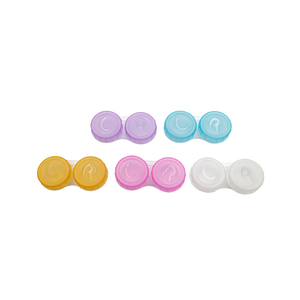
Application: Hygiene Travel Supply
Customization: Logo & Colorway OEM
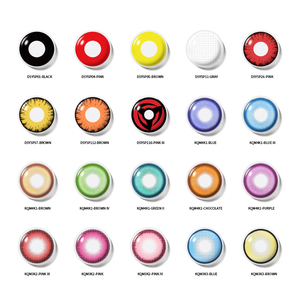
Diameter: 14.2mm | BC: 8.6mm
Shades: Brown, Pink, Green, Blue
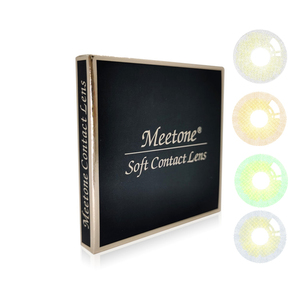
Packaging: Custom Box & Blister
MOQ: Low Batch Available
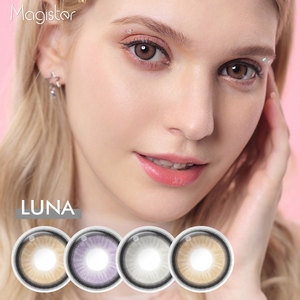
Base Curve: 8.5mm - 8.6mm
Certifications: ISO 13485, CE Marked
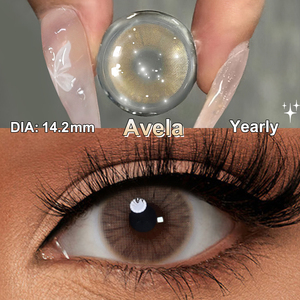
Thickness: 0.08mm Center
Target Market: EU & US Retailers
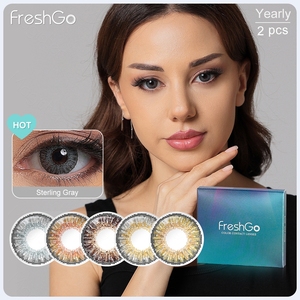
Oxygen Permeability: High Dk/t
Bulk Pricing: Tiered Wholesale
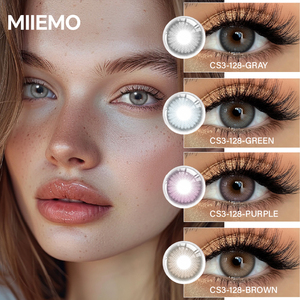
MOQ: From 100 Pairs
Turnaround: Rapid Prototyping
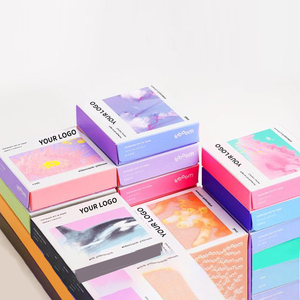
Printing: UV, Foil Stamping, Matte
Compliance: UDI Barcode Ready
Industry Whitepaper: Technical Standards & Procurement Strategy in Cosmetic Contact Lens Manufacturing
The global market for custom OEM colored contact lenses has undergone a structural transformation. What was once considered a niche fashion accessory has evolved into a highly regulated, technologically advanced sector of the ocular medical device industry. Procurement officers, optical chain buyers, and e-commerce brand founders are now tasked with navigating complex polymer chemistry, international regulatory frameworks (such as EU MDR Annex XVI and US FDA Class II designations), and hyper-dynamic consumer aesthetics.
1. Material Science & Pigment Micro-Encapsulation Technology
When evaluating a custom OEM colored contact lenses wholesale supplier, the fundamental benchmark of manufacturing competency lies in the color application method. Legacy printing techniques applied pigments directly onto the outer lens surface, leading to potential ocular irritation, pigment leaching, and abrasive friction against the palpebral conjunctiva.
Modern high-precision manufacturing relies on 3-Layer Sandwich Micro-Encapsulation Technology. Under this process, bio-compatible organic and inorganic pigments (such as Iron Oxides, Titanium Dioxide, and Phthalocyanine Blue) are embedded within a secondary hydrogel monomer matrix. The color layer is physically locked between an inner base curve layer and an outer front curve layer of clear hydrogel material.
| Manufacturing Standard | Traditional Direct Surface Printing | Advanced Sandwich Micro-Encapsulation |
|---|---|---|
| Corneal Pigment Exposure | High risk of microscopic leaching | Zero exposure; 100% enclosed within polymer |
| Surface Smoothness (Ra Value) | Uneven micro-roughness (>0.25 µm) | Ultra-smooth optical boundary (<0.05 µm) |
| Oxygen Transmissibility (Dk/t) | Pigment blocks fluid pathways | Optimized porous matrix maintains oxygen flux |
| Wear Comfort Duration | 4 - 6 hours (frequently induces dryness) | 8 - 12 hours sustained biocompatibility |
2. Enterprise OEM/ODM Capabilities: Miomiconlens Infrastructure
Miomiconlens Technology Co., Ltd. operates a fully integrated, automated cast-molding manufacturing environment certified under ISO 13485:2016. By bridging high-volume automated production with flexible, small-batch OEM programs, we solve the primary pain point for growing optical brands: high initial financial risk.
Future Procurement Trends in Colored Contact Lenses (2026–2030)
How changing consumer preferences, technological innovation, and evolving global medical standards are reshaping wholesale sourcing strategies.
Product Development & Manufacturing Technology Directions
To maintain a competitive edge, custom contact lens brands must align their product development pipelines with three core technological advancements currently driving factory production floors:
A. Hydration Locking & Hyaluronic Acid Polymer Matrix Bonding
Surface dehydration is the primary cause of contact lens discomfort and early removal. Next-generation OEM formulations integrate hydrophilic moisturizing agents—such as Sodium Hyaluronate (HA) or Polyvinylpyrrolidone (PVP)—directly into the monomer saline liquid prior to polymerization. This forms an internal water-locking network that resists environmental evaporation and maintains wettability throughout a 12-hour wearing cycle.
B. Automated Laser Edge Profiling
The peripheral edge design of a contact lens dictates tear exchange beneath the lens and determines conjunctival sensation. Conventional mechanical trimming can leave microscopic burrs. Advanced manufacturing facilities employ non-contact automated laser edging and high-resolution optical inspection (AOI) to create a rounded, tapered edge profile that glides effortlessly over ocular tissues.
C. Integrated Broad-Spectrum UV Protection
Modern consumers expect dual-function eye enhancement and protection. Incorporating Class 1 or Class 2 UV-blocking monomers into the hydrogel matrix allows the lens to absorb >90% of UVA and >99% of UVB radiation, safeguarding internal ocular structures from cumulative actinic damage without distorting color perception.
Frequently Asked Questions (B2B Procurement FAQ)
Detailed technical answers to common questions raised by brand managers, compliance officers, and sourcing agents during OEM onboarding.
Q1. What is the minimum order quantity (MOQ) for custom private-label colored contact lenses?
Our flexible OEM production model supports small-batch launch testing starting from 100 pairs per design for existing catalog patterns (ODM). For fully customized iris artwork, custom base curves, or bespoke primary box printing, trial batch runs typically begin between 500 to 1,000 pairs depending on packaging specifications.
Q2. How do you ensure biological safety and prevent pigment leaching in colored lenses?
We utilize a proprietary 3-layer sandwich color embedding process. Pigments are completely encapsulated between two layers of clear hydrogel polymer, ensuring zero direct contact with the cornea or eyelids. Every batch undergoes cytotoxicity testing, ocular irritation testing, systemic toxicity screening, and ISO 10993 biological evaluation.
Q3. Can Miomiconlens supply compliance documentation for EU MDR and US FDA registration?
Yes. Non-corrective cosmetic lenses are regulated under Annex XVI of Regulation (EU) 2017/745 in Europe and Class II special controls in the US. We provide full manufacturer-side technical dossiers, ISO 13485 certificates, material safety data sheets (MSDS), sterilization validation reports (EN ISO 17665-1), and primary/secondary labeling files with UDI barcode integration.
Q4. What primary and secondary packaging customization options are available?
We offer complete end-to-end packaging engineering. Primary packaging options include sterile glass vials (popular for annual lenses) and polypropylene foil-sealed blisters (ideal for daily and monthly disposable lines). Secondary packaging includes custom rigid gift boxes, folding cardstock cartons, multilingual instruction leaflets (IFUs), and custom tamper-evident security seals.
Q5. What replacement schedules and prescription parameters can be manufactured?
We produce daily (1-day), monthly (1-month), quarterly (3-month), and annual (1-year) wearing schedules. Powers range from plano (0.00 diopters) for purely cosmetic use to prescription myopia correction ranging from -0.50D to -10.00D in 0.25D or 0.50D steps. Toric lenses for astigmatism can also be produced under specialized ODM project contracts.
Q6. What is the standard production lead time from artwork approval to shipping?
For standard catalog designs using existing packaging templates, production lead time is typically 14 to 21 working days. For fully custom packaging development or new custom mold engraving, initial project lead time ranges from 30 to 45 days. Expedited air freight and DAP/DDP logistics services are supported globally.
Q7. How are physical samples requested for laboratory and wearing trial evaluation?
Qualified business buyers can request physical sample kits containing sample lenses across diverse water contents, iris patterns, and packaging styles. Contact our export sales team via the live chat or quotation button to select your desired colorways and specify your destination market compliance requirements.
Launch Your Private Label Colored Contact Lens Line Today
Partner with a trusted, ISO 13485-certified contact lens manufacturer. Connect with our OEM export engineers to request full product catalogs, regulatory documentation, and custom factory quotes.