Natural Multi-Tone
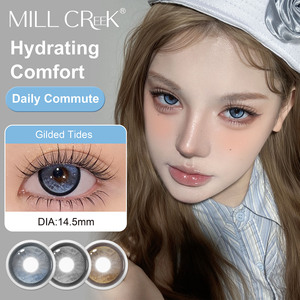
Engineered via sub-micron cast-molding and triple-layer pigment sandwich encapsulation. Fully compliant with international ophthalmic safety metrics for B2B optical chains, beauty distributors, and private-label e-commerce brands.
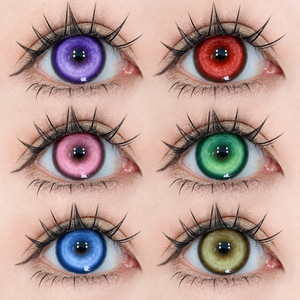
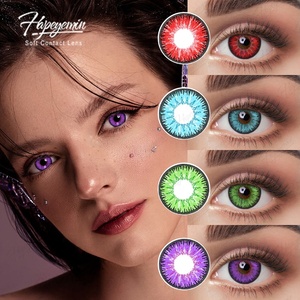
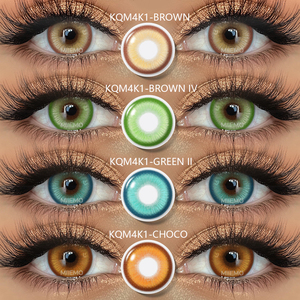
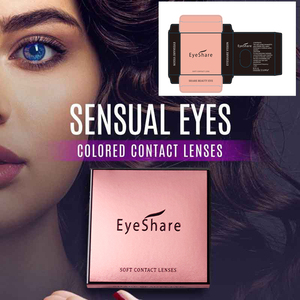
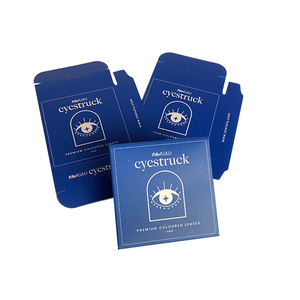
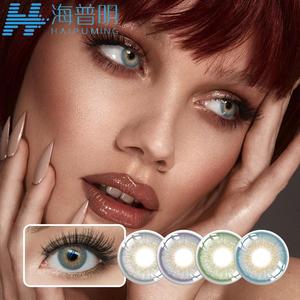
Combining world-class polymer science with high-throughput cast-molding precision. We empower cross-border brands to launch high-margin product lines supported by bulletproof international certifications.
Unlike secondary surface-printed lenses that present risks of pigment abrasion and corneal staining, our automated cast-molding lines employ a sealed "sandwich" encapsulation structure. Non-toxic bio-reactive pigments are permanently embedded between biocompatible hydrogel layers, guaranteeing 0% pigment-to-cornea contact and exceptional optical smoothness.
Our production facilities utilize CNC nano-lathe master tooling and proprietary polymer cure kinetics. Every cosmetic lens achieves continuous round-edge profiles that promote natural tear exchange, reduce friction along the palpebral conjunctiva, and dramatically minimize foreign-body sensations during extended 8-to-12 hour daily wear sessions.
Navigating global medical device regulations can delay launch schedules by years. We furnish comprehensive technical files, biological safety evaluations (ISO 10993), accelerated shelf-life aging test reports, and factory master files compatible with EU MDR (Annex XVI), US FDA 510(k), and national health regulatory submissions worldwide.
A rigorous engineering perspective on balancing water content, oxygen transmissibility (Dk/t), and surface wettability in modern color contact lens formulations.
In conventional poly-HEMA (2-hydroxyethyl methacrylate) hydrogels, hydration levels dictate oxygen permeability according to the classic Fatt relation: as water percentage increases from 38% to 58%, Dk rises concurrently. However, high-water hydrogels often dehydrate on-eye under low-humidity conditions (e.g., air-conditioned office environments or prolonged digital screen usage), leading to secondary desiccation corneal staining. Our proprietary Polymacon-NVP formulations strike an optimal compromise at 38%–42% hydration, retaining internal water matrix stability without drawing moisture from the precorneal tear film.
For premium product lines, our advanced Silicone Hydrogel (SiHy) color platforms decouple oxygen transport from water content. By establishing siloxane fluorocarbon transport pathways, these lenses attain Dk/t values spanning 85 to 110 Barrer/cm, effectively eliminating hypoxic corneal swelling while maintaining hydrophilic surface plasma grafting to deter lipid and protein deposits.
The comfort threshold of a colored contact lens is overwhelmingly determined by its peripheral edge architecture. Traditional chisel-cut edges cause mechanical micro-trauma to the limbal epithelium. Our molds integrate a proprietary "ski-slope" bevel configuration that maintains an optimal 0.04mm to 0.06mm edge clearance. This allows uniform capillary tear circulation beneath the posterior lens surface during involuntary blinks, flushing metabolic debris and maintaining ocular homeostasis.
| Material Classification | Water Content (%) | Oxygen Permeability (Dk/t) | Primary Clinical Advantage | Ideal Replacement Frequency |
|---|---|---|---|---|
| Hydrogel (HEMA-GMA) | 38% - 42% | 12 - 18 Barrer/cm | Superior shape retention, minimal dehydration in dry environments | Monthly, Quarterly, Annual |
| High-Water Hydrogel (HEMA-NVP) | 55% - 58% | 22 - 28 Barrer/cm | Ultra-soft initial on-eye touch, instantaneous comfort | Daily Disposable (1-Day) |
| Silicone Hydrogel (SiHy Gen III) | 45% - 48% | 85 - 120 Barrer/cm | Eliminates corneal hypoxia, safe for extended 12h+ cosmetic wear | Daily & Monthly Premium Lines |
| Therapeutic FX Hardness Hydrogel | 38% | 15 Barrer/cm | Full opacity coverage for dark irises and theatrical circle FX | Annual / Seasonal Retail |
How evolving consumer behaviors, regulatory frameworks, and distribution channels are reshaping B2B sourcing requirements over the next decade.
While annual and quarterly lenses remain strong cash generators in emerging retail sectors, mature markets across North America, the European Union, and East Asia are shifting decisively toward single-use daily disposables. Driven by consumer awareness surrounding ocular hygiene and zero-maintenance convenience, B2B buyers are scaling up OEM orders for 10-pack and 30-pack daily blister strips. Factories with automated high-speed blister packing and inline optical inspection machines represent the key suppliers capturing this high-volume recurring replenishment cycle.
The era of exaggerated, artificial "doll-eye" lenses (14.5mm+ graphic diameter with harsh limbal rings) is giving way to realistic, low-contrast designs. Consumers demand subtle iris enhancement that integrates naturally with indigenous eye shades. Procuring brands are prioritizing patterns with stochastically scattered pigment dots, translucent transitional zones, and Graphic Diameters (GDIA) calibrated strictly between 13.0mm and 13.4mm to simulate authentic iris crypts and furrows.
Regulatory mandates such as the German Packaging Act (VerpackG) and EU Single-Use Plastics Directives have elevated packaging sustainability to a decisive supplier selection criterion. B2B buyers now seek Chinese manufacturers capable of supplying polypropylene blister cups with optimized wall thickness (reducing raw resin consumption by up to 22%), secondary cartons crafted from FSC-certified paperboards, and soy-based non-volatile inks, all without compromising sterile barrier integrity.
The convergence of cosmetic allure and therapeutic utility is driving unprecedented R&D capital expenditure across China's elite manufacturing clusters.
Modern consumers spend upwards of 9 hours per day exposed to digital displays and outdoor irradiance. Leading Chinese manufacturers are now incorporating polymerized benzophenone and triazine UV-blocking monomers directly into the hydrogel prepolymer matrix prior to cast-molding. Unlike topical coatings that can wear off, this molecular integration absorbs over 95% of UV-B, 80% of UV-A, and systematically dampens high-energy visible (HEV) violet-blue spectra between 415nm and 455nm without causing color cast distortion to the wearer's vision.
Crucial commercial, regulatory, and production logistics answers derived from managing thousands of export containers worldwide.
Connect with our technical engineering and export compliance team. Request a physical sample kit, review comprehensive ISO/CE audit files, and receive a transparent volume quotation engineered for your target market.
Contact Us