Natural Gradient
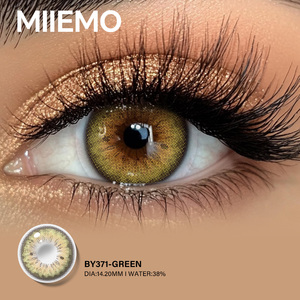
Engineered via sub-micron cast-molding, multi-layer sandwich pigment entrapment, and clinical-grade biocompatible hydrogels for exceptional corneal breathability.
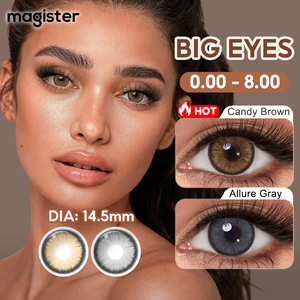
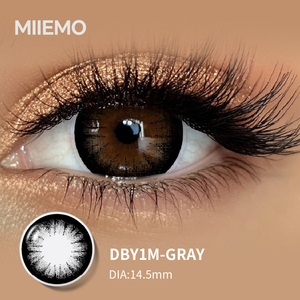

In global ophthalmic device supply chains, medical device buyers, beauty conglomerates, and optical chains consistently assess two prominent manufacturing clusters: China contact lens manufacturing plants and South Korea optical factories. Both industrial ecosystems command high market authority, yet their technical and commercial models serve distinct strategic objectives.
South Korea’s contact lens industry, historically anchored around Daejeon, Gwangju, and Gyeonggi-do, built international acclaim through early innovation in lathe-cutting and semi-cast processes, cultivating distinct aesthetic patterns for Asian and Western cosmetic markets. Korean factories excel in intricate graphic formulations, 3-tone limbal borders, and artisanal pattern prototyping. However, procurement officers scaling private label brands in Europe, North America, and Latin America frequently encounter systemic bottlenecks in Korean facilities: strict minimum batch orders (MOQs often exceeding 5,000–10,000 units per Stock Keeping Unit), elevated tooling costs, and longer lead times for custom blister tooling.
Conversely, China's advanced contact lens contract manufacturing landscape has achieved rapid technological convergence through heavy capital investment in fully automated high-speed cast-molding systems, state-of-the-art cleanrooms (Class 100,000 / ISO 8 or higher), and integrated downstream ecosystems. Chinese manufacturers provide an unparalleled combination: the aesthetic variety and color-rendering sophistication of Korean design studios, coupled with unmatched manufacturing agility, vertical packaging integration, and accessible minimum order commitments (such as Miomiconlens' low 100-pair entry tier).
| Procurement Metric | Standard Korea Factories | Premier China Manufacturers (Miomiconlens Model) |
|---|---|---|
| Primary Molding Technology | Semi-cast / Lathe-cut & Hybrid Cast-Molding | Continuous Sub-Micron Fully Automated Cast-Molding |
| Entry Barrier (Initial MOQ) | High (Typically 3,000 - 10,000 pairs per SKU/power) | Ultra-Agile (Starts at 100 pairs per design for pilot launches) |
| Pigment Safety Method | Pad Printing with Standard Sandwich Encapsulation | Micro-encapsulated Dual-Layer Full Embedding Technology |
| Lead Time (Custom OEM) | 60 to 90 business days | 25 to 45 business days (Sample prototypes in 7–10 days) |
| Comprehensive Packaging | Third-party packaging subcontractors common | Direct integrated packaging lines (boxes, kits, cases, displays) |
| EU MDR & Regulatory Data | Strong for regional K-MFDS; varied EU MDR readiness | Dedicated MDR Annex XVI, ISO 13485, UDI & German IFU compliant |
Analyzing key structural shifts reshaping OEM purchasing strategies for 2026 and beyond.
Global demand is steadily transitioning from classic Poly-HEMA hydrogel to third-generation fluorosilicone and silicone hydrogel matrix structures. Procuring brands require high oxygen transmissibility (Dk/t > 80) without compromising water content or modulus elasticity, preventing peripheral keratitis during extended wear cycles.
Direct-to-consumer (DTC) and fast-beauty eyewear brands are abandoning high-volume annual inventory stock models. Procurement directors require agile manufacturers capable of supporting short production runs, rapid SKU testing, and immediate replenishments to mitigate dead-stock risks across seasonal color drops.
The regulatory classification of non-corrective cosmetic lenses under EU MDR Regulation (EU) 2017/745 Annex XVI requires factory partners to maintain complete clinical data evaluations, biocompatibility profiles (ISO 10993), continuous post-market surveillance, and registered Unique Device Identification (UDI) tracking.
How cutting-edge precision tooling, bio-colorimetry, and surface hydrophilization redefine lens performance.
By employing ultra-precision diamond-turned optical steel inserts within high-cavity cast-molds, leading factories produce tapered, rounded lens edge profiles. This continuous edge design eliminates tear-film disruption, reduces eyelid friction, and significantly increases all-day wear satisfaction.
Advanced cosmetic contact lenses utilize micro-molecular entrapment printing. Non-toxic, pharmaceutical-grade cosmetic pigments are permanently cured between two transparent structural polymer envelopes, guaranteeing that pigments never contact the corneal surface or the conjunctiva.
Rather than relying solely on superficial post-treatment coatings that degrade over multiple cleanings, internal polymer chemistry integrates internal wetting agents (such as polyvinylpyrrolidone - PVP and phosphorylcholine - PC analogs) to sustain surface hydration and inhibit lipid deposition.
Combining the artistic design flexibility of South Korean studios with the manufacturing power, cost efficiency, and end-to-end integration of China's top medical optical facilities.
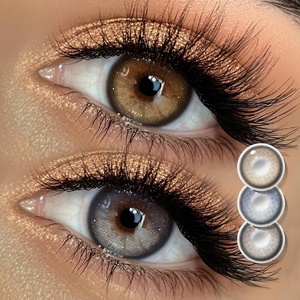
Extensive catalog covering hyper-natural blending, limbal enlargement ring styles, vivid multi-tone matrices, prescription corrective optics, and specialized cosplay/theatrical SFX lenses engineered for global ocular aesthetics.
De-risk your brand launch. Our pilot manufacturing tracks allow emerging brands, clinic optical chains, and digital retailers to start production runs from just 100 pairs per SKU before scaling to mass automated batches.
We supply ISO 13485 cleanroom certifications, NMPA, FDA Master Files, CE documentation, biological evaluation reports (ISO 10993), stability data, and localized multilingual IFU labeling for German, EU, and Americas customs entry.
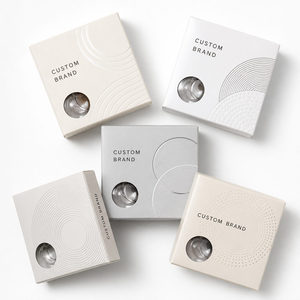
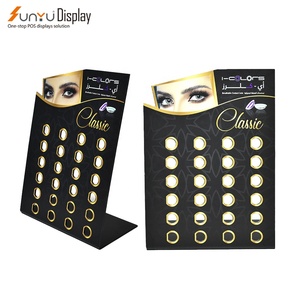
Eliminate multi-vendor friction. We deliver fully branded blisters, autoclaved vials, foil-embossed paperboard outer cartons, multi-language inserts, companion contact lens cases, travel kits, and retail acrylic counter displays.
Full manufacturing versatility across daily disposables (1-day), bi-weekly, monthly (30-day), quarterly, and extended annual replacement wear schedules across standard and custom base curves (8.5mm to 8.9mm).
Experienced international export division providing air and sea courier management, DDP/DAP options, LUCID/VerpackG adherence in Germany, and full customs compliance direct to your regional warehouse hub.
Clear, direct technical and commercial answers addressing common OEM & ODM sourcing inquiries.
Consult with our optical engineering team. Receive technical specifications, full regulatory documentation, physical sampling, and customized private-label pricing within 24 business hours.
Contact Us