500+
Ready Iris Patterns & Tooling Sets
100
Pairs MOQ Small-Batch Validation
Class100K
Certified Cleanroom Facilities
100%
EU MDR Annex XVI Technical Readiness
Factory Catalog
High-Precision Optical Inventory & Custom Packaging Ecosystem
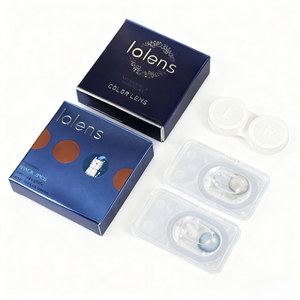
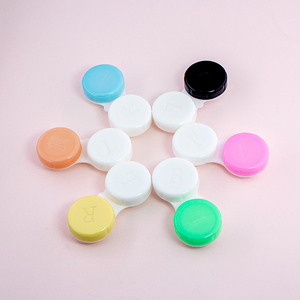
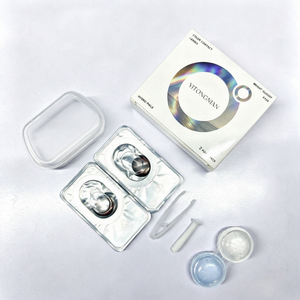
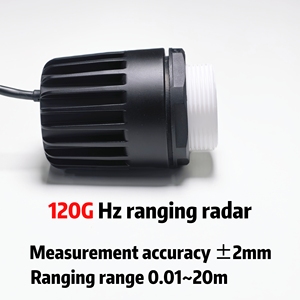
Direct supply-chain procurement: from medical grade contact lenses to bespoke secondary packaging and environmental level-monitoring instrumentation.
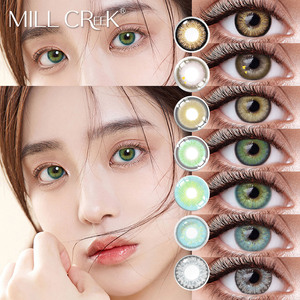
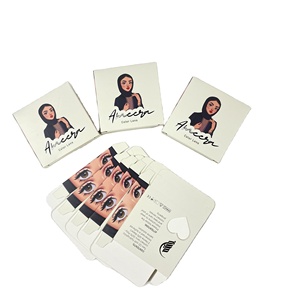
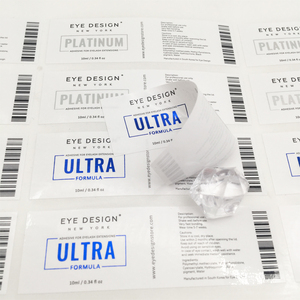
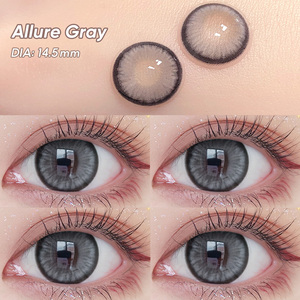
Technical Whitepaper
Deconstructing Optical Excellence: China's Next-Gen Contact Lens Manufacturing
Navigating the global supply chain for Class II and Class III medical devices requires navigating rigorous international standards, material biomechanics, and micro-precision manufacturing. China's top contact lens manufacturers have transformed from basic contract packagers into advanced optoelectronic cleanroom powerhouses capable of full cast-molding, double-sandwich pigment encapsulation, and multi-curve edge contouring.
Key Engineering Metric: Industrial cast molding tolerances within our Class 100,000 cleanrooms maintain sagittal depth variations below ±0.02mm, ensuring consistent base curve radii (8.5mm – 8.6mm) and minimal ocular surface shear.
Modern cast molding integrates automated digital optical inspection (AOI) with sub-micron surface topography profiling. As cosmetic colored lenses and high-diopter corrective contacts continue to surge across Europe, North America, and Southeast Asia, our manufacturing infrastructure bridges raw hydroxyethyl methacrylate (HEMA) and advanced silicone hydrogel polymerizations with automated saline buffer packaging systems.
ISO 13485
Medical QMS
CE Marking
MDR Annex XVI
US FDA
510(k) Cleared
NMPA
Class III Verified
GMP Cleanroom
Class 100K Validated
MFDS
Korea Approved
Furthermore, cosmetic pigmentation safety remains the foundation of eye health. Using triple-layer "sandwich" entrapment technology, pigment micro-particles are hermetically sealed inside the lens core. This completely isolates colorants from the human corneal epithelium and conjunctiva, guaranteeing zero pigment leaching while maximizing oxygen permeability (Dk/t) for prolonged wear.
Sourcing Intelligence
Future Procurement Trends in the Global Contact Lens Sector
Strategic purchasing insights for brand directors, retail opticians, and e-commerce aggregators preparing for 2026–2030 market shifts.
Agile Small-Batch OEM (MOQ 100)
The era of rigid 10,000-unit minimums is ending. High-growth indie eyewear labels demand lower inventory risks, testing viral colorways via ultra-low 100-pair minimum order quantities before committing to mass production.
EU MDR Annex XVI Tightening
Cosmetic lenses without optical correction are now classified under Regulation (EU) 2017/745 Annex XVI. Wholesale buyers must partner with manufacturers providing full Clinical Evaluation Reports (CER) and UDI barcode structures.
Silicone Hydrogel Penetration
While poly-HEMA hydrogel dominates the budget cosmetic space, next-generation procurement is pivoting toward high-Dk/t fluorosilicone materials to prevent hypoxia-induced complications during 12+ hour daily cosmetic wear.
Material Comparison
Engineering Specifications: Comparing Modern Production Modalities
Quantitative breakdown of core physical parameters across wear modalities to assist B2B procurement decision-making.
| Evaluation Parameter | Daily Disposable (1-Day) | Monthly Replacement | Annual Cosmetic (1-Year) | Silicone Hydrogel Hybrid |
|---|---|---|---|---|
| Water Content (%) | 55% – 58% | 40% – 45% | 38% – 42% | 45% – 50% |
| Dk/t (Oxygen Transmissibility) | 25 – 32 × 10-9 | 20 – 28 × 10-9 | 16 – 22 × 10-9 | 80 – 120 × 10-9 |
| Base Curve (BC) Options | 8.5mm, 8.6mm | 8.6mm | 8.6mm | 8.4mm, 8.6mm |
| Diameter (DIA) Range | 14.0mm – 14.2mm | 14.0mm – 14.5mm | 14.0mm – 15.0mm | 14.0mm – 14.3mm |
| Sterilization Standard | Steam Autoclave 121°C | Steam Autoclave 121°C | Steam Autoclave 121°C | Steam Autoclave 121°C |
| Packaging Medium | Buffered Saline Blister Pack | Buffered Saline Blister Pack | Hermetic Borosilicate Vial | Buffered Saline Blister Pack |
Factory Advantage
Why Tier-1 Global Brands Choose Our Cleanroom Manufacturing
A completely integrated supply ecosystem from raw monomer compounding to end-consumer packaging fulfillment.
End-to-End Vertical Integration
We eliminate middlemen margin dilution. Our facility houses high-precision steel tooling centers, mold-casting cleanrooms, automated optical testing arrays, and in-house carton printing lines, securing your margins from origin.
Defect Rate Less Than 0.05%
Every single contact lens passes through automated high-resolution CCD cameras that verify edge curvature, diameter eccentricity, and pigment centralization before blister sealing, keeping customer defect complaints near zero.
Multilingual Regulatory Dossiers
We prepare all compliance files for seamless international customs clearance: German-language labeling, EU Authorized Representative (EC REP) assistance, LUCID packaging declarations, and US FDA submission data sets.
Buyer FAQ
Frequently Asked Questions: Global Sourcing & Compliance
Key operational clarifications for B2B procurement officers, opticians, and private-label distributors.
What are the typical MOQ requirements for new private-label contact lens brands?
For custom ODM patterns from our existing mold library of 500+ styles, our small-batch startup tier initiates at just 100 pairs per SKU. For fully bespoke iris dot-matrix printing designs requiring customized steel tool creation and new photolithography film, standard production MOQs range between 1,000 to 3,000 pairs depending on the packaging format (vial vs. blister pack).
How does the factory ensure regulatory compliance with EU MDR Annex XVI for non-prescription colored lenses?
Under EU MDR Regulation (EU) 2017/745, cosmetic contact lenses are strictly treated as Class IIa medical devices even when zero corrective power is present. Our factory provides full technical files comprising biocompatibility testing (ISO 10993 cytotoxicity, ocular irritation, systemic toxicity), stability studies, sterilization validation under ISO 11137, and UDI (Unique Device Identification) data ready for EUDAMED registration.
What is the difference between cast-molding and lathe-cutting for soft contact lenses?
Cast-molding involves injecting liquid polymer monomer directly into micro-machined concave and convex optical mold pairs, followed by UV or thermal polymerization. This process yields ultra-thin, smooth edges, uniform mass production, and superior wearer comfort. Lathe-cutting mechanically carves solidified polymer discs, which is useful for custom scleral or complex toric lenses, but slower and less consistent for mass-market cosmetic batches.
Can packaging, blister foils, and carton boxes be printed with custom regional languages?
Yes. Our in-house packaging division prints pharmaceutical-grade multi-lingual packaging, including German (VerpackG compliant), English, French, Spanish, and Arabic. We integrate mandatory regional regulatory symbols, lot numbers, expiration tracking, sterile barrier indicators, and importer address specifications directly onto primary blister foils and secondary paper cartons.
What lead times and shipping Incoterms are standard for international bulk orders?
Standard lead times for stocked ODM designs are 7 to 15 business days. Custom private-label runs with novel packaging require 30 to 45 business days including print proof approvals and cleanroom scheduling. We support all primary Incoterms including EXW, FOB (Shanghai/Shenzhen), DAP, and DDP with full door-to-door temperature-controlled air freight solutions.
Accelerate Your Optical Brand With A Proven Manufacturing Partner
Whether establishing a new boutique cosmetic lens label or scaling multi-million unit hospital distribution, request our comprehensive OEM/ODM catalog, sample test kit, and technical dossier today.
Inquire Now