Featured Contact Lenses & Precision Packaging Systems
Engineered for optical accuracy, clinical-grade biocompatibility, and luxury cosmetic retail presentation.
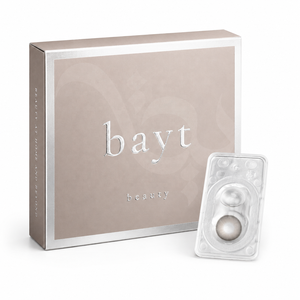
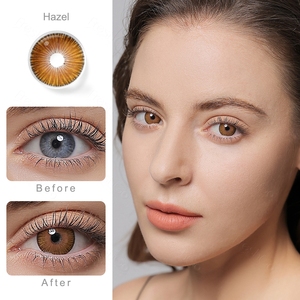
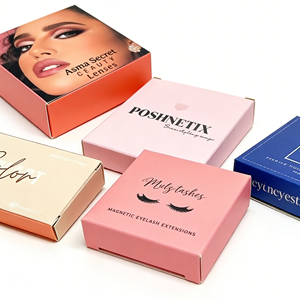
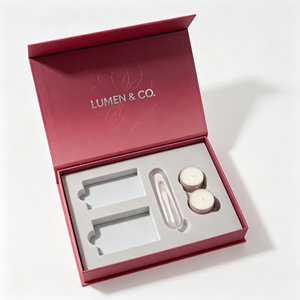
Precision Color Encapsulation & Cast-Molding Excellence
Eliminating pigment shedding, corneal staining, and hypoxic discomfort through verified microscopic multi-layer casting.
Sandwich Pigment Lock
Industrial color printing risks direct corneal or palpebral conjunctival contact if executed as a surface print. Our factory implements high-precision cast molding where biocompatible FDA/CE approved non-ionic micro-pigments are encapsulated between two micro-thin monomer layers. The colorant matrix never contacts ocular tissue, maintaining a zero-toxicity safety profile.
- Zero pigment leaching certified by ISO 10993 cytotoxicity assays
- Ultra-smooth anterior and posterior surface profiles
- Hydrophilic outer layer preserving ocular tear film balance
Hydrophilic Edge Profile (HEP)
Discomfort in extended colored contact wear stems from edge stiffness and poor tear exchange. Using CNC nano-lathe master tooling, our injection molds create a tapered multi-radial ski edge. Each blink facilitates natural lacrimal tear flow underneath the lens matrix, preventing conjunctival indentation and dry-eye symptoms during 12+ hour wear schedules.
- Tapered bevel geometry reducing eyelid friction
- Dynamic tear pump dynamics preventing corneal edema
- Constant 0.08mm center thickness profile for high Dk/t
Polymacon & Silicone Hydrogel
We tailor hydrogel formulations to regional market demands. Our PolyHEMA (38%-42% water content) ensures structural stability, resistance to environmental protein deposit build-up, and high tensile tear-resistance for annual replacement cycles. Our newly developed Silicone Hydrogel series offers elevated oxygen permeability (Dk/t > 80) tailored for daily disposable luxury markets.
- Non-ionic polymers reducing lipid and protein adhesion
- High mechanical resilience reducing breakage rates in automated bottling
- UV-blocking Class II protection embedded directly into the polymer chain
Engineering Specifications Across Lens Modalities
Factory-verified physical-chemical parameters conforming to ISO 18369 and EN ISO 13485 standards.
| Series Category | Base Curve (BC) | Diameter (DIA) | Water Content | Polymer Formulation | Color Encapsulation Tech | Standard Wear Schedule |
|---|---|---|---|---|---|---|
| Natural Pupilentes (14.0 - 14.2mm) | 8.5mm - 8.6mm | 14.0mm / 14.2mm | 38% - 40% | Poly-HEMA (Group 1 Non-ionic) | Full Cast Semi-Sandwich Process | Daily / Monthly / Yearly |
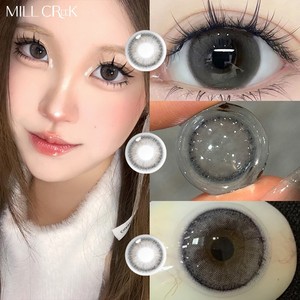
| Doll-Eye & Kawaii Enhancing (14.5mm) | 8.6mm | 14.5mm | 40% - 42% | Hydrophilic Poly-HEMA | Dual-Lamination Ring Technology | Monthly / Quarterly / Yearly |
| Silicone Hydrogel Daily Disposables | 8.5mm - 8.7mm | 14.1mm - 14.3mm | 45% - 55% | Filcon II 3 (Silicone Matrix) | Molecular Dispersion Monomer Lock | Single-Use Daily Disposable |
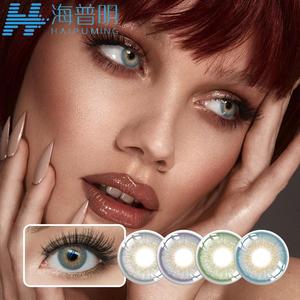
| Theatrical / Mini-Sclera FX (15.0 - 17.0mm) | 8.6mm - 9.0mm | 14.5mm - 17.0mm | 38% | High-Tensile Poly-HEMA | Full-Coverage Pigment Interlayer | Seasonal / Yearly |
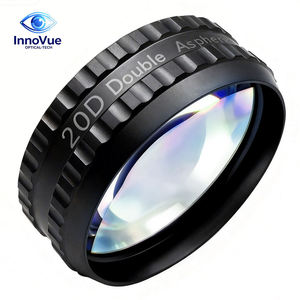
| Clinical Diagnostic (e.g. 20D Fundus) | Anatomical Fit | Optical Aperture Spec | Non-Hydrated / Optical PMMA/Glass | Medical High-Index Crown Polymer | Anti-Reflective Medical Multicoating | Multi-Year Hospital Reusable |
Future Procurement Trends in Colored Contact Lens Manufacturing (2026–2030)
Navigating shifting clinical standards, digital customization, sustainable packaging mandates, and lean inventory strategies.
EU MDR Annex XVI Enforcement
Aesthetic, non-corrective colored lenses are legally categorized as Class IIa medical devices across Europe under Regulation (EU) 2017/745 Annex XVI. Wholesale buyers can no longer rely on superficial cosmetic paperwork. Procurement is shifting towards certified Chinese factories holding full technical documentation, clinical evaluations, and active Notified Body audit trails.
The Surge of Daily Disposables
While yearly replacement lenses retain strong cost advantages in Latin America and the Middle East, Tier-1 brands in North America, Western Europe, and East Asia are shifting capital into daily disposable colored blisters. Consumers prioritize sterile convenience, driving procurement volumes toward automated high-speed blister packing lines that cut unit costs.
Micro-Batching & Rapid Color Testing
Massive 10,000-pair MOQs are obsolete for digital-first D2C brands. Market leaders source through agile OEM hubs offering 100-pair MOQs per design. This enables swift A/B testing of iris patterns, quarterly capsule launches matching seasonal fashion trends, and near-zero inventory deadstock through rapid replenishment protocols.
Plastic-Negative Blisters & Paper Packaging
Environmental compliance laws (such as Germany's VerpackG/LUCID and EU PPWR) are compelling importers to procure recyclable secondary art-paper cartons, biodegradable polypropylene blister bowls, and reduced-foil lidding. Sustainable outer cases have evolved from a marketing gimmick into a mandatory customs clearance prerequisite.
Why Global Optical Brands Choose Our Chinese Manufacturing Hub
We bridge the gap between high-precision optical laboratory fabrication and flexible commercial export. By consolidating cleanroom polymer synthesis, lens casting, blister sealing, and custom packaging in-house, we eliminate multi-tier contractor margins and ensure complete batch traceability from raw monomer to final logistics delivery.
- 100% In-line Automated Optical Inspection (AOI)
- Full Multi-Lingual Dossier Support (UDI, IFU, Barcodes)
- Custom Pupil/Iris Radial Pattern Development in 14 Days
- DAP/DDP Direct Air Freight to EU, USA, LatAm Warehouses
State-of-the-Art Contact Lens Cleanroom Process Flow
A transparent view into our automated cast-molding, sterilization, and quality validation infrastructure.
1. Nano-Precision Tooling & Mold Injection
High-grade optical molds are produced using single-point diamond turning machines within temperature-stabilized chambers. Liquid optical monomers (HEMA or Silicone macromolecules) are injected into anterior and posterior mold halves with sub-micron precision to ensure uniform diopter power and zero optical aberration across every single lens batch.
2. Photopolymerization & Hydration
Molds undergo controlled thermal or UV-curing chambers where cross-linking agents stabilize the polymer network. The hardened lenses then pass into automated multi-stage de-molding and ultrasonic demicon-purified hydration baths. The dry xerogel expands predictably into an ultra-soft, flexible hydrogel state while unreacted monomers are thoroughly extracted.
3. Automated AOI & Terminal Autoclaving
Each individual lens is inspected in a liquid immersion state through 360-degree high-resolution dark-field digital vision systems that spot edge chips, bubbles, or pigment misalignments as small as 5 micrometers. Certified lenses are sealed in medical-grade aluminum blister packaging or glass vials, followed by validated steam sterilization at 121°C for 30 minutes.
Frequently Asked Questions for Contact Lens Procurement & OEM
Clear, authoritative technical, regulatory, and commercial answers for brand founders, hospital procurement officers, and retail distributors.
What is the true Minimum Order Quantity (MOQ) for custom private label brands?
For existing catalogue designs from our 500+ iris pattern library, our agile small-batch OEM program starts at just 100 pairs per design/colorway. For fully bespoke iris patterns engineered from customer CAD or vector artwork, the initial molding development MOQ is 1,000 pairs. For custom retail paper packaging boxes and magnetic gift kits, box production starts at 500 to 1,000 units depending on printing finishes (UV spot, hot foil, or window cutouts).
How do you assist buyers with EU MDR (2017/745) Annex XVI compliance for cosmetic lenses?
Under the updated European Medical Device Regulation (EU MDR), colored contact lenses without corrective vision function fall under Annex XVI and are subjected to Class IIa conformity assessment procedures. As an ISO 13485 certified manufacturer, we supply the complete technical documentation dossier: biocompatibility test reports (ISO 10993 cytotoxicity, ocular irritation, sensitization), shelf-life stability data, sterilization validation reports (ISO 17665), and standardized UDI-compliant labelling templates ready for your European Authorised Representative (EC REP).
What is the difference between Poly-HEMA and Silicone Hydrogel colored lenses?
Poly-HEMA (hydroxyethyl methacrylate) is the battle-tested industry standard for cosmetic contact lenses. It provides an optimal balance between mechanical durability, cost efficiency, and moisture retention (38%-42%), making it the material of choice for monthly, quarterly, and annual replacement cycles. Silicone Hydrogel incorporates fluorosilicone macromolecules, boosting oxygen transmissibility (Dk/t) by 3x to 5x. While more expensive to mold, Silicone Hydrogel is the preferred choice for premium daily disposable brands targeting all-day comfort.
Can you provide customized packaging with multilingual Instructions for Use (IFU)?
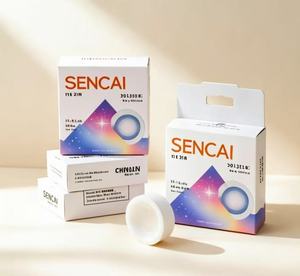
Yes. We offer turnkey packaging customization covering vial labels, PP blister foil films, single/dual unit folding cartons, multi-pack magnetic kits, and paper insert sheets. We assist in printing regulatory text in German, French, Spanish, Italian, Arabic, Japanese, and English. We ensure designated spaces for GS1 DataMatrix barcodes, lot numbering, manufacture/expiry dates, sterilization indicators, and local importer registration addresses.
How are quality defects and batch consistency managed during production?
Our factory employs a strict three-tier quality assurance protocol. First, computerized spectrophotometers verify incoming pigment lots to prevent delta-E color drift between production batches. Second, 100% of wet hydrated lenses undergo automated optical inspection (AOI) to eliminate structural burrs and optical distortions. Third, random statistical sampling from every autoclave cycle undergoes 14-day sterility incubation, surface contact angle wetting tests, and tensile elongation rupture verification before batch release.
What are the standard production lead times and global shipping methods?
Sample kits and existing catalogue stock dispatch within 3 to 5 business days. Standard private label production runs (1,000 to 20,000 pairs with custom packaging) typically require 20 to 30 calendar days for molding, printing, hydration, autoclaving, and secondary boxing. We provide worldwide logistics via express air courier (DHL, FedEx, UPS) for quick commercial deliveries (4-7 business days transit) and consolidated sea freight / air cargo under Incoterms EXW, FOB, DAP, or DDP with full customs documentation.