Best Seller
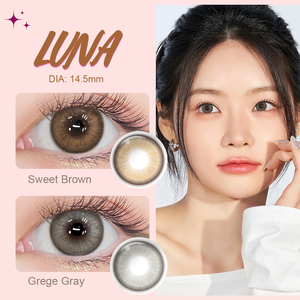
Select our top-performing CE-compliant SKUs ready for immediate wholesale distribution and custom private-label branding.
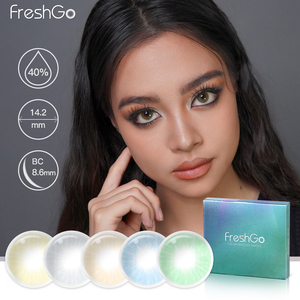
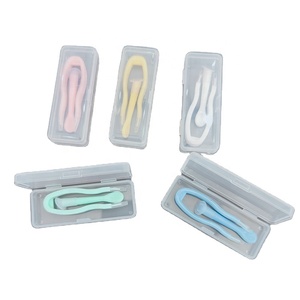
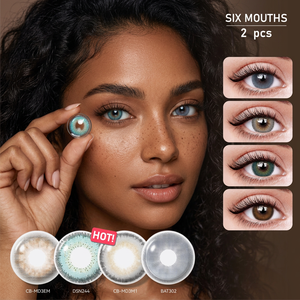
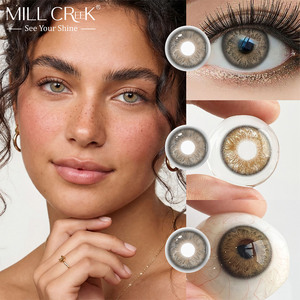

Bridging biomedical compliance and cosmetic trends with specialized contract manufacturing facilities.
Cosmetic and colored contact lenses are classified as medical devices subject to Regulation (EU) 2017/745 (MDR) Annex XVI. We provide comprehensive technical documentation, ISO 13485 audit records, biocompatibility test results, and complete traceability files.
We eliminate cornea-pigment interaction by embedding color formulations safely between two biocompatible HEMA or Silicone Hydrogel layers. Automated cast-molding ensures consistent edge geometry (bevel design) and superior wearing comfort.
Mitigate commercial risk in new optical lines. While conventional optical factories demand 5,000+ units per color, our small-batch OEM framework empowers retail brands and opticians to initiate market pilots with as few as 100 pairs per SKU.
For optical distributors, ecommerce direct-to-consumer (DTC) brands, and specialized optometry groups, securing a dependable CE Certified contact lens wholesale manufacturer is no longer solely about pricing per vial. With the enforcement of Regulation (EU) 2017/745 (MDR) and strengthened FDA 510(k) enforcement internationally, contact lenses—whether corrective or purely decorative—are governed under rigorous medical device mandates. An importer carries strict joint liability; hence, partnering with a primary exporter possessing legitimate quality management credentials and deep technical capability is foundational to sustainable enterprise value.
The ocular surface requires uninhibited oxygen flow and continuous tear exchange to prevent corneal hypoxia, epithelial microcysts, and peripheral neovascularization. During large-scale manufacturing, contact lenses are shaped using three primary techniques: lathe cutting, spin casting, or fully automated cast-molding. In our production facilities, high-speed dual-sided cast-molding is utilized for colored lenses. Cast molding guarantees uniform thickness throughout the optical zone and maintains micron-level repeatability in base curve radius (BCR) and overall diameter (DIA).
Crucially, the bevel edge architecture determines on-eye comfort. A rough or uneven lens edge damages the limbal conjunctiva and disrupts the tear film mucin layer. Through laser-guided mold polishing and automated optical inspection (AOI), our export lenses yield an ultra-thin, smoothly tapered profile that slips seamlessly beneath the eyelid margins with every natural blink.
| Performance Parameter | HEMA Hydrogel Series | Silicone Hydrogel (SiHy) Next-Gen | Special FX / Scleral Series |
|---|---|---|---|
| Water Content (%) | 38% – 42% (Optimal tear balance) | 45% – 55% (High equilibrium hydration) | 38% – 40% (Structural stability) |
| Oxygen Permeability (Dk/t) | 18 – 25 × 10⁻⁹ (Daily/Periodic) | 85 – 120 × 10⁻⁹ (Extended wear safety) | 20 – 30 × 10⁻⁹ (Cosplay/Theatrical) |
| Base Curve (BC) Options | 8.5mm / 8.6mm standard fit | 8.4mm / 8.6mm universal fit | 8.6mm – 9.0mm (Customized vault) |
| Diameter (DIA) Range | 14.0mm – 14.5mm (Natural) | 14.0mm – 14.2mm (Ergonomic fit) | 14.5mm – 22.0mm (Full Sclera) |
| Pigment Isolation Tech | Full Sandwich Micro-Encapsulation | Matrix Intercalation Polymerization | Multi-Layered Optical Encapsulation |
| Regulatory Classification | CE Class IIa / EU MDR Annex XVI | CE Class IIb / 510(k) Cleared | CE Class IIa / ISO 13485 |
Color formulations must never sit exposed on either the anterior or posterior surface of the contact lens. When low-tier manufacturers use screen printing directly onto polymerized hydrogel, pigment leaching, surface friction, and microbial adhesion exponentially increase. In our certified facilities, we utilize Sandwich Intercalation Technology. Nontoxic, pharmaceutical-grade iron oxide and phthalocyanine pigments are imprinted inside the virgin monomer layer prior to UV heat polymerization. The pigments are permanently enclosed within the hydrogel cross-linked network. Slit-lamp biomicroscopy and rubbing-resistance tests confirm zero mechanical exposure to corneal and conjunctival tissues.
Procurement teams must align their commercial inventory strategies with clear behavioral and regulatory evolutions occurring worldwide:
While yearly and monthly wear periods remain dominant in price-sensitive territories, developed consumer markets in Europe and North America demonstrate rapid double-digit migration toward daily disposable colored contacts to eradicate maintenance issues and improve hygiene.
Customs authorities throughout the EU, GCC, and Americas increasingly detain shipments lacking verifiable CE certificates, Notified Body references, and registered Unique Device Identifiers (UDI). Sourcing through pre-documented factories has become non-negotiable.
Consumer aesthetics favor high-definition 3-tone and 4-tone dot matrices that mimic natural iris radial patterns over aggressive solid limbal rings. Natural light enhancement and subtle coloration now drive over 65% of repeat retail purchases.
Brands now require manufacturers to bundle blister sealing, German/English packaging, barcode serialization, and multi-SKU fulfillment into single agile procurement accounts, drastically lowering entry barrier costs.
Every batch shipped from our clean-room workshops undergoes systematic batch tracing. From the initial inspection of raw HEMA monomer lots to final ethylene oxide or high-temperature steam sterilization, detailed records are cataloged under ISO 13485 requirements. Blister packs and vials are laser-coded with individual LOT numbers, production timestamps, and expiration curves. Should an importer receive an audit or query from an EU health authority (such as BfArM in Germany or ANSM in France), our engineering desk provides batch release certificates (CoC) and microbiological test summaries within 24 hours.
Need certified laboratory test reports or a customized prototype quotation?
Send an InquiryTransparent guidance regarding quality standards, minimum order commitments, private labeling, and global logistics.
Whether you require 100 pairs for a boutique product launch or high-volume container shipments for national optical retail, our engineering and export team is ready to assist your growth.
Send an Inquiry